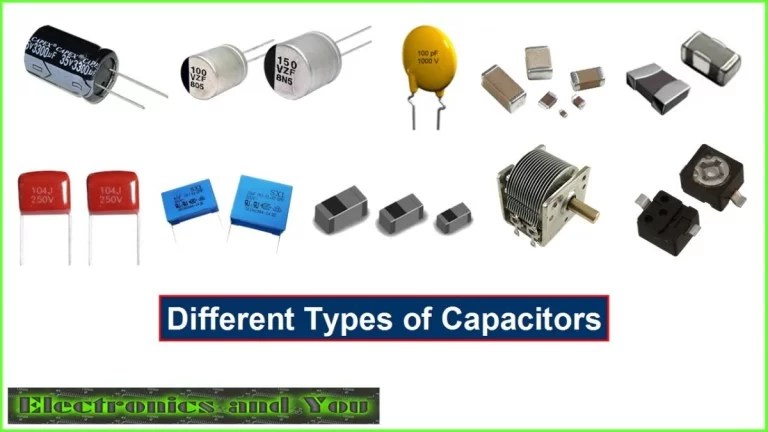
Have you ever wondered why electronic components seem so complicated? You might think they should be simple—after all, they’re the building blocks of the gadgets you use every day.
But the truth is, there’s a reason behind their complexity. Understanding this can save you time, frustration, and even money. If you’ve ever struggled to make sense of resistors, capacitors, or microchips, this article is for you. Keep reading, and you’ll discover why electronic components can’t be simple—and why that actually works in your favor.
Evolution Of Electronic Components
The evolution of electronic components is a story of constant change and increasing complexity. As technology advanced, each new generation of components brought fresh challenges. Understanding this evolution helps explain why electronic parts can’t just be “simple” anymore.
From Vacuum Tubes To Integrated Circuits
Early electronic devices used vacuum tubes, which were large, fragile, and consumed a lot of power. I remember seeing an old radio with these glass tubes inside—it was bulky and often overheated.
Transistors replaced vacuum tubes, making devices smaller and more reliable. But the real game-changer was the integrated circuit, which packed thousands of transistors into a tiny chip.
This shift didn’t just shrink size; it increased functionality. Suddenly, circuits could do more, but designing and manufacturing them became far more complex.
Miniaturization And Its Challenges
As components became smaller, new problems appeared. Tiny parts are harder to manufacture consistently and are more sensitive to heat and electrical noise.
Have you ever noticed how your smartphone heats up during heavy use? That’s partly due to how tightly packed its components are, making heat management a real challenge.
Miniaturization demands precision at microscopic levels, pushing engineers to develop advanced materials and fabrication techniques. This complexity explains why simple electronic components are rare today.

Credit: www.electronicsandyou.com
Intricacies Of Circuit Design
Circuit design might seem straightforward at first glance—you connect components, and the circuit works. But the reality is far more complex. Every decision you make impacts the entire system, requiring a deep understanding of how components interact under different conditions.
Designers constantly juggle multiple factors to create circuits that function reliably and efficiently. This balancing act reveals why electronic components can’t be simple; their behavior depends heavily on how they fit into the bigger picture.
Balancing Power And Performance
One major challenge in circuit design is finding the right balance between power consumption and performance. If you push a component too hard, it may deliver better performance but consume excessive power, leading to heat and potential failure.
On the other hand, lowering power use often means sacrificing speed or accuracy. This trade-off forces you to carefully select components and tweak their settings to meet your project’s specific needs.
Think about a smartphone processor: it needs to run fast for apps but also save battery life. Designers use techniques like dynamic voltage scaling and clock gating to adjust power use on the fly. Could your designs benefit from similar strategies?
Understanding Signal Integrity
Signal integrity is another critical aspect that complicates circuit design. Electrical signals don’t travel perfectly; they degrade, reflect, and interfere with each other along the way.
Maintaining clean, accurate signals requires careful layout of circuit paths and proper grounding. Even a small mistake in trace routing can cause data errors or noise, especially at high frequencies.
I’ve seen circuits fail because the designer overlooked the impact of crosstalk between adjacent lines. Using techniques like shielding, impedance matching, and controlled trace spacing can drastically improve reliability.
Ask yourself: How much attention are you paying to signal paths in your designs? Small adjustments here could save you hours of debugging later.
Material Science In Electronics
Material science plays a crucial role in shaping the complexity of electronic components. The materials chosen directly affect how devices function, how reliable they are, and how small they can become. Understanding the materials behind your gadgets gives you a clearer picture of why electronics can’t simply be made “simple.”
Role Of Semiconductors
Semiconductors are the heart of almost every electronic device you use. They act like a switch, controlling the flow of electricity in precise ways. Silicon, the most common semiconductor, isn’t just abundant—it has unique properties that let engineers create intricate circuits.
Why can’t we just use metals or insulators instead? Metals conduct electricity too well and can’t control it, while insulators block it entirely. Semiconductors sit in the perfect middle ground, allowing devices to process information efficiently.
Think about your smartphone’s processor. It contains billions of tiny semiconductor switches called transistors. Each one needs to be perfectly made from materials that respond exactly as planned. That’s why material science is so critical and why making components simpler isn’t just about design—it’s about mastering these materials.
Emerging Materials And Their Impacts
New materials are constantly being researched to improve electronics. Graphene, for example, is a single layer of carbon atoms with incredible electrical and thermal properties. It promises faster, smaller, and more energy-efficient devices.
But switching to new materials isn’t simple. Each comes with challenges in manufacturing, cost, and compatibility with existing systems. You might wonder if these materials will soon replace silicon—many experts say it will take time before they become mainstream.
Other materials like transition metal dichalcogenides (TMDs) and organic semiconductors also show promise. They can enable flexible or wearable electronics, opening up new possibilities you might not have considered. This ongoing exploration means the complexity of electronic components will likely grow, not shrink, as we push the limits of what materials can do.
Manufacturing Complexities
Manufacturing electronic components involves many challenges. The tiny size and complex design demand exact processes. Each step must be done with care to avoid faults. These complexities make production both costly and time-consuming.
Precision In Fabrication
Electronic components require extreme precision in fabrication. Small errors can cause the entire device to fail. Machines must place parts within microns of accuracy. Even the slightest misalignment affects performance. Manufacturers use advanced tools to maintain this precision. This attention to detail is essential for reliable components.
Quality Control And Testing
Quality control is critical in electronics manufacturing. Every component undergoes rigorous testing before shipment. Tests check for electrical performance and physical defects. Faulty parts must be identified and removed early. This process ensures only high-quality components reach customers. It adds time and cost but guarantees product reliability.
Software And Firmware Integration
Software and firmware integration is vital in modern electronics. Electronic components rely on software to function correctly. Firmware acts as the bridge between hardware and software. This integration adds layers of complexity to simple electronic parts. Each component must be programmed and tested carefully. Problems in software can cause hardware to fail or behave unpredictably.
Interplay Between Hardware And Software
Hardware and software work closely together. Hardware provides the physical parts like chips and sensors. Software controls these parts, telling them what to do. The two must communicate perfectly for the device to work. Small errors in software can lead to hardware errors.
This interplay requires detailed design and thorough testing. Engineers must understand both hardware limits and software needs. Changes in software may require hardware adjustments. This back-and-forth makes development challenging and time-consuming.
Challenges In Firmware Development
Firmware development faces many challenges. It must be efficient to save memory and power. Firmware must be reliable as it controls critical functions. Debugging firmware can be difficult because it runs on hardware directly.
- Limited resources on microcontrollers restrict firmware size.
- Firmware updates must not disrupt device operation.
- Compatibility with different hardware versions is needed.
- Security is crucial to protect devices from hacking.
These challenges slow down the creation of simple electronic components. Developers must balance performance, size, and security carefully.

Credit: www.youtube.com
Design And Innovation Constraints
Design and innovation in electronic components face many challenges. Engineers must consider many factors while creating new parts. These limits affect how simple or complex components can be.
Each new design tries to improve performance, size, and cost. But these goals often conflict. Finding the right balance is not easy. Many rules and conditions shape the final product.
Balancing Cost With Innovation
Creating advanced components can be expensive. New materials and processes often raise production costs. Companies want to keep prices low for customers. This need limits how much innovation can be applied.
Innovators must find ways to improve parts without making them too costly. Sometimes, the best technology is not affordable for mass production. Designers must choose practical solutions that fit budgets.
Environmental And Ethical Considerations
Manufacturing electronic parts impacts the environment. Toxic chemicals and heavy metals require careful handling. Laws restrict harmful substances in components.
Designers must use safer materials and reduce waste. Recycling and energy use also influence design choices. Ethical concerns push companies to create greener products.
These rules and values add complexity to the design process. Simple designs must still meet strict environmental and ethical standards.
Future Of Electronic Components
The future of electronic components holds a mix of challenges and exciting possibilities. As devices become more powerful and compact, the demand for simpler yet more efficient components grows. You might wonder how the industry will balance complexity with usability in the years ahead.
Trends In Simplification
Designers focus on creating components that are easier to integrate without losing performance. Modular designs allow you to swap parts quickly, reducing time spent on repairs and upgrades.
Smart components with built-in diagnostics help you identify problems faster. This trend reduces the need for specialized knowledge when troubleshooting complex circuits.
Manufacturers also use advanced materials that perform multiple functions in one part. This approach cuts down the number of components needed, making circuits less cluttered and easier to manage.
Potential Breakthroughs On The Horizon
Quantum electronics promises components that operate faster and consume less power than today’s options. Imagine devices that can handle huge amounts of data without bulky hardware.
Nanotechnology could create components so small and efficient that entire circuits fit on a chip no bigger than a grain of sand. This breakthrough would change how you think about device design.
Another area to watch is artificial intelligence embedded directly into hardware. This could let components learn and adapt, simplifying complex tasks without extra programming.
What if your next device could repair itself or upgrade automatically? These ideas aren’t far off and could redefine simplicity in electronics.

Credit: www.reddit.com
Frequently Asked Questions
Why Are Electronic Components Not Simple?
Electronic components involve complex materials and precise designs. Their functionality relies on intricate electrical properties. Simplifying them can reduce performance and reliability. Advanced technology demands sophisticated components for efficiency and miniaturization.
What Makes Electronic Components Complex?
Electronic components require precise manufacturing and materials. They must handle specific electrical signals and conditions. Their complexity ensures stability, durability, and accuracy. High-tech applications increase the need for advanced component designs.
How Does Complexity Improve Electronic Component Performance?
Complex designs optimize functionality and power efficiency. They enable components to handle various conditions reliably. Enhanced precision reduces errors and signal loss. This complexity supports innovation and better device performance.
Can Electronic Components Be Simplified Without Losing Quality?
Simplifying components often compromises performance and reliability. Essential features require intricate designs and materials. While some parts can be simplified, core components need complexity. Balancing simplicity and functionality is challenging in electronics.
Conclusion
Electronic components have many parts and tasks to perform. This complexity keeps devices working well and safe. Simple parts cannot handle all the needs. Designers must balance size, power, and function carefully. Understanding this helps us appreciate the technology around us.
Electronics will keep growing more complex with new ideas. It takes skill and knowledge to create these parts. The challenge is big but necessary for progress.
Leave a Reply