Are you curious about what makes your electronic devices work? Understanding the difference between active and passive components is key to unlocking the secrets behind every circuit.
Whether you’re a beginner or just want to sharpen your knowledge, this guide will help you see how these tiny parts control the flow of electricity and bring your gadgets to life. By the end, you’ll know exactly what role each component plays—and how they work together to power the technology you use every day.
Keep reading to discover the hidden forces inside your electronics!
Credit: www.youtube.com
Active Components
Active components are the heart of any electronic device. They have the power to control electric current and amplify signals, making your gadgets work smarter, not just harder. Without these components, your circuits would be lifeless, unable to perform the tasks you expect from them.
Definition And Characteristics
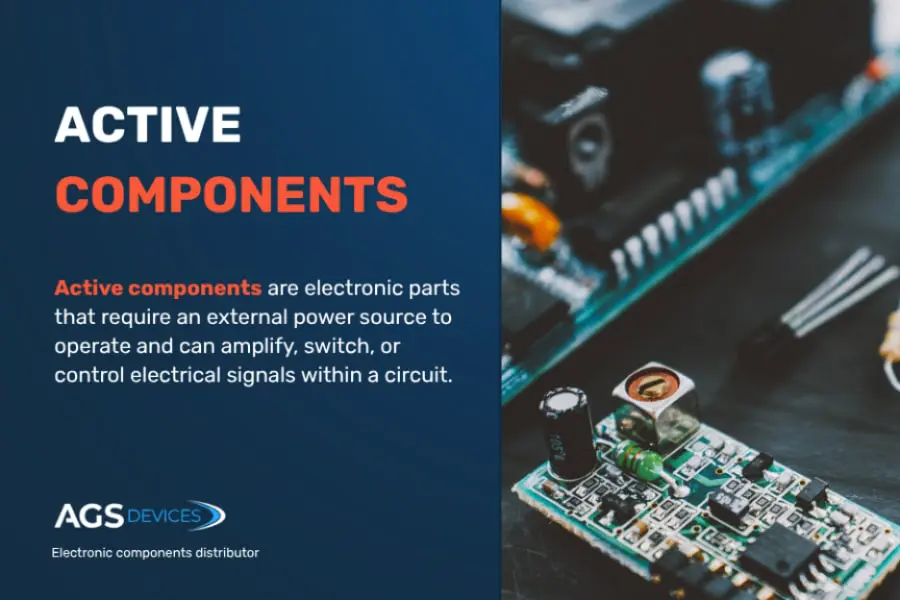
Active components are electronic elements that can inject power into a circuit and control the flow of electricity. They require an external power source to operate, unlike passive components that only respond to signals. Their key characteristic is the ability to amplify or switch electrical signals.
These components are capable of controlling current and voltage, which means they can increase signal strength or enable complex functions. Think about your smartphone’s processor—that’s packed with active components working together to process data.
Types Of Active Components
There are several types of active components you should know about:
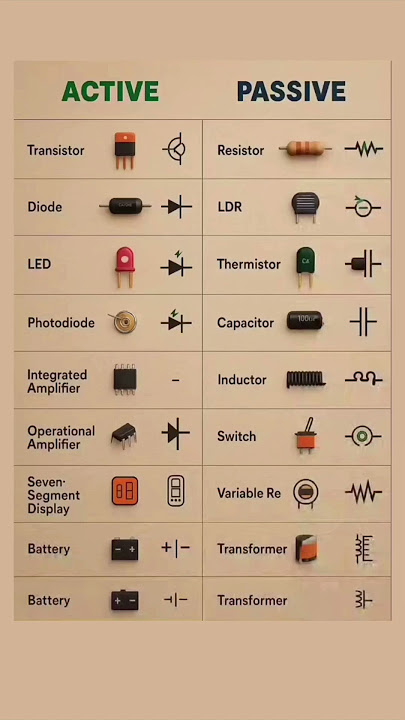
- Transistors:Often called the building blocks of modern electronics, transistors can amplify signals or act as switches.
- Diodes:They control the direction of current flow, allowing electricity to pass in one direction only.
- Integrated Circuits (ICs):Miniature chips that combine multiple active components to perform complex functions.
- Thyristors:Used mainly in power control applications, they can handle high voltage and current.
Each type plays a unique role depending on the circuit’s purpose. Which active component do you think your everyday electronics rely on most?
Role In Electronic Circuits
Active components drive the functionality of electronic circuits. They amplify weak signals, switch currents on and off, and process information. Without them, devices couldn’t perform tasks like data processing, audio amplification, or digital computation.
Imagine trying to tune a guitar without an amplifier; the sound would be faint and unclear. Active components act like that amplifier for electronic signals, making them strong and usable. They make sure your devices respond accurately and efficiently to the commands you give them.
Passive Components
Passive components are the building blocks of almost every electronic device you use daily. Unlike their active counterparts, these components don’t amplify or generate energy. Instead, they store or dissipate energy, helping control the flow of electric current in a circuit.
Definition And Characteristics
Passive components are electronic parts that cannot introduce net energy into the circuit. They don’t require an external power source to operate and cannot amplify signals.
Their main characteristics include:
- Energy storage or dissipation
- No gain or signal amplification
- Usually linear and predictable behavior
Have you ever wondered why some parts of your gadgets never seem to wear out quickly? It’s often because passive components handle energy in a way that reduces stress on the circuit.
Types Of Passive Components
There are several common types of passive components that you’ll encounter:
- Resistors:Control current by providing resistance.
- Capacitors:Store and release electrical energy temporarily.
- Inductors:Store energy in a magnetic field when current passes through.
- Transformers:Transfer electrical energy between circuits through induction.
- Diodes (sometimes considered semi-passive):Allow current to flow in one direction only.
Each type plays a unique role, and understanding these can help you design or troubleshoot your own circuits more effectively.
Role In Electronic Circuits
Passive components manage how electricity moves and behaves within a circuit. For example, resistors limit current to protect sensitive parts, while capacitors smooth out voltage fluctuations.
Think about your phone charger—capacitors help stabilize the voltage to ensure your device charges safely. Without these passive parts, circuits would face constant spikes and drops, leading to damage.
What would happen if you removed all passive components from a circuit? Likely, it would become unstable or even fail completely. Their silent yet crucial role is to maintain balance and reliability in electronics you depend on every day.
Key Differences Between Active And Passive Components
Understanding the key differences between active and passive components is essential for anyone working with electronics. These differences affect how circuits behave, how you design them, and even how you troubleshoot problems. Let’s break down the main contrasts that will help you identify and use these components effectively.
Energy Requirement
Active components need an external power source to operate. They can control the flow of electricity and amplify signals.
Passive components do not require any external power to function. They simply respond to the electrical signals passing through them without adding energy.
Think about a transistor in your phone—it needs power to amplify sound signals, unlike a resistor that just limits current without needing power on its own.
Functionality In Circuits
Active components can amplify, switch, or generate electrical signals. They are crucial for processing and controlling signals within circuits.
Passive components mainly store, filter, or dissipate energy. Their role is more about managing the existing electrical signals rather than creating or increasing them.
Consider how a capacitor smooths out voltage fluctuations—it doesn’t boost the signal but helps maintain stability.
Examples In Real-world Applications
- Active Components:Transistors in amplifiers, integrated circuits in computers, and diodes in power supplies.
- Passive Components:Resistors controlling current in LED circuits, capacitors in power filters, and inductors in radio tuning devices.
Next time you work on a project, try identifying which components add energy to the circuit and which ones simply manage it. How does understanding this difference change your approach to building or fixing electronics?

Credit: www.microwavejournal.com
Applications Of Active Components
Active components play a vital role in making electronic devices functional and dynamic. Their ability to control electric current and provide gain means they are essential in various electronic applications. Understanding where and how these components are used can help you design better circuits and troubleshoot more effectively.
Amplifiers
Amplifiers use active components like transistors and operational amplifiers to increase the strength of weak electrical signals. This is crucial in devices such as radios, microphones, and hearing aids where clear sound output matters. Have you ever noticed how your phone boosts your voice during a call? That’s an amplifier working behind the scenes.
Oscillators
Oscillators generate repetitive signals like sine waves, square waves, or pulses, which are essential for clocks, radios, and computers. Active components such as transistors and integrated circuits help maintain the oscillation by continuously supplying energy. Without them, devices wouldn’t be able to keep time or transmit signals consistently.
Switching Devices
Active components act as switches in many electronic circuits, turning currents on or off rapidly. This switching ability is the foundation of digital electronics, including microprocessors and memory storage. Next time you use your computer or smartphone, think about how countless tiny switches are working together to make it all happen.
Applications Of Passive Components
Passive components play a vital role in many electronic devices. They control and shape electrical signals without needing power. These components include resistors, capacitors, and inductors. They serve many important functions in circuits, helping devices work properly and efficiently.
Filters
Filters use passive components to allow certain signals to pass. They block unwanted frequencies and noise. Capacitors and inductors form these filters. They help improve sound quality in audio systems. Filters also clean signals in communication devices. This ensures clear and stable data transmission.
Resonant Circuits
Resonant circuits use passive parts to select specific frequencies. Inductors and capacitors create these circuits. They are key in radios and TVs. Resonant circuits tune into desired channels or signals. This improves reception and signal clarity. They also help in signal generation and timing.
Voltage Dividers
Voltage dividers reduce voltage to needed levels. Resistors are mainly used in these circuits. They provide stable voltage for sensors and microcontrollers. This helps protect sensitive parts from damage. Voltage dividers are simple yet essential in electronics. They ensure devices receive the correct power.

Credit: www.agsdevices.com
Choosing The Right Components For Your Circuit
Choosing the right components for your circuit is crucial to ensure it works efficiently and reliably. The components you select directly affect the performance, durability, and even the cost of your project. Understanding how to pick between active and passive components can save you time and frustration in the long run.
Factors To Consider
- Functionality:Identify what role the component will play. Active components like transistors can amplify signals, while passive components like resistors control current flow.
- Power Ratings:Check the voltage and current ratings to avoid component failure. Using a component with too low a rating can cause overheating or damage.
- Size and Footprint:Consider the physical size, especially for compact circuits. Smaller components might save space but could be harder to handle.
- Tolerance and Precision:Passive components come with tolerance levels that affect circuit accuracy. Choose tighter tolerance parts for sensitive applications.
- Cost vs. Quality:Don’t always go for the cheapest option. Sometimes paying a bit more ensures better reliability and fewer replacements.
Common Mistakes To Avoid
- Using components without checking their datasheets. Specs can vary widely even within the same category.
- Ignoring the power dissipation limits, which can lead to overheating and failure.
- Mixing up polarity on active components like diodes or transistors, which can damage your circuit instantly.
- Choosing components solely based on availability rather than suitability for your specific circuit needs.
- Overlooking component compatibility, such as mixing digital and analog parts without proper interface considerations.
Tips For Efficient Circuit Design
- Plan your circuit layout with component placement in mind to minimize noise and interference.
- Test your design with simulation tools before building to catch potential issues early.
- Use standard component values whenever possible to simplify sourcing and replacements.
- Keep an eye on power consumption to optimize battery life or reduce heat generation.
- Document your component choices and reasons; it helps if you revisit the project later or share it with others.
Frequently Asked Questions
What Are Active Components In Electronics?
Active components control current flow and can amplify signals. Examples include transistors, diodes, and integrated circuits. They require external power to operate and can introduce energy into a circuit, enabling signal processing and switching functions.
What Defines Passive Components In Electronics?
Passive components cannot amplify or control current but store or dissipate energy. Common types are resistors, capacitors, and inductors. They do not need external power to function and mainly influence voltage and current in circuits.
How Do Active And Passive Components Differ?
Active components amplify or control electrical signals and need power. Passive components only store or dissipate energy and do not amplify signals. Together, they form essential parts of electronic circuits with distinct roles.
Why Are Passive Components Important In Circuits?
Passive components regulate voltage, current, and signal timing. They filter noise, store energy, and provide resistance or reactance. Without them, circuits would lack stability, control, and proper signal conditioning.
Conclusion
Active and passive components work together in electronic circuits. Active components control the flow of electricity and can amplify signals. Passive components store or release energy without amplification. Understanding both helps you grasp how devices function. This knowledge makes learning electronics easier and more fun.
Keep exploring these parts to build and fix circuits confidently. Electronics become clearer with each step you take.
Leave a Reply