
Have you ever wondered who invented the electronic components that power your everyday gadgets? From the tiny resistors to complex microchips, these parts are the building blocks of the devices you use daily.
Understanding their origins can change the way you see technology and spark your curiosity about the incredible minds behind these inventions. Keep reading, and you’ll discover fascinating stories about the pioneers who shaped the world of electronics—and how their work impacts your life right now.
Credit: cloudgeek7.medium.com
Early Electronics Components
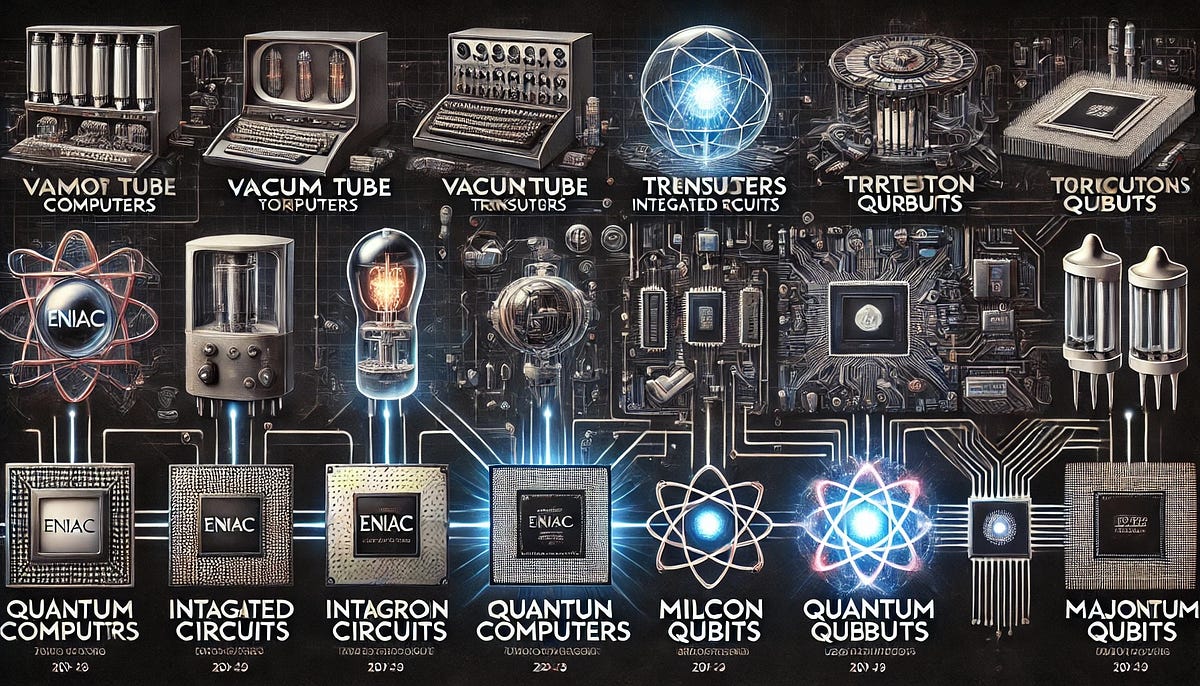
Inventors like Thomas Edison and Nikola Tesla helped create early electronic parts. These components made modern devices possible. Simple parts such as vacuum tubes paved the way for today’s electronics.
Early electronics components played a pivotal role in shaping the modern world. These components laid the foundation for the technology we rely on today. Understanding their origins can give you a deeper appreciation for the gadgets that surround you.First Electronic Devices
The first electronic devices were simple yet groundbreaking. The vacuum tube, invented by John Ambrose Fleming in 1904, was among the earliest. It acted as a switch and amplifier, paving the way for radios and televisions. The crystal detector, used in early radios, was another essential invention. It allowed people to listen to broadcasts by converting radio waves into audio signals. Imagine the excitement of hearing a voice from miles away for the first time!Key Materials And Their Uses
Materials like silicon, germanium, and copper became crucial. Silicon, for instance, is the backbone of modern semiconductors found in computers and smartphones. Copper’s excellent conductivity made it ideal for wiring and components like transformers. Its widespread use in electronics owes much to its reliability and efficiency. Think about how these materials are still vital today. What would your life be like without the reliable performance of these components? Understanding these early developments can change how you see your everyday devices. Next time you use your phone or computer, remember the humble beginnings of electronics.Pioneers Of Electronic Components
Understanding the pioneers behind electronic components helps you appreciate the devices you use daily. These inventors shaped the foundation of modern electronics. Their work still influences how we build circuits and gadgets.
Contributions Of Thomas Edison
Thomas Edison is often remembered for the light bulb, but his impact on electronics goes deeper. He developed the first practical incandescent light, which required reliable electrical components. Edison’s work on the phonograph also pushed advancements in electrical circuits.
He invented the carbon microphone, which improved sound clarity in telephones. This innovation was crucial for communication devices and set standards for electronic signals. Imagine how your smartphone’s microphone owes its roots to Edison’s experiments.
Role Of Nikola Tesla
Nikola Tesla’s ideas were ahead of his time, especially in alternating current (AC) systems. He designed the AC motor and transformer, which are fundamental electronic components used worldwide. Tesla’s work made efficient power transmission possible, impacting everything from your home appliances to industrial machines.
He also experimented with wireless transmission of energy, a concept still explored today. Tesla’s vision challenges you to think beyond current technology limits. What innovations could you pursue by questioning existing electronic designs?
Impact Of John Ambrose Fleming
John Ambrose Fleming invented the vacuum tube diode, a key breakthrough in electronics. This component allowed control of electrical current flow, enabling amplification and switching. Without it, radio, television, and early computers wouldn’t have advanced as they did.
Fleming’s work laid the groundwork for modern semiconductor devices. His invention guides you to understand how controlling electron flow is vital in circuits. Have you considered how foundational components like the vacuum tube shape today’s technology?
Invention Of The Vacuum Tube
The invention of the vacuum tube marked a turning point in the world of electronics. This device enabled the control and amplification of electrical signals, laying the groundwork for modern electronics. Understanding its origins helps you appreciate the evolution of technology that powers your everyday devices.
Development By Lee De Forest
Lee De Forest invented the Audion in 1906, which was the first practical vacuum tube. It was a triode, meaning it had three elements: the cathode, anode, and a control grid. This design allowed De Forest to amplify weak electrical signals, a breakthrough at the time.
His invention was not just a technical marvel but also a stepping stone for radio communication and early computing. De Forest’s work showed how controlling electrons in a vacuum could manipulate signals, a concept still used in electronics today. Have you ever considered how this simple idea changed the way we communicate?
Vacuum Tube Applications
Vacuum tubes found quick use in radios, televisions, and early computers. Their ability to amplify and switch signals made them essential components for decades. Without vacuum tubes, devices like the first electronic computers would not have been possible.
- In radios, vacuum tubes amplified weak signals so you could hear distant broadcasts clearly.
- Televisions used them to process and display images on the screen.
- Early computers relied on vacuum tubes for processing data before transistors took over.
Imagine your smartphone without transistors, relying on bulky vacuum tubes instead. It raises a question: how does a simple invention influence so many different technologies? Knowing this can inspire you to think about how current innovations might shape the future of your devices.
Birth Of The Transistor
The transistor was invented by John Bardeen, Walter Brattain, and William Shockley in 1947. This key electronic component changed technology by controlling electric signals in devices. Their work laid the foundation for modern electronics.
Bell Labs Breakthrough
The birth of the transistor marks a key moment in electronics history. It happened at Bell Labs in the late 1940s. Scientists there worked hard to find a better way to amplify signals. The goal was to replace bulky vacuum tubes with a smaller device. This effort led to the creation of the first working transistor. It changed electronics forever.
John Bardeen, Walter Brattain, And William Shockley
Three scientists played vital roles in this breakthrough. John Bardeen, Walter Brattain, and William Shockley combined their skills. Bardeen focused on the theory of semiconductors. Brattain worked on practical experiments to test ideas. Shockley led the team and improved the design. Together, they built the first point-contact transistor in 1947.
This invention made electronics smaller, faster, and more reliable. It paved the way for radios, computers, and many devices we use today. The transistor’s birth was a major step in modern technology’s story.
Evolution Of Semiconductors
The evolution of semiconductors marks one of the most significant chapters in the history of electronics. These tiny materials have transformed how devices operate, shrinking the size of gadgets while boosting their power and efficiency. Understanding this journey helps you appreciate the technology behind everyday electronics and sparks ideas on how you might leverage it in your own projects or work.
Silicon And Germanium Advances
The story of semiconductors began with germanium and silicon, two elements that changed the game. Early transistors used germanium because it was easier to work with, but silicon quickly took the lead due to its superior performance at higher temperatures.
Silicon’s abundance and stability made it the foundation for most semiconductor devices today. Have you noticed how your smartphone or computer chips mainly rely on silicon? This shift was not just about material choice but about pushing boundaries in manufacturing techniques and device reliability.
Integrated Circuits Innovation
The invention of integrated circuits (ICs) marked a massive leap forward. Instead of connecting separate components with wires, engineers packed millions of tiny transistors onto a single chip. This innovation made devices smaller, faster, and cheaper to produce.
Think about how your laptop or gaming console fits so much power into a compact design. ICs made that possible. What could you create if you had access to such powerful yet tiny building blocks for your own electronic designs?
Credit: www.tomsonelectronics.com
Modern Electronic Components
Modern electronic components have transformed the way we live, work, and communicate. These components are the building blocks of all electronic devices, from smartphones to advanced medical equipment. Understanding their origins and how they function can give you a clearer picture of the technology that surrounds you every day.
Microchips And Microprocessors
Microchips and microprocessors are at the heart of most electronic devices today. A microchip, also called an integrated circuit, contains thousands or millions of tiny components packed into a small piece of silicon. This technology allows devices to perform complex tasks quickly and efficiently.
The microprocessor, a type of microchip, acts as the brain of computers and many other gadgets. It processes instructions and manages the flow of information within a device. Without microprocessors, your laptop or smartphone would be just a bulky shell with no real function.
Did you ever wonder how your phone can run multiple apps at once? That’s the power of microprocessors working behind the scenes. Their development started in the late 1960s and has rapidly evolved, making today’s technology incredibly powerful yet compact.
Emerging Technologies And Future Trends
Emerging electronic components are pushing the boundaries of what devices can do. Technologies like flexible electronics, quantum components, and bioelectronics are beginning to appear in research labs and some commercial products. These innovations promise to change everything from healthcare to wearable tech.
Flexible electronics, for example, can bend and stretch, opening new possibilities for screens and sensors that fit your body comfortably. Quantum components harness the strange rules of quantum physics to perform calculations far beyond today’s computers. Bioelectronics blend technology with biology to monitor or even repair the human body.
What will your next device be capable of? As these technologies grow, you may soon have gadgets that adapt to your lifestyle in ways you haven’t imagined yet. Staying informed about these trends can help you make smarter choices when upgrading your tech.
Credit: medium.com
Frequently Asked Questions
Who Invented The First Electronic Component?
The first electronic component, the vacuum tube, was invented by John Ambrose Fleming in 1904. It amplified electrical signals and paved the way for modern electronics.
Who Created The Transistor, A Key Electronic Component?
John Bardeen, Walter Brattain, and William Shockley invented the transistor in 1947. It replaced vacuum tubes, revolutionizing electronics with smaller, efficient devices.
What Is The Origin Of The Resistor In Electronics?
Resistors evolved from early carbon and wire materials, with no single inventor. They regulate current flow and are fundamental in electronic circuits.
Who Developed The Capacitor In Electronic Circuits?
The capacitor concept dates back to 1745 by Ewald Georg von Kleist and Pieter van Musschenbroek. It stores electrical energy for circuit stability.
Conclusion
The invention of electronic components shaped today’s technology world. Many smart minds contributed to this progress over time. Each part, from the resistor to the transistor, plays a key role. These inventions help devices work faster and better every day.
Understanding who made these parts shows how science and effort come together. Electronics keep growing and changing thanks to these early pioneers. Their work still impacts our daily lives in many ways. The story of electronics is a tale of curiosity and invention.
It inspires us to learn and explore more about technology.
Leave a Reply