Are you struggling to identify tiny SMD electronic components on your circuit boards? You’re not alone.
These small parts look almost identical but play very different roles in your electronics projects. Knowing how to recognize each one can save you time, prevent mistakes, and boost your confidence when working with electronics. You’ll discover simple tips and tricks to quickly identify SMD components like resistors, capacitors, and diodes—even if you’re just starting out.
Keep reading, and you’ll soon feel ready to tackle your next project with ease.

Credit: electronics.stackexchange.com
Basics Of Smd Components
Understanding the basics of Surface-Mount Device (SMD) components is essential. These small, efficient parts are used in modern electronics. They are crucial for compact and reliable circuit designs. Let’s explore the fundamentals of SMD components.
What Are Smd Components
SMD components are tiny electronic parts mounted on circuit boards. Unlike traditional components, they don’t use wires. They are soldered directly onto the board’s surface. This method saves space and improves performance. Common examples include resistors, capacitors, and diodes.
Common Types Of Smd Components
There are several common types of SMD components. Each serves a unique function in circuits. Here are a few:
- Resistors:Control the flow of electric current.
- Capacitors:Store and release electrical energy.
- Diodes:Allow current to flow in one direction.
- Transistors:Amplify or switch electronic signals.
Benefits Of Using Smd Components
SMD components offer several advantages. They are smaller and lighter than traditional parts. This makes them ideal for compact devices. They also provide better electrical performance. Their design reduces unwanted noise and interference. SMD components are cost-effective, too. They simplify the manufacturing process, reducing labor costs.
Reading Smd Markings
Reading SMD markings can feel like cracking a secret code at first. These tiny prints hold essential information about the components’ values and types. Once you know how to interpret them, you can quickly identify parts without digging through datasheets or guessing.
Decoding Smd Resistor Codes
SMD resistors often use a three or four-digit number system to indicate resistance. The first two or three digits represent the significant figures, and the last digit shows the multiplier as a power of ten.
- Example:“472” means 47 × 10² ohms, which equals 4700 ohms.
- If you see “100”, it means 10 × 10⁰, so 10 ohms.
Sometimes, resistors use the letter “R” to mark the decimal point, like “4R7” for 4.7 ohms. Have you noticed how this system saves space but demands a bit of mental math? Keep a reference chart handy to speed up your work.
Identifying Capacitor Labels
Capacitor markings can be trickier because many SMD capacitors only show codes related to their capacitance in picofarads (pF). You might find three-digit codes similar to resistors but representing capacitance.
- “104” means 10 × 10⁴ pF, which is 100,000 pF or 0.1 µF.
- Some capacitors have voltage ratings or tolerance codes nearby, but often you’ll need a datasheet to be sure.
Not all capacitors show readable codes, especially ceramic types. Have you tried measuring with an LCR meter to confirm values? It’s a quick way to verify when markings aren’t clear.
Understanding Inductor Markings
Inductors usually have simple codes showing their inductance in microhenries (µH). They might use numbers followed by letters to indicate values and tolerance.
- “220” could mean 22 µH, with the last digit as a multiplier.
- Letters like “M” or “K” might represent tolerance or series.
Sometimes, no code is printed at all, especially on very small inductors. How do you handle those? Using a component tester or referring to the circuit design can guide you.
Recognizing Diode And Transistor Codes
Diodes and transistors often have short alphanumeric codes that identify the device type and polarity. These codes are standardized but can vary by manufacturer.
- For example, “1N4148” is a popular small-signal diode, sometimes abbreviated as “4148” on SMD parts.
- Transistors might have codes like “2N3904” or a simpler three-character code like “A92”.
Since these codes can be cryptic, cross-checking with a reliable component database or app can save you time. Have you ever mixed up transistor pinouts because of unclear markings? Double-checking prevents costly mistakes.
Tools For Identification
Identifying SMD electronic components requires having the right tools at your fingertips. Without proper equipment, it’s easy to misread labels or overlook tiny details that can make a big difference in your projects. The right tools not only improve accuracy but also save you time and frustration.
Essential Tools For Beginners
If you’re just starting out, a few basic tools can make identification much easier. A good digital multimeter is a must-have for measuring resistance, voltage, and continuity. Tweezers with fine tips help handle small components without damaging them.
Other helpful tools include a component tester that can automatically identify common SMD parts. Don’t forget a basic reference chart or app to decode component markings, since many SMD components use tiny alphanumeric codes that aren’t immediately obvious.
Using A Multimeter Effectively
Your multimeter is more than just a measuring device—it’s your detective tool in identifying components. Use the resistance mode to check resistors by comparing their measured value against their printed code. For capacitors, the capacitance mode helps verify values, though some cheaper meters might not support this.
Testing diodes and transistors requires using the diode test mode. By measuring forward voltage drops, you can distinguish between different semiconductor types. Have you ever found a part that didn’t match any markings? A multimeter often provides clues to figure out what it is.
Magnification And Lighting Aids
Small size is the biggest challenge when identifying SMD components. A magnifying glass or jeweler’s loupe reveals tiny printed codes that are otherwise invisible to the naked eye. For even better clarity, consider a digital microscope which allows you to capture images for detailed inspection.
Good lighting is equally important. A bright LED desk lamp with adjustable angles reduces eye strain and shadows. Have you noticed how much easier it is to read tiny markings under consistent, bright light? Pair this with magnification and you’ll spot details others might miss.
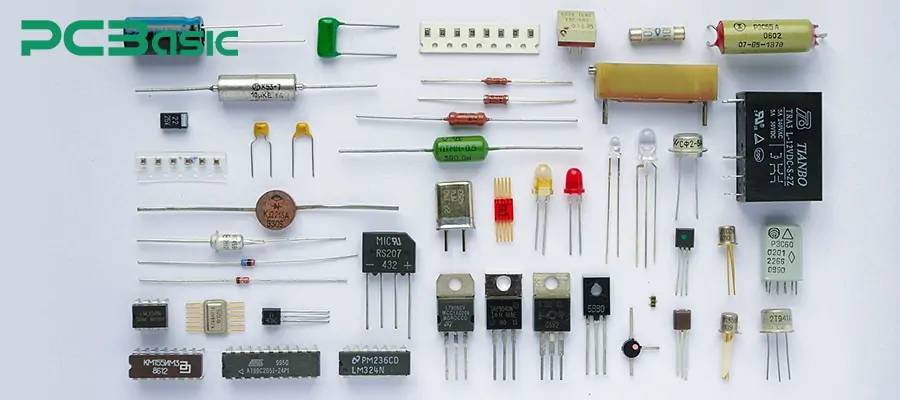
Credit: www.pcbasic.com
Practical Identification Tips
Identifying SMD electronic components can feel like solving a puzzle without a picture. The key lies in practical techniques that make the process clear and manageable. Focused observation, reliable references, and the right tools turn confusion into clarity.
Visual Inspection Techniques
Start by examining the component’s markings under good lighting and magnification. Look for numbers, letters, or symbols printed on the surface; these often indicate the component type or value.
Check the shape and size—resistors, capacitors, and diodes have distinct physical features. Sometimes, the smallest scratches or color bands can tell you more than you expect.
Have you ever noticed how a dull or faded marking might mislead you? Clean the component gently with isopropyl alcohol to reveal clearer details before jumping to conclusions.
Cross-referencing Datasheets
Datasheets are the ultimate guide for decoding those mysterious codes. Match the markings you see with datasheet specifications like package dimensions, pin configuration, and electrical characteristics.
Keep datasheets from trusted manufacturers handy—they often include helpful images and tables. Don’t ignore the tiny notes about temperature ratings or voltage limits; these details confirm you’ve got the right part.
If you find multiple datasheets for similar codes, compare them side by side. Which one aligns best with your component’s physical traits and your circuit’s needs?
Utilizing Online Component Databases
Online databases can save you hours by offering quick searches for part numbers and markings. Websites like Octopart, Digi-Key, and SnapEDA provide extensive libraries with images and specs.
Upload a clear photo or enter the code, and the database suggests possible matches. This helps especially when you face obscure or unbranded components.
Are you using filters to narrow down results by package type or electrical ratings? Tailoring your search this way makes the identification faster and more accurate.
Common Challenges And Solutions
Identifying SMD electronic components involves several challenges. These tiny parts often have faded markings or lack clear labels. Similar components may look almost identical, making differentiation tough. Handling these small and complex parts requires care and the right tools.
Faded Or Missing Markings
SMD components often have very small markings. These can fade during manufacturing or use. Missing markings make identification difficult. Using a magnifying glass or microscope helps read faint codes. Cross-checking with datasheets and reference guides aids in matching parts.
Differentiating Similar Components
Many SMD parts look alike in shape and size. Resistors, capacitors, and inductors can be confused easily. Checking color codes, size, and placement on the board offers clues. Measuring electrical properties with a multimeter confirms the component type.
Handling Tiny And Complex Parts
SMD components are very small and fragile. Tweezers with fine tips allow precise handling. Using an anti-static mat prevents damage from static electricity. Working under good light reduces mistakes. Patience and steady hands improve accuracy when placing or removing parts.
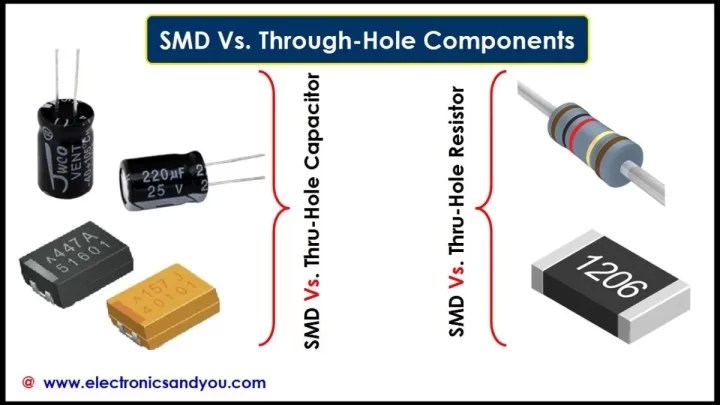
Credit: www.electronicsandyou.com
Best Practices For Beginners
Starting out with SMD electronic components can feel overwhelming due to their tiny size and similar appearance. However, adopting smart habits early on helps you avoid confusion and mistakes. Clear organization, careful handling, and thorough record-keeping can make identification much easier and your projects more successful.
Organizing Smd Components
Keep your SMD parts sorted by type and value. Use small, labeled containers or compartmentalized storage boxes to separate resistors, capacitors, diodes, and ICs. Labeling each section with component values or codes saves you time and frustration when searching.
Try to arrange components in the order you use them most often. This simple habit reduces errors and speeds up your workflow. Have you noticed how a clutter-free workspace helps you focus better?
Safe Handling Procedures
SMD components are delicate and sensitive to static electricity. Always use an anti-static wrist strap or mat to protect your parts from damage. Handle components with tweezers rather than fingers to avoid contamination and accidental bending.
Make sure your work area is clean and well-lit. Proper lighting helps you see tiny markings and avoid mix-ups. Have you ever struggled to identify a part just because the lighting was poor?
Maintaining An Identification Log
Keep a detailed log of your SMD components to track what you have and where it’s stored. Note down the component type, value, package size, and any supplier codes. This record makes reordering easier and prevents repeated mistakes.
Use a simple spreadsheet or a dedicated notebook. Update it every time you add or use parts. How much time could you save if you never had to guess what a tiny component was again?
Frequently Asked Questions
What Are Smd Electronic Components?
SMD components are Surface Mount Devices soldered directly onto circuit boards. They are smaller and more efficient than traditional parts. These parts include resistors, capacitors, and ICs, designed for automated assembly. Identifying them requires understanding their size, shape, and marking codes.
How To Read Smd Component Markings?
SMD markings use alphanumeric codes indicating component values and types. Resistors and capacitors have numerical codes, while ICs show manufacturer and model numbers. Using reference charts and datasheets helps decode these markings accurately, essential for proper identification and replacement.
What Tools Help Identify Smd Components?
Tools like magnifying glasses, multimeters, and component testers aid in identifying SMD parts. A microscope can reveal tiny markings clearly. Multimeters measure electrical values, confirming component type. These tools ensure accurate identification during repair or assembly.
Why Is Identifying Smd Components Important?
Correct identification ensures proper circuit function and prevents damage. Using the wrong component can cause failures or inefficiencies. Knowing SMD codes helps in sourcing replacements and troubleshooting electronics effectively.
Conclusion
Identifying SMD electronic components is easier than it seems. Start by checking the size and shape carefully. Look closely at the markings on each part. Use a magnifier for better visibility. Compare parts with a reference chart or datasheet. Practice helps improve your recognition skills quickly.
Soon, reading SMD codes will become natural. Keep your tools and guides handy always. This knowledge saves time and reduces errors. Stay patient and keep learning step by step. Your confidence with electronics will grow steadily.
Leave a Reply