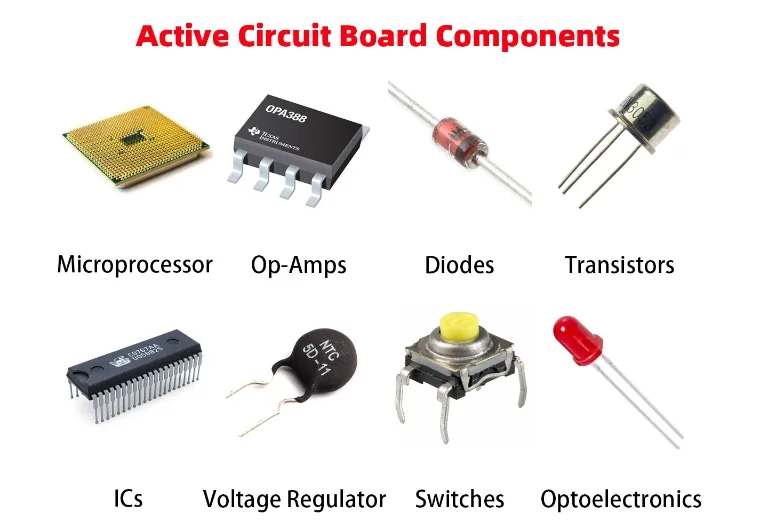
Have you ever wondered what makes your gadgets work? Every electronic device you use is built from a few basic parts.
These parts, called electronic components, are the building blocks of technology. Knowing the 5 electronic components can help you understand how devices function and even spark your interest in creating your own projects. Keep reading to discover these essential components and see how they fit into the world of electronics around you.
Resistors
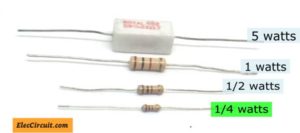
Resistors are fundamental components in the world of electronics, often acting as the unsung heroes of a circuit. Their primary role is to resist the flow of electric current, providing precise control over the circuit’s behavior. Whether you’re a seasoned engineer or a curious hobbyist, understanding resistors can transform your approach to designing and troubleshooting circuits.
Types Of Resistors
Resistors come in various forms, each suited to different applications. The most common type is the fixed resistor, which has a set resistance value, making it reliable for predictable performance. Variable resistors, such as potentiometers, allow you to adjust resistance levels, offering flexibility in tuning circuits.
Specialized resistors, like thermistors and light-dependent resistors, change their resistance based on temperature or light, respectively. This adaptability makes them essential in creating responsive devices like thermostats and automatic lighting systems.
Functions In Circuits
Resistors serve multiple functions within circuits, primarily limiting current to protect sensitive components. By controlling the current, they help maintain the desired voltage across various parts of the circuit. This is crucial in ensuring the longevity and efficiency of electronic devices.
Another key role of resistors is in creating voltage dividers. By dividing the voltage between two points, they allow for precise voltage control, which is essential in analog signal processing. Have you ever thought about how important this is in audio equipment, where clarity and precision are paramount?
Common Applications
Resistors are ubiquitous in everyday electronics. In household gadgets like TVs and microwaves, they ensure components receive the correct power levels. Their presence is critical in ensuring these devices function safely and reliably.
In educational projects and hobbyist kits, resistors are often among the first components you encounter. They’re used in simple circuits to teach basic principles of electronics. The knowledge gained from these projects lays the foundation for more complex designs.
Next time you’re tinkering with a circuit, pause and consider the humble resistor. Its role might not be flashy, but its impact is undeniably significant. How might your next project change with a deeper understanding of this essential component?
Credit: nandasiddhardha.medium.com
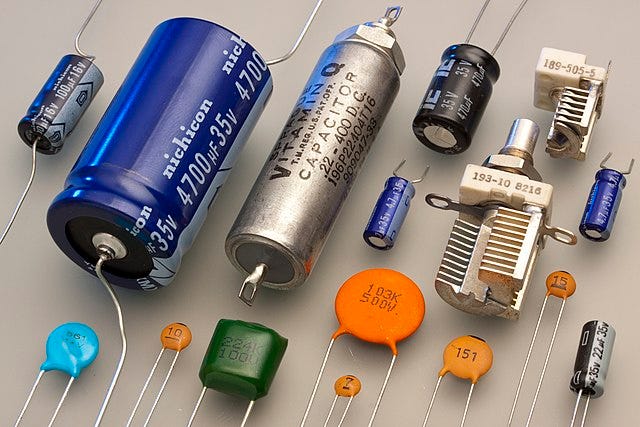
Capacitors
Capacitors are essential parts of most electronic circuits. They store and release electrical energy quickly. This ability helps control voltage and smooth out power supply. Capacitors come in many forms and sizes, each suited for specific tasks. Understanding capacitors helps grasp how electronic devices work.
Varieties Of Capacitors
- Ceramic Capacitors: Small and stable, used in high-frequency circuits.
- Electrolytic Capacitors: Larger, with high capacitance, common in power supplies.
- Tantalum Capacitors: Reliable and compact, used in mobile devices.
- Film Capacitors: Durable and precise, ideal for audio and signal processing.
- Supercapacitors: Store large charges, used for backup power.
Role In Electronic Devices
Capacitors store electric charge and release it when needed. They filter signals by blocking direct current while allowing alternating current. This helps clean power signals and reduce noise. They stabilize voltage, preventing sudden changes that might damage components. Capacitors also time circuits by charging and discharging at set rates.
Usage Examples
- Power supplies use capacitors to smooth output voltage.
- Radios rely on capacitors to tune frequencies.
- Camera flashes use capacitors to store energy and release a burst of light.
- Computers use capacitors to maintain memory during power loss.
- Audio equipment employs capacitors to filter sound signals.
Inductors
Inductors are key electronic components that store energy in a magnetic field when electrical current flows through them. They may look simple but play a crucial role in controlling current and voltage in circuits. If you’ve ever wondered how radios tune into specific stations or how power supplies smooth out voltage fluctuations, inductors are often behind the scenes making it happen.
Different Inductor Types
Inductors come in various shapes and sizes, each designed for specific uses. Here are some common types:
- Air Core Inductors:These have no magnetic core and are mainly used at high frequencies because they avoid core losses.
- Iron Core Inductors:Featuring a core made of iron or ferrite, they provide higher inductance for the same number of coil turns.
- Toroidal Inductors:Shaped like a donut, their magnetic field is contained within the core, reducing interference.
- Variable Inductors:You can adjust their inductance, useful for tuning circuits.
Choosing the right type depends on your project’s frequency, size, and efficiency needs.
Working Principles
Inductors work by resisting changes in current. When current flows through the coil, it creates a magnetic field around it.
If the current tries to change, this magnetic field induces a voltage that opposes the change, smoothing out spikes or dips.
This property is called inductance and is measured in henries (H). The strength depends on the coil’s number of turns, core material, and coil area.
Where Inductors Are Used
Inductors appear in many everyday devices you might not expect. They are essential in power supplies to filter out noise and stabilize voltage.
In radios and televisions, inductors help select the right frequencies, making your channels clear and crisp.
They’re also used in transformers, electric guitars, and even in your smartphone’s charging circuits.
Next time you charge your phone or listen to music, think about how inductors quietly keep things running smoothly. What part of your daily tech do you think would struggle without them?
Credit: www.eleccircuit.com
Diodes
Diodes are one of the fundamental electronic components you’ll encounter in almost every circuit. They act like one-way gates for electrical current, allowing it to flow in one direction while blocking it in the opposite. This simple behavior makes them crucial for tasks like converting AC to DC, protecting circuits, and controlling signal flow.
Types Of Diodes
There are several types of diodes, each designed for specific uses. The most common is the rectifier diode, used to convert alternating current (AC) into direct current (DC). Then you have Zener diodes, which allow current to flow backward when a certain voltage is reached, useful for voltage regulation.
Other types include:
- Light Emitting Diodes (LEDs)– emit light when current passes through.
- Schottky Diodes– known for their low forward voltage drop and fast switching.
- Photodiodes– generate current when exposed to light.
How Diodes Work
At their core, diodes are made from semiconductor materials, usually silicon. When you apply voltage in the forward direction, the diode allows current to pass. Reverse the voltage, and it blocks the current, acting as an electrical check valve.
Think of it this way: if you’ve ever tried to push water through a pipe with a valve, it flows only one way. Diodes do the same with electricity, preventing unwanted current flow that could damage components or cause malfunctions.
Applications In Circuits
Diodes show up everywhere, from power supplies to signal processing. In power supplies, rectifier diodes convert AC from the wall outlet into DC to power your gadgets. Zener diodes stabilize voltage, protecting sensitive parts from spikes.
LEDs provide visual indicators in devices, while Schottky diodes improve efficiency in high-speed switching circuits. Have you ever noticed how your phone charger converts electricity smoothly? That’s diodes at work, ensuring your device receives the right kind of power safely.
Transistors
Transistors are tiny switches or amplifiers inside electronic devices. They control the flow of electric current. Transistors help devices work faster and smarter. They are essential parts of almost all modern electronics.
Types Of Transistors
- Bipolar Junction Transistor (BJT): Uses both electrons and holes to conduct.
- Field Effect Transistor (FET): Controls current by voltage applied to its gate.
- Metal-Oxide-Semiconductor FET (MOSFET): A popular FET with high input resistance.
- Junction FET (JFET): Voltage-controlled resistor used in low-noise applications.
Functions In Electronics
- Amplifying signals to make them stronger.
- Switching electrical currents on and off.
- Regulating voltage and current in circuits.
- Processing digital signals in computers and gadgets.
Common Uses
- Amplifiers in radios and audio equipment.
- Switches in computer processors and memory.
- Voltage regulators in power supplies.
- Signal modulators in communication devices.

Credit: www.youtube.com
Frequently Asked Questions
What Are The Main Types Of Electronic Components?
The main types include resistors, capacitors, inductors, diodes, and transistors. Each serves a unique function in circuits.
How Do Resistors Work In Electronic Circuits?
Resistors limit electric current flow and control voltage levels. They protect components and ensure circuit stability.
Why Are Capacitors Important In Electronics?
Capacitors store and release electrical energy. They smooth power supply fluctuations and filter signals in circuits.
What Role Do Diodes Play In Electronics?
Diodes allow current to flow in one direction only. They protect circuits from reverse voltage damage.
Conclusion
Electronic components make devices work. Resistors, capacitors, diodes, transistors, and inductors each have a role. They control current, store energy, and amplify signals. Understanding these parts helps in learning electronics basics. Simple knowledge can lead to building and fixing gadgets.
Keep exploring these components to grow your skills. Electronics become less confusing with practice and patience. Small parts, big impact.
Leave a Reply