
Have you ever wondered what makes your gadgets work? Inside every electronic device, there are tiny parts called electronic components that play a big role.
Knowing about these components can help you understand how your favorite devices function and even inspire you to create your own projects. You’ll discover the different types of electronic components, what they do, and why they matter. Stick with me, and by the end, you’ll feel confident talking about electronics like a pro.
Ready to unlock the secrets inside your devices? Let’s dive in!
Resistors
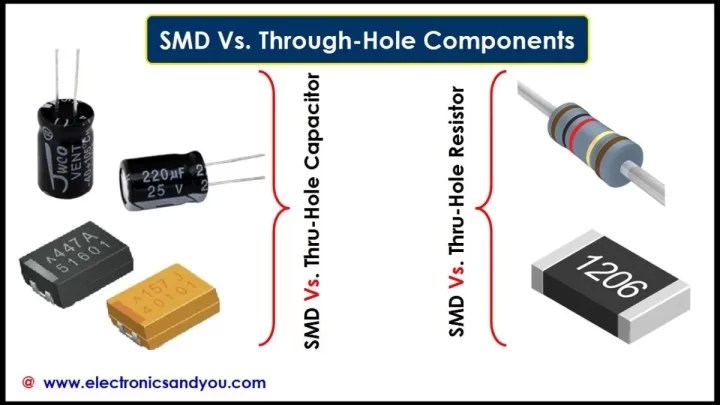
Resistors are one of the most common electronic components. They control the flow of electric current in a circuit. By limiting current, they protect sensitive parts from damage. Resistors also help set voltage levels and divide voltages in circuits. Their simple design hides their important role in electronics.
Function And Types
The main function of a resistor is to reduce current flow. It does this by providing resistance measured in ohms (Ω). Different types of resistors serve various needs in circuits. Common types include:
- Fixed Resistors:Have a set resistance value that does not change.
- Variable Resistors:Allow adjustment of resistance, like a volume knob.
- Carbon Film Resistors:Made from carbon film, used for general purposes.
- Metal Film Resistors:Provide more precision and stability.
- Wirewound Resistors:Made from coiled wire, handle higher power.
Applications In Circuits
Resistors appear in nearly every electronic device. They help control signals and power levels. Some common uses include:
- Setting bias points in amplifiers.
- Protecting LEDs by limiting current.
- Forming voltage dividers to supply different voltages.
- Filtering signals in combination with capacitors.
- Pull-up or pull-down resistors to set logic levels.
Without resistors, circuits would not work safely or correctly. They balance current and voltage, ensuring smooth operation.

Credit: www.electronicsandyou.com
Capacitors
Capacitors are essential electronic components that store and release electrical energy. They consist of two conductive plates separated by an insulating material called a dielectric. Capacitors play a key role in many circuits by managing voltage and smoothing power supply fluctuations.
Varieties And Uses
Capacitors come in many types, each suited for different tasks:
- Ceramic Capacitors:Small, reliable, used in high-frequency circuits.
- Electrolytic Capacitors:Larger, hold more charge, common in power supplies.
- Tantalum Capacitors:Stable, used in portable electronics.
- Film Capacitors:Durable, used in audio and signal processing.
Each type serves specific needs, from filtering noise to timing applications.
Role In Energy Storage
Capacitors store energy by accumulating electric charge on their plates. This energy can be quickly released when needed. They help stabilize voltage by absorbing spikes and filling dips in power supply. In devices, they provide short bursts of energy to keep circuits running smoothly. Capacitors also improve the efficiency and lifespan of electronic equipment.
Inductors
Inductors are essential electronic components that store energy in a magnetic field when electrical current flows through them. You’ll often find them in circuits where controlling current and voltage changes is crucial. Understanding how inductors work can help you design better electronic projects and troubleshoot issues effectively.
Basic Principles
An inductor is basically a coil of wire, usually wound around a core made of magnetic material. When current passes through this coil, it creates a magnetic field around it. This field stores energy temporarily and opposes changes in current, which means inductors resist sudden spikes or drops in current.
The unit of inductance is the henry (H), and it measures how effectively an inductor stores magnetic energy. The larger the inductance, the stronger the magnetic field and the greater the opposition to current changes. You might notice that inductors behave differently depending on the frequency of the current — they allow direct current (DC) to pass but resist alternating current (AC) to varying degrees.
Inductor Applications
Inductors play a vital role in many electronic devices. You’ll find them in power supplies, radio transmitters, and audio equipment. They help smooth out voltage fluctuations, filter noise, and tune circuits to specific frequencies.
- Power Filters:Inductors combined with capacitors form filters that remove unwanted signals or noise from power supplies.
- Transformers:While transformers use multiple inductors, each coil’s inductance helps transfer energy efficiently between circuits.
- Energy Storage:In switching power supplies, inductors store energy during ON cycles and release it during OFF cycles to maintain steady voltage.
Have you ever wondered why some radios can pick up stations clearly while others struggle? The answer often lies in the quality and tuning of inductors within the radio’s circuits. Paying attention to these components can improve your device’s performance significantly.
Diodes
Diodes are fundamental electronic components that control the direction of current flow in circuits. They act like one-way valves, allowing electricity to pass through only in one direction. This simple yet powerful function makes them essential in many devices you use daily, from chargers to radios.
Types Of Diodes
Diodes come in various types, each designed for specific tasks. Here are some common ones:
- Standard Diode:Allows current to flow in one direction and blocks it in the other.
- Zener Diode:Lets current flow backward when a certain voltage is reached, useful for voltage regulation.
- Light Emitting Diode (LED):Emits light when current passes through it.
- Schottky Diode:Has a low forward voltage drop, making it efficient for fast switching.
- Photodiode:Converts light into electrical current.
Each type serves a unique purpose, depending on your project or device needs.
Function In Rectification
One of the most common uses of diodes is in rectification, which means converting alternating current (AC) into direct current (DC). Imagine you have an AC power source but your device needs DC to work properly.
By arranging diodes in specific ways, like a bridge rectifier, you can ensure current flows only in the desired direction. This process is vital for powering electronics safely and efficiently.
Have you ever wondered how your phone charger turns wall AC power into the DC power your battery needs? Diodes are the key players behind that transformation.
Transistors
Transistors are fundamental building blocks in modern electronics. They control the flow of electrical current and act as switches or amplifiers in circuits. Understanding how transistors work can help you design better electronic projects or troubleshoot existing devices.
Working Principle
A transistor controls current through a small input signal. It has three parts: the emitter, base, and collector. When a tiny current flows into the base, it allows a larger current to flow from the collector to the emitter.
This ability to control a large current with a small one makes transistors powerful. You might have noticed how a simple switch controls a light bulb; a transistor does something similar but with electronic signals. It acts like a gate, opening or closing based on the input at the base.
Use In Amplification
One of the most common uses of transistors is amplification. If you’ve ever used a microphone or listened to music on a speaker, transistors are at work making weak signals stronger. They take a small electrical signal and boost its power without changing its original shape.
Imagine trying to speak to a large crowd without a microphone—your voice might not reach everyone. Transistors in amplifiers do the job of making your voice louder electronically. This principle is also why your phone calls, radios, and even hearing aids work effectively.
Integrated Circuits
Integrated circuits form the backbone of modern electronics. These tiny chips contain many electronic components packed into a small area. They help devices run faster and use less power. From smartphones to cars, integrated circuits play a key role in technology.
Definition And Importance
An integrated circuit, or IC, is a set of electronic components built on a small semiconductor chip. It combines transistors, resistors, and capacitors into a single unit. This integration reduces size and cost while improving performance. ICs make electronic devices compact and reliable. They are essential in almost all electronic gadgets today.
Common Ic Types
There are several types of integrated circuits, each with a specific function. Here are some common ones:
- Analog ICs:Handle continuous signals like sound and light.
- Digital ICs:Process binary data using logic gates.
- Microcontrollers:Small computers controlling devices.
- Memory ICs:Store data temporarily or permanently.
- Power ICs:Manage voltage and current in circuits.
Leds
LEDs, or Light Emitting Diodes, are tiny electronic components that produce light when electricity passes through them. Unlike traditional bulbs, they use semiconductors to emit light efficiently. You might already have several LEDs around your home—in your remote controls, indicator lights, or even modern light fixtures.
How Leds Work
LEDs work by allowing electrons to move across a semiconductor material. When electrons jump from one energy level to another, they release energy in the form of light. This process is called electroluminescence.
The color of the light depends on the materials used in the semiconductor. For example, gallium arsenide produces infrared light, while gallium nitride emits blue light. This ability to create different colors without filters makes LEDs highly versatile.
Applications In Lighting
LEDs have transformed the lighting industry. Their low power consumption and long lifespan make them ideal for many uses. You can find LEDs in everything from household bulbs to streetlights and automotive headlights.
Because they produce little heat, LEDs are also perfect for delicate applications like aquarium lighting or electronic displays. Have you noticed how much brighter and energy-efficient your LED bulbs are compared to older incandescent ones? This small component has a big impact on your energy bills and the environment.
Credit: www.electronicsandyou.com
Switches
Switches are essential electronic components that control the flow of electricity in a circuit. They act as gates that open or close to start or stop current. Switches help manage how devices and systems work by controlling their power supply. Their design varies based on the application and the type of control needed.
Types Of Switches
- Toggle Switch:Moves up and down to open or close a circuit.
- Push Button Switch:Activated by pressing a button; can be momentary or latching.
- Slide Switch:Slides from one position to another to switch states.
- Rotary Switch:Rotates to select different circuits or modes.
- Micro Switch:Small and sensitive, often used for precise control.
- Dip Switch:A set of small switches in one package for multiple settings.
Role In Circuit Control
Switches control the path of electric current. They enable turning devices on and off easily. This control prevents damage and conserves power. Switches can also select different functions in complex circuits. They ensure safety by allowing manual interruption of current flow. Without switches, managing circuits would be difficult and unsafe.
Sensors
Sensors are electronic devices that detect and measure changes in the environment. They convert physical parameters into signals that machines can understand. Sensors play a crucial role in modern technology by enabling systems to interact with the real world. They are widely used in various applications, from simple gadgets to complex industrial machines.
Categories Of Sensors
- Temperature Sensors:Measure heat or cold, such as thermistors and thermocouples.
- Pressure Sensors:Detect force applied on surfaces, used in weather stations and cars.
- Proximity Sensors:Sense the presence or absence of objects nearby without contact.
- Light Sensors:Measure the intensity of light, common in smartphones and cameras.
- Motion Sensors:Detect movement, often used in security systems and gaming devices.
- Humidity Sensors:Measure moisture levels in air or materials.
- Gas Sensors:Identify and measure gases like carbon monoxide or methane.
Usage In Automation
Sensors are vital in automation processes across many industries. They provide real-time data to control systems. This data helps machines make decisions without human input. Sensors improve efficiency by monitoring conditions continuously.
In manufacturing, sensors track temperature, pressure, and position to maintain quality. In smart homes, they control lighting and security based on presence and environmental changes. In vehicles, sensors support safety features like collision detection and automatic braking.
Automation systems rely on sensors to reduce errors and save time. They enable machines to respond quickly to changing conditions. This leads to safer and more reliable operations.
Connectors
Connectors are essential electronic components that join circuits together. They allow electrical signals or power to pass from one part to another. These small devices provide a reliable and removable link between wires, cables, and components. Connectors come in many shapes and sizes, designed for various uses in electronic devices.
Types And Functions
Several types of connectors exist, each serving different purposes. Common types include:
- Pin connectors:Simple connectors with metal pins for easy plug-in connections.
- Socket connectors:Receive pins and provide a secure connection.
- USB connectors:Widely used for data transfer and charging.
- Coaxial connectors:Transmit radio frequency signals with low loss.
- Ribbon cable connectors:Connect flat ribbon cables to circuit boards.
Each connector type ensures proper electrical contact and signal integrity. They also allow for quick assembly and disassembly of parts.
Importance In Circuit Assembly
Connectors simplify circuit assembly by making connections fast and reliable. They reduce soldering time and prevent wiring mistakes. Connectors also enable easy repairs and upgrades without damaging components.
Good connectors maintain strong electrical contact, avoiding signal loss or power failures. They protect circuits from vibrations and mechanical stress. Overall, connectors improve the durability and functionality of electronic devices.

Credit: www.electronicsandyou.com
Frequently Asked Questions
What Are The Basic Types Of Electronic Components?
Basic electronic components include resistors, capacitors, inductors, diodes, and transistors. Each serves a unique function in circuits, like controlling current or storing energy.
How Do Resistors Work In Electronic Circuits?
Resistors limit electric current flow and adjust signal levels. They protect components by controlling voltage and current within circuits.
What Role Do Capacitors Play In Electronics?
Capacitors store and release electrical energy. They stabilize voltage, filter signals, and manage power supply fluctuations in devices.
Why Are Diodes Important In Electronic Devices?
Diodes allow current to flow in one direction only. They protect circuits by blocking reverse voltage and converting AC to DC.
Conclusion
Electronic components build every device we use daily. Resistors, capacitors, and transistors each play a unique role. They control electric current and store energy simply. Understanding these parts helps you grasp how electronics work. This knowledge can make learning electronics easier and more fun.
Keep exploring each component to see how they connect. Step by step, electronics become less confusing and more clear. The world of electronics is vast but very interesting.
Leave a Reply