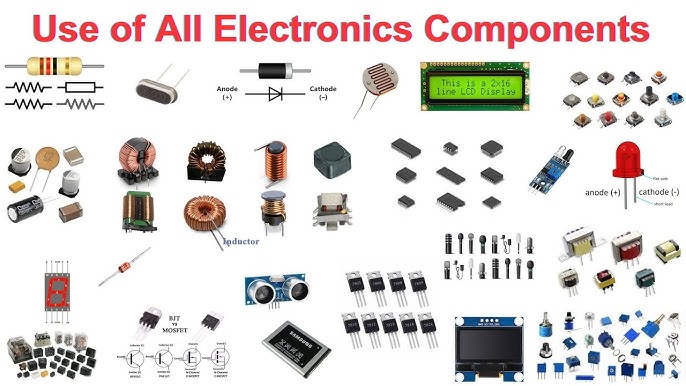
Have you ever wondered what makes your smartphone light up or your TV display clear? The answer lies in tiny parts called electronic components.
These small pieces work together to bring your devices to life, making everyday technology possible. Understanding what these components do can help you see how your gadgets function and even inspire you to create your own projects. Keep reading, and you’ll discover how these essential elements shape the technology you rely on every day.
Basics Of Electronic Components
Electronic components are the building blocks of all electronic devices. They control the flow of electric current and perform various functions. Understanding the basics of these components helps in designing and repairing circuits. Each component has a unique role and works together to create a complete system.
Resistors
Resistors limit the flow of electric current in a circuit. They protect sensitive components from too much current. Resistors come in different sizes and values, measured in ohms (Ω). They are often color-coded to show their resistance value.
Capacitors
Capacitors store and release electrical energy. They help smooth out voltage changes in circuits. Capacitors come in many types, including ceramic and electrolytic. Their capacity is measured in farads (F), usually microfarads (µF) or picofarads (pF).
Diodes
Diodes allow current to flow in only one direction. They protect circuits from damage by blocking reverse current. Light Emitting Diodes (LEDs) are special diodes that emit light when current passes through them.
Transistors
Transistors act as switches or amplifiers in circuits. They control large currents with a small input signal. Transistors are essential in building digital and analog circuits. They come in two main types: NPN and PNP.
Inductors
Inductors store energy in a magnetic field when current flows through them. They resist changes in current and help filter signals. Inductors are often used in power supplies and radios.

Credit: www.tomsonelectronics.com
Resistors And Their Role
Resistors are fundamental components in electronic circuits that control the flow of electric current. Without them, circuits could easily be damaged by excess current or fail to function properly. Understanding their role helps you design and troubleshoot circuits more effectively.
Types Of Resistors
Resistors come in various types, each suited for different needs. The most common are:
- Fixed Resistors:These have a set resistance value that does not change. You often find them in everyday devices to limit current.
- Variable Resistors (Potentiometers):These allow you to adjust resistance manually, useful in volume controls or tuning circuits.
- Thermistors:Their resistance changes with temperature, ideal for temperature sensing and protection.
- Photoresistors:These change resistance based on light exposure, often used in light-sensitive applications.
Knowing the right resistor type can save you from trial and error in your projects.
Applications In Circuits
Resistors perform several crucial tasks in circuits. They limit current to protect delicate components like LEDs and microcontrollers. Without them, your components might burn out quickly.
They also help divide voltage to provide the right levels for different parts of a circuit. Ever wondered how a small sensor gets the right voltage from a battery? Resistors are behind that balance.
Additionally, resistors can shape signals by filtering or timing in combination with capacitors. This is essential in audio devices and communication systems where signal clarity matters.
Capacitors In Electronics
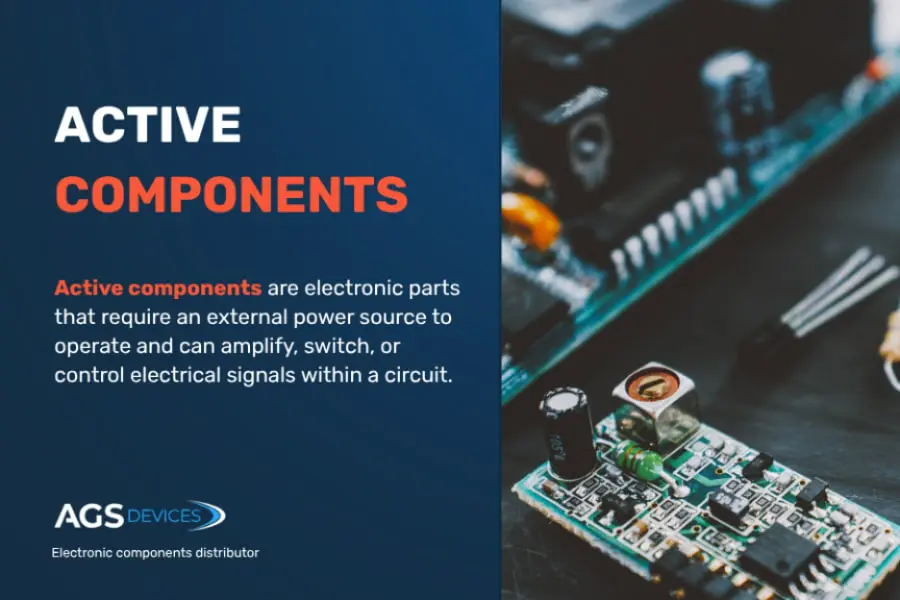
Capacitors are essential parts in electronics. They store and release electrical energy quickly. This ability makes them useful in many devices. Capacitors help control voltage and smooth power supply. They play a key role in circuits and electronic systems.
Types And Uses
Capacitors come in different types. Each type suits specific tasks in electronics.
- Ceramic capacitors:Small, used for high-frequency circuits.
- Electrolytic capacitors:Larger, ideal for power supply filtering.
- Tantalum capacitors:Stable, used in precision circuits.
- Film capacitors:Reliable, found in audio and timing circuits.
Each type offers unique features. These features determine where capacitors are applied.
Storage And Release Of Energy
Capacitors store energy as an electric charge. They hold this charge between two metal plates.
When needed, capacitors release energy fast. This helps in stabilizing voltage and power flow. They prevent sudden drops or spikes in circuits. Capacitors also filter noise and smooth signals.
This quick energy release is crucial in devices like cameras and radios. It ensures smooth and reliable operation.
Credit: www.agsdevices.com
Diodes And Their Functions
Diodes are essential electronic components that control the flow of electric current. They allow current to pass in one direction and block it in the opposite. This simple function is vital in many electronic circuits. Diodes protect circuits, convert signals, and regulate voltage. Understanding diodes helps in grasping how many devices work.
Rectification Process
The rectification process converts alternating current (AC) into direct current (DC). Diodes act as one-way valves in this process. They allow current to flow during the positive half-cycle of AC. During the negative half-cycle, diodes block the current. This creates a pulsating DC output. Rectifiers are used in power supplies to provide steady DC voltage.
Types Of Diodes
Different types of diodes serve different purposes in electronics. Here are some common types:
- Standard Diode:Used for basic rectification and switching.
- Zener Diode:Maintains a fixed voltage, used in voltage regulation.
- Light Emitting Diode (LED):Emits light when current flows through it.
- Schottky Diode:Has a low forward voltage drop, useful for fast switching.
- Photodiode:Converts light into electrical current.
Each type has unique features and applications in electronics.
Transistors As Amplifiers And Switches
Transistors are essential in electronics for controlling and amplifying electrical signals. They work mainly as amplifiers and switches, making devices smarter and more efficient. Amplifiers boost weak signals to stronger levels, while switches control the flow of current in circuits.
Bipolar Junction Transistors
Bipolar Junction Transistors (BJTs) have three layers: emitter, base, and collector. Small current at the base controls a larger current between emitter and collector. This property makes BJTs ideal for amplification. They also act as switches by turning current fully on or off. BJTs are common in audio amplifiers and switching circuits.
Field Effect Transistors
Field Effect Transistors (FETs) use voltage to control current flow. They have three terminals: source, gate, and drain. Voltage at the gate controls current between source and drain. FETs have high input resistance, making them efficient amplifiers. They switch faster and use less power than BJTs. FETs are popular in digital circuits and radio frequency amplifiers.
Inductors And Their Uses
Inductors are key electronic components used in many circuits. They store energy in a magnetic field when electric current flows through them. This ability makes inductors useful in controlling current and voltage in devices. Their simple coil design helps manage electrical signals efficiently.
Energy Storage In Magnetic Field
Inductors store energy by creating a magnetic field around the coil. When current passes through, the magnetic field builds up. If the current changes, the magnetic field changes too. This change opposes sudden shifts in current, helping stabilize circuits. The stored energy can be released back into the circuit as needed.
Common Applications
- Filtering noise in power supplies
- Energy storage in switching power supplies
- Creating tuned circuits in radios
- Managing current in transformers
- Signal processing in audio equipment
Integrated Circuits
Integrated circuits (ICs) are the tiny powerhouses behind almost every electronic device you use daily. They combine multiple electronic components like transistors, resistors, and capacitors into a single chip. This compact design saves space and improves performance, making modern gadgets possible.
Functions And Types
Integrated circuits perform a variety of functions depending on their design. They can amplify signals, process data, or store information. You’ll find ICs in everything from your smartphone to your car’s control systems.
- Analog ICs:Handle continuous signals, like audio or radio waves.
- Digital ICs:Process binary data, essential in computers and digital devices.
- Mixed-Signal ICs:Combine analog and digital functions for complex tasks.
Think about your laptop. Inside, thousands of digital ICs work together to run applications smoothly. Without these chips, the device would be bulky and slow.
Impact On Modern Technology
Integrated circuits have transformed technology by making devices smaller, faster, and more reliable. They allow manufacturers to add more features without increasing size or cost. This efficiency has led to advancements in fields like healthcare, communication, and entertainment.
Have you noticed how your smartphone fits so much into a slim frame? That’s the power of ICs at work. They’ve made technology accessible and affordable for millions.
What kind of new devices could you imagine if ICs continue to evolve and shrink further? Your next gadget might be smarter and more powerful than you expect.

Credit: www.youtube.com
Sensors And Their Importance
Sensors play a crucial role in how electronics interact with the world around them. They detect changes in the environment and convert these into signals that electronic devices can understand. Without sensors, many modern technologies we rely on daily would not function efficiently or at all.
Types Of Sensors
You encounter different types of sensors every day, often without noticing. Each type serves a specific purpose by detecting various physical quantities:
- Temperature Sensors:Measure heat levels, used in thermostats and weather stations.
- Proximity Sensors:Detect the presence or absence of an object nearby, common in smartphones and cars.
- Light Sensors:Adjust screen brightness on your devices by sensing ambient light.
- Motion Sensors:Trigger alarms or lights when movement is detected, essential in security systems.
- Pressure Sensors:Found in automotive and industrial equipment to monitor pressure changes.
Think about your smartphone’s ability to turn off the screen when you bring it close to your ear. That’s a proximity sensor in action, saving battery and preventing accidental touches.
Role In Automation
Sensors are the eyes and ears of automation systems. They provide real-time data that allows machines to make decisions without human intervention.
In manufacturing, sensors ensure machines operate safely and efficiently by monitoring temperature, pressure, and position continuously. This reduces errors and downtime.
Have you ever wondered how self-driving cars navigate streets safely? They rely heavily on sensors like LIDAR and cameras to understand their surroundings instantly.
Without sensors, automation would lack the responsiveness needed to adapt to changing conditions. Your smart home devices, automated factories, and even medical equipment depend on accurate sensor input to perform reliably.
Microcontrollers In Electronics
Microcontrollers are the tiny brains inside many electronic devices you use every day. They control functions and make devices smarter by processing inputs and managing outputs. Understanding how microcontrollers work can help you appreciate the technology behind everyday gadgets.
Programming And Functionality
Microcontrollers are programmed with specific instructions to perform tasks. You write code that tells the microcontroller what to do, such as reading sensors or controlling motors. This programming allows the device to respond automatically without human intervention.
The functionality of a microcontroller depends on its hardware and software working together. It can handle multiple tasks at once, like turning on a light when it detects motion or adjusting temperature based on sensor data. Have you ever thought about how your microwave knows exactly when to stop heating your food? That’s a microcontroller at work.
Applications In Daily Life
Microcontrollers are everywhere—from your smartphone to your washing machine. They manage displays, sensors, and communication in devices you rely on every day. Without microcontrollers, many modern conveniences would not exist.
- In cars, microcontrollers control engine functions and safety systems like airbags.
- In home automation, they manage lighting, heating, and security systems.
- Wearable devices use microcontrollers to track your health and fitness data.
Think about your morning routine. How many devices do you interact with that contain microcontrollers? Recognizing their role helps you understand the technology that makes life more efficient and connected.
Future Trends In Electronic Components
The future of electronic components is shaping how devices will become smarter, faster, and more efficient. As technology evolves, these components play a crucial role in transforming everyday gadgets and complex systems alike. Understanding upcoming trends helps you anticipate changes and adapt your projects or products accordingly.
Advancements In Miniaturization
Electronic components are getting smaller while packing more power. This trend allows devices to be lighter and more portable without sacrificing performance.
Think about your smartphone: its power and capabilities continue to grow even as the device gets slimmer. This happens because components like microchips and sensors are shrinking in size.
You might wonder how small these components can go. Researchers are already working on nanoscale electronics, which could open doors to wearable tech that’s almost invisible and implantable medical devices that monitor your health in real-time.
Emerging Technologies
New technologies are changing the way electronic components function and interact. For example, flexible electronics are allowing devices to bend and stretch while maintaining their electrical properties.
Another exciting development is in quantum computing components, which promise to solve problems that traditional computers can’t handle efficiently. This could impact fields from cryptography to drug discovery.
Are you ready to experiment with components that use new materials like graphene or organic semiconductors? These materials offer better conductivity and durability, pushing the limits of what electronics can do.
Frequently Asked Questions
What Are The Primary Functions Of Electronic Components?
Electronic components control electrical signals, manage power flow, and process data. They enable devices to operate efficiently and perform specific tasks in circuits.
How Do Electronic Components Improve Device Performance?
Components like resistors and capacitors regulate voltage and current, enhancing stability. They optimize signal quality and ensure reliable operation in electronic devices.
Why Are Electronic Components Essential In Modern Technology?
They form the building blocks of all electronic gadgets, enabling communication, computing, and automation. Without them, modern devices would not function.
What Types Of Electronic Components Are Commonly Used?
Common types include resistors, capacitors, diodes, transistors, and integrated circuits. Each serves a unique role in circuit design and functionality.
Conclusion
Electronic components play a key role in everyday devices. They help control, connect, and power machines. Without them, many gadgets would not work properly. These parts make technology simple and useful. Understanding their purpose helps us appreciate how things function.
Electronics shape our world quietly but strongly. They continue to improve and support modern life. Small pieces, big impact.
Leave a Reply