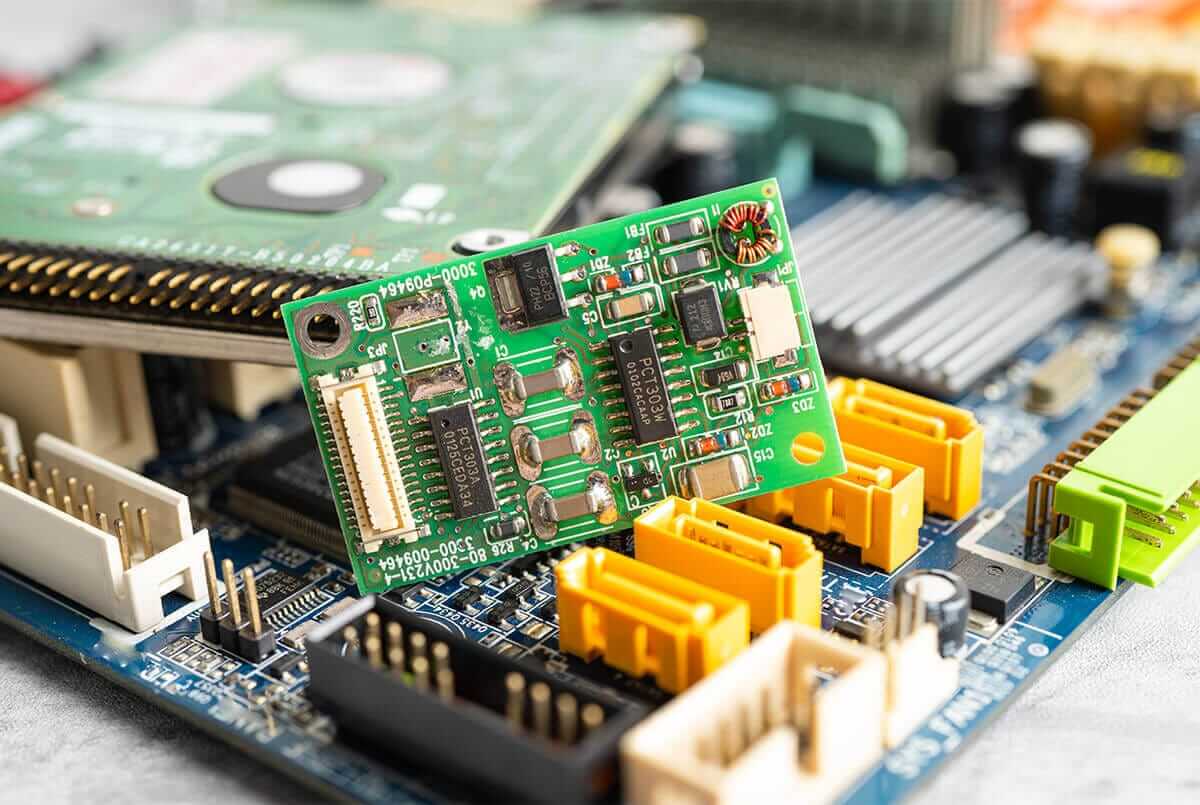
Are you curious about how to name electronic components in German? Whether you’re learning the language, working on a technical project, or simply want to expand your vocabulary, knowing the right terms can make a big difference.
Imagine confidently identifying resistors, capacitors, and diodes without hesitation. You’ll discover clear and simple translations that will boost your understanding and help you communicate more effectively. Ready to power up your language skills? Let’s dive in!

Credit: www.mygermanuniversity.com
Basics Of Electronic Components
Electronic components form the foundation of all electronic devices. They control electric currents and signals. Understanding their basic names helps in learning electronics. Knowing these terms in German is useful for students and professionals working with German manuals or components.
Common Terms In English And German
| English | German |
|---|---|
| Resistor | Widerstand |
| Capacitor | Kondensator |
| Inductor | Induktor |
| Transistor | Transistor |
| Diode | Diode |
| Integrated Circuit | Integrierter Schaltkreis |
| Switch | Schalter |
| Battery | Batterie |
Importance In Modern Technology
Electronic components enable all modern gadgets to work properly. They help in processing signals, storing energy, and controlling power flow. Without these parts, devices like smartphones, computers, and TVs would not function.
They make technology smaller, faster, and more efficient. Engineers rely on these components to create new devices. Learning their names in different languages aids global communication and understanding.

Credit: tbaglobal.com
Translating Electronic Components
Translating electronic components into German might seem straightforward, but it often surprises you how specific terms vary and what nuances they carry. If you’re working on a project or reading German technical manuals, knowing the exact terms can save you time and confusion. Let’s look at some common components and their German names to help you navigate this language landscape with confidence.
Resistors And Their German Equivalents
Resistors are fundamental in any circuit, and in German, they are called Widerstände. The word directly relates to their function—to resist electrical current. You’ll often see abbreviations like Rused in schematics, which is universal, but knowing the term helps when searching for parts or reading datasheets in German.
For example, a 10k resistor is referred to as a 10-kilo-Ohm-Widerstand. If you ever visit a German electronics store or website, this is the term you’ll want to use. Have you ever stumbled over a label only to realize the name was just a language barrier?
Capacitors In German Language
Capacitors translate to Kondensatorenin German. This term might sound a bit more complex than its English counterpart, but it’s commonly used in all technical materials. The abbreviation Cremains the same across languages, which makes identifying them easier in circuit diagrams.
One practical tip: when ordering a capacitor online from a German supplier, search for Kondensatoralong with the capacitance value. This small detail can make your search much faster and more accurate. How often do you find yourself lost in translation with technical terms?
Diodes And How They Are Referred To In German
Diodes are known as Diodenin German, a term that closely resembles the English word. This similarity helps you instantly recognize the component, whether you’re reading a textbook or a parts catalog. The symbol and abbreviation Dare also consistent, aiding visual identification.
Knowing this term is crucial when troubleshooting or building circuits using German instructions. Imagine missing a critical step just because the word looked unfamiliar—knowing Diodenkeeps you on track. Have you noticed how some technical terms stay surprisingly close across languages?
Semiconductor Devices
Semiconductor devices are the heart of modern electronics. They control electrical signals and power in gadgets. These components work by managing the flow of current through materials like silicon. Knowing their German names helps in understanding technical manuals and datasheets.
In German, semiconductor devices include various components such as transistors and integrated circuits. Each has a specific term that engineers and technicians use daily. This section explains these key terms clearly.
Transistors In German Terminology
Transistors amplify or switch electronic signals. In German, a transistor is called Transistor. The word is pronounced similarly but spelled the same as in English. Types of transistors also have German names:
- Bipolar Junction Transistor– Bipolartransistor
- Field Effect Transistor– Feldeffekttransistor
- Metal-Oxide-Semiconductor FET– Metall-Oxid-Halbleiter-Feldeffekttransistor
These terms are common in German electronics literature and manuals.
Integrated Circuits And Their German Names
Integrated circuits combine many semiconductor devices on one chip. The German word for integrated circuit is Integrierter Schaltkreis, often shortened to IC. Another common term is Mikrochip.
Types of ICs in German include:
- Analog Integrated Circuit– Analoger integrierter Schaltkreis
- Digital Integrated Circuit– Digitaler integrierter Schaltkreis
- Microcontroller– Mikrocontroller
These terms are essential for reading datasheets and technical documents in German.
Passive Components
Passive components are the backbone of any electronic circuit. They don’t require power to operate but influence the flow of electrical signals in various ways. Understanding their German names can help you navigate datasheets, manuals, or even communicate more effectively with German-speaking engineers.
Inductors And Their German Translation
Inductors, known as “Spulen”in German, are components that store energy in a magnetic field when electrical current flows through them. You might see the term “Drossel”used as well, especially for choke inductors designed to block high-frequency signals.
When shopping for inductors in Germany, labels often include:
- Spule– general inductor
- Drossel– choke coil
- Induktivität– inductance value
Knowing these terms helps you identify parts quickly. Have you ever struggled to find the right inductor because of language barriers? Learning these few words can save you hours.
Transformers In The German Context
Transformers are called “Transformatoren”in German. The word is quite similar to English, which makes it easier to remember.
In German technical documents, you might encounter specific types like:
- Netztransformator– mains transformer
- Übertrager– signal transformer
- Trenntransformator– isolation transformer
These terms clarify the transformer’s purpose in the circuit. If you are repairing or designing equipment, knowing the precise term can help avoid mistakes. How often do you check component specifications closely enough to catch these nuances?
Active Components
Active components are essential parts of electronic circuits. They control the flow of electricity and amplify signals. These components need a power source to work. Understanding their German names helps in learning and buying parts in Germany or from German catalogs.
Power Supplies And German Naming
Power supplies provide energy to electronic devices. In German, they are called Stromversorgungor Netzteil. The word Netzteilmeans “power unit.” It converts electrical power into the right voltage and current. Different types include:
- Gleichstromversorgung– direct current supply
- Wechselstromversorgung– alternating current supply
- Schaltnetzteil– switch mode power supply
Knowing these terms helps in selecting the right power supply for your project.
Switches And Relays In German
Switches control the connection of a circuit. The German word is Schalter. It can mean a simple on/off switch or more complex types. Relays, called Relaisin German, are electrically operated switches. They control high power circuits using a low power signal. Common terms include:
- Kippschalter– toggle switch
- Druckschalter– push button switch
- Leistungsschalter– circuit breaker
- Elektromagnetisches Relais– electromagnetic relay
These terms help identify and discuss control components in German electronics.
Specialized Components
Specialized electronic components play a vital role in modern technology. These parts have specific functions in devices, making them essential for advanced applications. Understanding their German names helps in technical discussions and product searches. This section covers sensors and optoelectronic devices, two important categories of specialized components.
Sensors And Their German Counterparts
Sensors detect changes in the environment and convert them into signals. They are found in many everyday devices. In German, sensors are called Sensoren.
- Temperature sensor – Temperatursensor
- Pressure sensor – Drucksensor
- Motion sensor – Bewegungsmelder
- Light sensor – Lichtsensor
Knowing these terms helps when reading manuals or buying parts in German markets. Sensors improve automation, safety, and user experience.
Optoelectronic Devices In German
Optoelectronic devices use light to perform electronic functions. They include LEDs, photodiodes, and lasers. The German word for optoelectronic devices is Optoelektronische Bauteile.
- LED (Light Emitting Diode) – Leuchtdiode (LED)
- Photodiode – Photodiode
- Laser diode – Laserdiode
- Optocoupler – Optokoppler
These components are common in communication, sensing, and lighting systems. Learning their names aids in understanding technical documents and ordering parts.
Practical Tips For Learning
Learning the German names for electronic components can feel overwhelming at first. The key is to approach it with practical strategies that make the process smoother and more enjoyable. You can improve your vocabulary by using targeted resources and adopting effective learning techniques that stick.
Resources For German Technical Vocabulary
Start with specialized dictionaries and glossaries focused on electronics. Websites like PONSor dict.ccoffer reliable translations and example sentences.
Look for German electronics forums and YouTube channels where native speakers discuss components in real contexts. This helps you see how terms are used naturally, beyond just the dictionary definition.
Consider flashcard apps like Anki or Quizlet tailored to technical vocabulary. You can find or create decks specifically for electronic components, making repetition easy and accessible anytime.
Effective Learning Strategies For Technical Terms
Don’t just memorize words; connect them to images and real devices you use. For example, when learning “der Widerstand” (resistor), hold a resistor in your hand and say the word aloud. This builds a stronger memory link.
Practice writing simple sentences with new terms. Instead of isolated words, try: “Der Kondensator speichert elektrische Ladung” (The capacitor stores electric charge). This helps your brain understand how terms fit into sentences.
Test yourself regularly with quizzes or by labeling your own electronic components in German. The act of retrieval improves retention far better than passive review.
Are you actively using the terms in conversations or writing? Engaging with others, even in short exchanges, forces you to recall and apply your vocabulary. This interaction sharpens your skills faster than solo study.
Credit: www.we-online.com
Frequently Asked Questions
What Is The German Word For Electronic Components?
The German term for electronic components is “elektronische Bauteile. ” It broadly covers parts used in electronic circuits and devices.
How Do You Say Resistor In German?
A resistor is called “Widerstand” in German. It controls electrical current flow in a circuit.
What Is The German Term For Capacitor?
In German, a capacitor is known as “Kondensator. ” It stores electrical energy temporarily.
How Do You Say Diode In German?
The word for diode in German is “Diode. ” It allows current to flow in one direction only.
Conclusion
Knowing the German names for electronic parts helps in learning and work. It makes reading manuals and guides easier. You can communicate clearly with German speakers in electronics. This small step improves your skills and confidence. Keep practicing these words every day.
Soon, they will feel natural to you. Understanding these terms opens new doors in technology and education. It’s a useful skill for students and professionals alike. Remember, simple words build strong knowledge. Keep exploring and learning with curiosity.
Leave a Reply