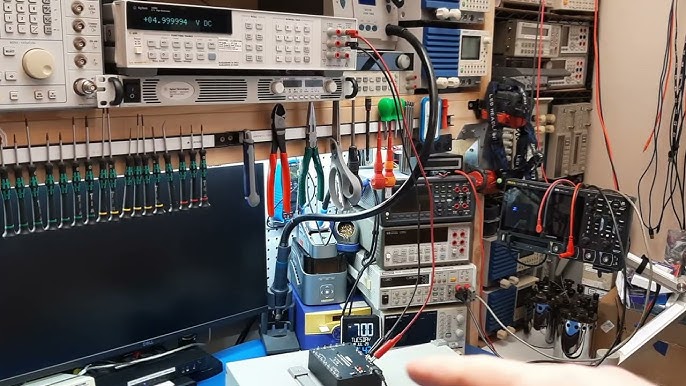
Are you ready to take your hobby workbench to the next level? Choosing the right electronics test equipment can make all the difference between frustration and success.
Whether you’re fixing gadgets, building circuits, or experimenting with new projects, having the right tools will save you time and help you work smarter. You’ll discover which essential test equipment you really need—and why each one matters to your hobby work.
Get ready to transform your workspace and boost your confidence with gear that fits your goals perfectly. Keep reading, and let’s find the perfect tools for your electronics adventures!

Credit: makezine.com
Choosing The Right Multimeter
Choosing the right multimeter is essential for any hobby workbench. This tool helps measure voltage, current, and resistance with ease. Picking the right type makes projects simpler and safer. Understanding the differences and features guides you to the best choice. Below are key points to consider when selecting your multimeter.
Digital Vs Analog Multimeters
Digital multimeters show readings on a screen. They are easy to read and more accurate. Analog multimeters use a needle to show values. They can show trends and changes quickly. Digital meters are common for hobbyists due to precision. Analog meters may suit those who prefer visual feedback.
Key Features To Look For
- Auto-ranging function for easy measurement selection
- Clear display with backlight for low light use
- Durable build to withstand drops and rough use
- Multiple measurement modes like voltage, current, and resistance
- Data hold option to freeze readings for review
- Safety ratings such as CAT II or CAT III for protection
Recommended Models For Hobbyists
| Model | Type | Main Features | Price Range |
|---|---|---|---|
| Fluke 117 | Digital | Auto-ranging, backlight, True RMS | Mid to high |
| AstroAI Digital Multimeter | Digital | Large display, data hold, affordable | Low to mid |
| Simpson 260 | Analog | Classic design, durable, reliable | Mid |

Credit: k4fmh.com
Oscilloscope Essentials
An oscilloscope is one of the most valuable tools on your hobby workbench. It lets you visualize electrical signals, which helps you understand how circuits behave in real time. Choosing the right oscilloscope can make your troubleshooting more efficient and your projects more successful.
Basic Functions And Uses
Oscilloscopes display voltage signals as waveforms on a screen. This lets you see signal patterns, measure frequencies, and identify noise or glitches. You can test audio circuits, microcontrollers, power supplies, and more with these insights.
Most scopes offer controls for adjusting time base, voltage scale, and triggering. Triggering lets you stabilize repetitive waveforms so you can analyze them clearly. Without these basics, you’d be guessing what’s happening inside your circuit.
Entry-level Vs Advanced Scopes
Entry-level oscilloscopes cover essential features at a budget-friendly price. They usually have lower bandwidth and sample rates, but still handle common signals like audio and low-frequency digital pulses. These are great if you’re just starting out or working on straightforward projects.
Advanced scopes offer higher bandwidth, deeper memory, and more analysis tools. They support complex signals and faster electronics, like RF or high-speed digital. You might not need these features immediately, but consider them if you plan to work on sophisticated designs.
| Feature | Entry-Level | Advanced |
|---|---|---|
| Bandwidth | Up to 100 MHz | 100 MHz and above |
| Sample Rate | 100 MS/s | 1 GS/s or higher |
| Memory Depth | Limited | Large, for detailed captures |
| Price Range | $200 – $600 | $1000 and up |
Portable Oscilloscope Options
Portability can be a game changer if you work on projects away from your main bench. Handheld oscilloscopes are compact and battery-powered, perfect for quick field diagnostics. Some models even connect to smartphones or tablets, turning your device into a display.
Keep in mind that portable scopes often have lower specs than bench models. But the convenience might outweigh this if you value mobility. What’s more useful to you: higher specs or the ability to carry your scope anywhere?
Signal Generators And Their Uses
Signal generators are essential tools for anyone working on electronic hobby projects. They produce electrical signals with set frequencies and waveforms, allowing you to test and troubleshoot circuits effectively. Whether you’re designing audio equipment or experimenting with radio frequencies, having a reliable signal generator can save you time and improve your results.
Types Of Signal Generators
There are several types of signal generators, each suited for different tasks. The most common are:
- Function Generators:Produce basic waveforms like sine, square, and triangle waves. Ideal for general testing.
- RF Signal Generators:Generate radio frequency signals, useful for wireless and communication projects.
- Arbitrary Waveform Generators (AWG):Allow you to create custom, complex waveforms beyond basic shapes.
Choosing the right type depends on what signals you need to test in your projects. Do you primarily work with audio frequencies, or do you need signals in the RF range?
Applications In Hobby Projects
Signal generators can be used in many practical ways on your workbench. They help you simulate input signals for amplifiers, filters, and other circuit components.
For example, if you’re building a radio receiver, an RF signal generator lets you test reception and tuning accuracy. In audio projects, a function generator can provide the test tones needed to adjust sound quality.
These tools also aid in troubleshooting. If a circuit isn’t working as expected, feeding it a known signal lets you isolate where the problem lies. How often do you find yourself guessing what went wrong without a reliable test signal?
Affordable Signal Generator Picks
Good signal generators don’t have to break your budget. Here are some cost-effective options that deliver solid performance for hobbyists:
| Model | Type | Frequency Range | Price |
|---|---|---|---|
| JDS6600 | Function/Arbitrary | 1µHz to 60MHz | Under $100 |
| FeelTech FY6600 | Function/Arbitrary | 1µHz to 60MHz | Under $90 |
| Siglent SDG1032X | Function/Arbitrary | 1µHz to 30MHz | About $350 |
These models offer a great balance between cost and capability. They’re perfect if you want to test a wide range of circuits without spending a fortune. Which one fits your current and future projects best?
Power Supplies For Hobby Workbench
A reliable power supply is essential for any hobby workbench. It provides the steady voltage and current needed to test and power electronic circuits. Choosing the right power supply can make your projects easier and safer.
Power supplies vary in features and capabilities. Understanding the differences helps select the best one for your needs. Safety and ease of use are important factors to consider.
Adjustable Vs Fixed Power Supplies
Fixed power supplies deliver a single, constant voltage. They are simple and often less expensive. Ideal for projects with known voltage requirements.
Adjustable power supplies let you change voltage and current limits. They offer flexibility for different projects and testing conditions. Most hobbyists prefer adjustable units for versatility.
Adjustable units usually have digital or analog displays. This helps monitor output values clearly. Some models also include multiple outputs for convenience.
Safety Features To Consider
- Overvoltage Protection:Prevents damage by shutting off if voltage gets too high.
- Overcurrent Protection:Limits current to avoid overheating or component failure.
- Short Circuit Protection:Automatically stops output if a short is detected.
- Cooling Fan:Keeps the power supply from overheating during long use.
- Insulated Case:Reduces risk of electric shock.
Choose a power supply with these features for safe and reliable operation.
Top Power Supplies For Beginners
| Model | Type | Voltage Range | Current Limit | Price Range |
|---|---|---|---|---|
| Korad KA3005P | Adjustable | 0-30V | 0-5A | $$ |
| TekPower TP3005T | Adjustable | 0-30V | 0-5A | $ |
| Eventek KPS305D | Adjustable | 0-30V | 0-5A | $ |
| Ruideng DPS3005 | Adjustable | 0-30V | 0-5A | $$ |
These models offer a good balance of price, features, and safety. Perfect for beginners starting electronics projects.
Soldering And Desoldering Tools
Soldering and desoldering tools are the backbone of any hobby workbench focused on electronics. These tools allow you to assemble, modify, and repair circuits with precision and ease. Choosing the right equipment can save you time, improve your work quality, and even protect delicate components from damage.
Essential Soldering Equipment
At a minimum, you need a reliable soldering iron with adjustable temperature control. This feature helps you work with different types of solder and components without overheating them.
Other essentials include:
- Solder wire:Choose a rosin-core solder with a diameter suitable for your projects, typically around 0.7mm.
- Soldering stand:Keeps your iron safely in place and prevents accidents.
- Tip cleaner:Brass wool or a damp sponge helps maintain the soldering iron tip for better heat transfer.
- Heat-resistant mat:Protects your work surface from accidental burns.
Have you noticed how a clean, well-maintained tip makes soldering smoother and faster? That’s the difference good tools can make.
Desoldering Techniques And Tools
Removing solder without damaging components is just as important as applying it. For this, you need effective desoldering tools and techniques.
- Desoldering pump (solder sucker):A simple and affordable tool for quickly removing molten solder.
- Desoldering braid (wick):Copper braid absorbs solder when heated, perfect for cleaning pads and joints.
- Hot air rework station:Ideal for surface-mount devices and more delicate work, allowing you to heat components evenly.
Try practicing desoldering on old circuit boards to develop a steady hand and avoid common mistakes like lifting pads. How often do you find that mastering desoldering actually improves your soldering skills?
Maintaining Your Soldering Gear
Regular maintenance extends the life of your soldering tools and keeps your work crisp. Always clean the soldering iron tip before and after each use to prevent oxidation.
Replace worn tips promptly and avoid using abrasive materials that can damage the plating. Periodically check your soldering iron’s cord and connections for safety.
Have you ever experienced frustration because your soldering iron wasn’t heating properly? Proper care prevents those moments and keeps your workflow smooth.
Additional Handy Test Equipment
Adding extra tools to your electronics test equipment collection can save time and improve accuracy on your hobby workbench. These handy gadgets go beyond the basics like multimeters and oscilloscopes, offering new ways to understand and troubleshoot your projects. Let’s look at some useful devices that can make your testing process smoother and more insightful.
Logic Analyzers And Their Benefits
Logic analyzers help you capture and analyze digital signals, which is essential when working with microcontrollers or digital circuits. They let you see multiple channels at once, making it easier to spot timing issues or communication errors. If you’ve struggled to debug a complex digital project, a logic analyzer can be a game-changer.
Using one, you can record signal patterns and decode protocols like SPI or I2C. This detailed view often reveals problems that a simple multimeter or oscilloscope might miss. Are you ready to dive deeper into your digital circuits and gain better control over your code and hardware?
Component Testers For Quick Checks
Component testers are small, affordable devices that quickly identify and measure common parts like resistors, capacitors, transistors, and diodes. They save you the hassle of guessing or manually testing components one by one. I’ve found them especially handy when sorting through mixed parts bins or repairing unknown boards.
These testers can tell you values and pinouts within seconds, speeding up your workflow and reducing errors. If you often work with salvaged or unlabeled parts, adding a component tester to your bench is a smart move. Wouldn’t you like to spend less time confirming parts and more time building?
Thermal Cameras And Ir Thermometers
Thermal cameras and infrared thermometers let you see heat patterns and measure temperatures without touching your circuit. This is crucial for spotting overheating components or uneven heat distribution that could signal a problem. I once caught a faulty voltage regulator early because the thermal camera showed a hot spot I wouldn’t have noticed otherwise.
These tools are great for checking power supplies, motors, or any device where heat is a factor. They help prevent damage and improve safety on your workbench. Could detecting hidden heat issues save your next project from unexpected failure?
Setting Up Your Workbench Efficiently
Setting up your electronics workbench efficiently is key to boosting productivity and maintaining a safe, organized space. A well-planned setup helps you find tools quickly and keeps your projects running smoothly. Let’s look at how to organize your tools, ensure safety, and manage power and lighting effectively.
Organizing Tools And Equipment
Arrange your tools so you can reach the most used ones without hassle. Use pegboards or magnetic strips on the wall to hang screwdrivers, pliers, and wire cutters. Small parts like resistors, capacitors, and screws belong in clear, labeled bins or drawer organizers.
Keep your test equipment, such as multimeters and oscilloscopes, on sturdy shelves or dedicated stands. This prevents clutter and protects delicate devices from accidental damage. Have a specific spot for cables and probes—coil them neatly to avoid tangles.
Safety Precautions And Workspace Tips
Electrical safety cannot be overlooked. Make sure your workbench surface is non-conductive to avoid shocks. Keep a fire extinguisher rated for electrical fires within easy reach and know how to use it.
Wear safety glasses when soldering or testing circuits under power. Keep liquids away from your workspace to prevent short circuits. Ventilate the area well, especially if you’re soldering, to avoid inhaling fumes.
Power Management And Lighting
Plan your power outlets to avoid overloading circuits. Use surge protectors to safeguard sensitive electronics from power spikes. Consider installing a power strip with individually switched outlets for better control over your devices.
Good lighting is essential—choose bright, adjustable LED lamps to reduce eye strain. Position lights so they don’t cast shadows on your work area. Natural daylight near your bench is a bonus, but don’t rely on it alone.

Credit: dronebotworkshop.com
Frequently Asked Questions
What Basic Electronics Test Tools Do Beginners Need?
Beginners should start with a multimeter, soldering iron, and oscilloscope. These tools help measure voltage, current, and signal waveforms. They are essential for troubleshooting and building circuits. Investing in quality basics ensures accurate readings and smooth hobby projects.
How To Choose The Right Oscilloscope For Hobby Use?
Select an oscilloscope with at least 50 MHz bandwidth and two channels. Look for a compact design and easy interface. Budget models from reputable brands offer good value. Ensure it can measure common signals in your projects clearly.
Why Is A Multimeter Essential For A Hobby Workbench?
A multimeter measures voltage, current, and resistance quickly. It helps diagnose faults and verify circuit functionality. It is versatile, affordable, and easy to use. Having a reliable multimeter saves time and prevents errors in electronics work.
What Role Does A Signal Generator Play In Testing?
A signal generator creates test signals to simulate electronic circuits. It helps check response, tune filters, and debug devices. Hobbyists benefit from basic function generators for waveform variety. It’s a valuable tool for advanced circuit experimentation.
Conclusion
Choosing the right electronics test equipment is vital for a hobby workbench. Basics like multimeters and soldering irons are essential. Oscilloscopes and function generators can enhance your projects. Consider your projects’ needs and budget when selecting tools. Quality tools make a difference in results and safety.
Start with essentials, then expand your collection. Keep learning and experimenting with new tools. This approach will keep your hobby exciting and rewarding. Remember, the right tools can open up endless possibilities. Happy tinkering, and may your projects be successful!
Leave a Reply