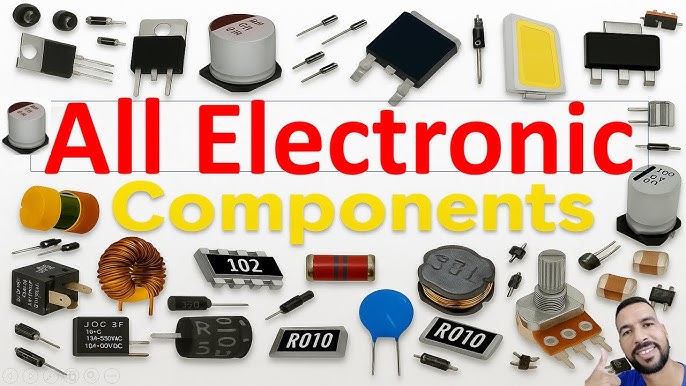
Have you ever wondered what makes your smartphone, TV, or computer work? The secret lies in tiny parts called electronic components.
These small pieces are the building blocks that bring your devices to life. Understanding what an electronic component is can open up a whole new world of technology right at your fingertips. Keep reading, and you’ll discover how these simple parts play a powerful role in the gadgets you use every day.

Credit: www.reddit.com
Basics Of Electronic Components
Electronic components are the building blocks of all electronic devices. They control the flow of electric current and help perform specific tasks. Understanding the basics of electronic components is essential for anyone interested in electronics. These parts come in many shapes and sizes, each serving a unique purpose.
Electronic components work together to create circuits. These circuits power gadgets, machines, and many modern tools. Simple parts like resistors or capacitors combine to form complex systems. Knowing their roles helps you grasp how electronics function.
ResistorsResistors limit the flow of electric current. They protect sensitive parts by reducing current. Resistors come in different values, measured in ohms. They are one of the most common components in electronics.
CapacitorsCapacitors store and release electrical energy quickly. They smooth out voltage changes in circuits. Capacitors help improve the performance of electronic devices. They are measured in farads.
DiodesDiodes allow current to flow in one direction only. They protect circuits from damage caused by reverse current. LEDs (Light Emitting Diodes) are a popular type of diode that emits light.
TransistorsTransistors act as switches or amplifiers in circuits. They control large currents with small electrical signals. Transistors are key to building complex electronic devices.
Integrated Circuits (ICs)Integrated Circuits contain many tiny components on one chip. They perform various functions like processing or memory storage. ICs make electronic devices smaller and more efficient.
Credit: www.agsdevices.com
Types Of Electronic Components
Electronic components are the building blocks of electronic devices. They come in various types, each serving a specific role. Understanding these types helps in grasping how electronic circuits work. Components fall into three main categories based on their functions and behavior.
Active Components
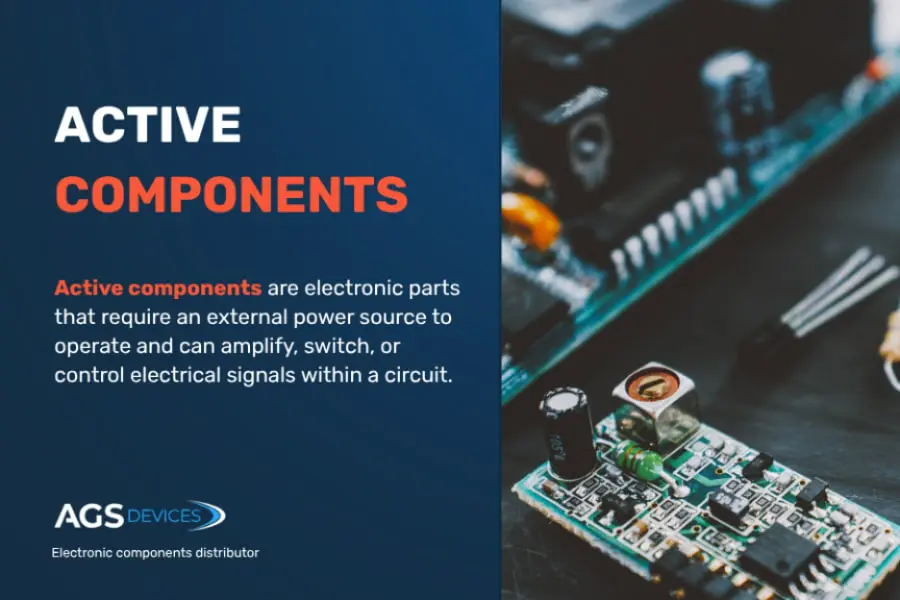
Active components control the flow of electricity. They can amplify signals or produce energy. Examples include transistors, diodes, and integrated circuits. These parts need an external power source to operate. They play a key role in switching and signal processing.
Passive Components
Passive components do not generate energy. They only store or dissipate electrical energy. Common passive components are resistors, capacitors, and inductors. These parts regulate current and voltage in circuits. They help shape signal and power flow without amplification.
Electromechanical Components
Electromechanical components combine electrical and mechanical processes. They include switches, relays, and connectors. These parts control circuit connections through physical movement. They enable turning devices on and off or changing circuit paths.
Key Characteristics
Understanding the key characteristics of electronic components is essential to use them correctly in your projects. These features determine how a component behaves under different electrical conditions. Paying attention to these ratings helps you avoid damage and ensures your circuit performs reliably.
Voltage Rating
The voltage rating tells you the maximum voltage an electronic component can handle without breaking down. Exceeding this limit can cause permanent damage or failure. Think about a capacitor in a power supply; if you apply voltage higher than its rating, it might burst or leak.
Always check this rating before selecting components, especially in circuits with fluctuating voltages. Do you know the highest voltage your circuit will face? That’s the number you need to match or exceed with your component’s rating.
Current Rating
Current rating indicates the maximum current a component can safely carry. If you push more current than this limit, the component may overheat or become damaged. For example, resistors have specific wattage ratings tied to their current limits.
Knowing your circuit’s current demands helps you pick components that won’t fail unexpectedly. Have you measured the current flow in your design? This simple step can save you from costly mistakes.
Power Rating
Power rating defines how much power a component can dissipate as heat without getting damaged. It combines voltage and current effects into a single value, usually measured in watts. Components like resistors and transistors have power ratings you must respect to avoid overheating.
Choosing a component with a higher power rating than needed adds safety margin. Consider a resistor that dissipates 0.25 watts in your circuit; opting for a 0.5-watt resistor provides extra durability. How often do you factor in power ratings during your component selection?
Common Electronic Components
Common electronic components are the building blocks of every device you use daily, from your smartphone to home appliances. Understanding these parts helps you grasp how electronics work and can inspire you to create your own projects. Let’s break down some of the most frequently used components and see why they matter.
Resistors
Resistors control the flow of electric current in a circuit. They help protect sensitive parts by limiting how much current passes through. You might find resistors in everything from LED lights to complex microcontrollers.
Have you ever noticed how a dimmer switch adjusts the brightness of a light? That’s often thanks to a resistor managing the current. Knowing their values and types lets you fine-tune your circuits for the best performance.
Capacitors
Capacitors store and release electrical energy quickly. They smooth out power supply fluctuations and help in timing applications. Without capacitors, your gadgets might face interruptions or noise in their signals.
When I built a small radio, the capacitor’s role in filtering the signal became clear—it made the sound much clearer. Imagine what you could improve by adding the right capacitor to your project!
Diodes
Diodes let current flow in only one direction, acting like one-way valves. They prevent damage caused by reverse polarity and are key in converting AC to DC power. LEDs, a type of diode, produce light when current flows through them.
Think about your phone charger—it uses diodes to ensure power flows correctly. Recognizing this helps you troubleshoot power issues effectively.
Transistors
Transistors act as switches or amplifiers in circuits. They control large currents with small signals, making them essential in computing and audio devices. Without transistors, modern electronics wouldn’t be possible.
When I experimented with amplifiers, I saw how a tiny transistor could boost sound power significantly. Can you imagine controlling complex devices with just a few transistors?
Integrated Circuits
Integrated circuits (ICs) combine many components into a tiny chip. They save space and improve reliability in devices. You’ll find ICs in nearly every electronic product, handling everything from logic functions to memory storage.
One of my first projects used an IC to create a timer—something that would have been complicated to build from scratch. What could you create by mastering integrated circuits?
How Electronic Components Work
Understanding how electronic components work can change the way you approach building or repairing devices. Each component has a specific role, controlling the flow of electricity and enabling complex functions. Let’s break down these roles so you can see how tiny parts combine to power entire systems.
Control of Electrical CurrentElectronic components manage the flow of electrical current in circuits. Some allow current to pass freely, while others restrict or modify it. Think of it as controlling water through pipes—components decide how much and where the electricity goes.
Conversion of EnergyMany components convert electrical energy into other forms. For example, resistors turn excess electrical energy into heat, protecting sensitive parts from damage. Speakers convert electrical signals into sound, bringing devices to life.
Signal Processing and AmplificationComponents like transistors amplify weak signals, making them stronger and clearer. This is crucial in devices like radios and microphones where tiny signals need boosting to be useful. Without amplification, many devices wouldn’t function properly.
Storage and Memory FunctionsSome components store electrical charge or data temporarily or permanently. Capacitors hold charge briefly to smooth out voltage changes, while memory chips keep data even when power is off. This storage capability is key for everything from flash drives to computers.
Switching and Timing OperationsSwitching components control when and how circuits turn on or off. Timers and oscillators keep circuits running at the right pace, essential for clocks and processors. These precise operations ensure your devices work smoothly and reliably.
Applications In Everyday Devices
Electronic components are inside many devices we use daily. They control functions, make devices smarter, and help save energy. These small parts work together to create powerful tools that make life easier. Understanding their roles helps appreciate modern technology.
Home Appliances
Electronic components help home appliances work efficiently. They control temperature in refrigerators and ovens. Sensors detect when to start or stop washing machines. Circuit boards manage microwave cooking times. These parts improve safety and save power.
Computers
Computers rely on many electronic components. Microchips process data fast and store information. Transistors switch signals on and off to run programs. Capacitors keep power steady during use. Without these parts, computers would not function.
Mobile Phones
Mobile phones contain tiny electronic components. They manage calls, messages, and internet access. Sensors adjust screen brightness based on light. Batteries and charging circuits keep phones powered. These components enable communication anywhere.
Automobiles
Modern cars use electronic components for safety and control. Sensors monitor engine and brake systems. Electronic control units manage fuel efficiency. Lights and entertainment systems depend on these parts. They enhance driving comfort and safety.
Choosing The Right Components
Choosing the right electronic components is key to building a reliable circuit. The quality and type of components affect the device’s performance and lifespan. Selecting components requires understanding their specifications and the project needs.
Knowing how to pick suitable parts helps avoid common pitfalls. It saves time and reduces costs by preventing errors in design and assembly.
Considerations For Selection
Check the component’s voltage and current ratings. Make sure these match or exceed the circuit requirements. Pay attention to tolerance levels for precision in your design. Consider the physical size to fit your layout. Think about the component’s operating temperature range. Choose components from reputable brands to ensure quality. Look for datasheets to verify all technical details. Evaluate availability and cost for your budget.
Common Mistakes To Avoid
- Ignoring component ratings can cause failure or damage.
- Using generic parts without datasheets risks mismatches.
- Overlooking size and form factor complicates assembly.
- Choosing components only on price may reduce reliability.
- Skipping testing and validation leads to unexpected issues.
Sourcing Electronic Components
Sourcing electronic components can be a challenging task, especially if you want to ensure quality and reliability. Knowing where to find the right parts quickly can save you time and frustration. Whether you are a hobbyist or a professional, having access to dependable suppliers is crucial for your projects.
Where To Buy
Finding the right place to buy electronic components depends on your needs and project scale. You can choose between online stores, local shops, or specialized distributors. Each option offers different advantages in terms of price, availability, and support.
Online Suppliers
Online suppliers provide a vast range of components at competitive prices. Websites like Digi-Key, Mouser, and Arrow offer detailed datasheets and user reviews that help you make informed decisions.
Buying online is convenient, especially if you need rare or specific parts. However, shipping times and potential customs fees might delay your project. Have you ever waited weeks for a small resistor? That experience highlights the importance of checking delivery times before ordering.
Local Electronics Stores
Local electronics stores offer immediate access to components and personal advice. Visiting a store lets you physically inspect parts and often get recommendations from experienced staff.
While local shops might not have the vast selection of online suppliers, they are perfect for quick fixes or last-minute buys. Plus, supporting local businesses can build relationships that benefit your future projects.
Tools For Working With Components
Working with electronic components requires the right set of tools. These tools help you handle, test, and assemble parts safely and efficiently. Using proper tools makes your work easier and more accurate.
Basic Tools
- Screwdrivers: For opening and assembling devices.
- Needle-nose pliers: Ideal for bending and holding small parts.
- Wire cutters: Used to trim wires cleanly.
- Soldering iron: Essential for connecting components on a circuit board.
- Multimeter: Measures voltage, current, and resistance in circuits.
- Tweezers: Helps in placing tiny components precisely.
Advanced Tools
- Oscilloscope: Visualizes electrical signals for detailed analysis.
- Function generator: Produces test signals for circuit evaluation.
- Hot air rework station: Removes and replaces surface-mounted components.
- Logic analyzer: Monitors and decodes digital signals.
- ESD wrist strap: Prevents static damage to sensitive parts.
- PCB holder: Secures circuit boards during soldering or inspection.

Credit: www.electronicsandyou.com
Safety Tips For Handling Components
Handling electronic components requires care and attention. These tiny parts are often sensitive to static electricity, heat, and physical damage. Taking safety precautions not only protects the components but also ensures your personal safety during projects.
Use Anti-static Precautions
Static electricity can destroy delicate components instantly. Always work on an anti-static mat or use an anti-static wrist strap to ground yourself. Touching a grounded metal object before handling parts can also help discharge static buildup.
Handle Components With Clean Hands
Oils and dirt from your fingers can cause corrosion or poor connections. Wash your hands before working, or wear gloves designed for electronics. Keeping components clean helps maintain their reliability over time.
Store Components Properly
Improper storage can lead to damage or loss. Use labeled anti-static bags or containers to keep components organized and protected. Avoid stacking parts haphazardly where they might bend or break.
Be Mindful Of Heat Sensitivity
Many components are sensitive to heat from soldering irons. Work quickly and with precision to avoid overheating. Use a heat sink clip when possible to protect sensitive leads during soldering.
Double-check Power Sources
Supplying incorrect voltage can fry a component instantly. Verify the power ratings before connecting anything. Using a multimeter to check voltage and polarity can save you from costly mistakes.
Ask Yourself: Have You Prepared Your Workspace?
A cluttered workspace increases risk of accidents and damage. Is your area clean, well-lit, and free of liquids? Taking a few moments to prepare your environment can prevent many common errors.
Future Trends In Electronic Components
Electronic components are evolving fast, and the future holds exciting possibilities for both hobbyists and professionals. Understanding these trends can help you stay ahead in designing and working with electronic devices. Let’s look at what’s coming next and how it might impact your projects and products.
Advancements In Miniaturization
Components are getting smaller and more powerful. This trend lets you build compact devices without sacrificing performance.
Think about your smartphone—each year it gets thinner but more capable. This happens because components shrink, allowing more to fit into less space.
How could you use smaller parts to improve your own designs? Maybe you can create wearables or smart gadgets that were once impossible.
Growth Of Flexible And Printed Electronics
Flexible electronics are bending the rules—literally. These components can be printed on flexible materials, opening up new design possibilities.
Imagine circuits that wrap around your wrist or fold like paper. This technology is moving from prototypes to everyday products.
If you design gadgets, could flexible electronics help you make more user-friendly or innovative devices?
Integration Of Ai And Smart Components
Electronic components are getting smarter by including AI capabilities directly on chips. This means faster processing and less reliance on cloud services.
Your next device might analyze data on the spot, improving speed and privacy. This is especially useful in areas like healthcare and autonomous vehicles.
What tasks could you automate or improve with smarter components in your projects?
Use Of New Materials For Better Performance
Materials like graphene and new semiconductors are pushing component performance beyond current limits. These materials offer higher speed and lower energy use.
For example, graphene-based transistors can switch faster and consume less power than traditional ones.
Could these materials help you build more efficient or longer-lasting devices?
Focus On Sustainability And Eco-friendly Components
Environmental concerns are shaping how components are made and disposed of. Manufacturers are now using recyclable materials and energy-efficient processes.
This shift helps reduce electronic waste and pollution, making your projects more responsible and future-proof.
How important is sustainability in your choice of components and suppliers?
Frequently Asked Questions
What Is An Electronic Component In Simple Terms?
An electronic component is a basic device used in circuits. It controls electrical currents and signals. Examples include resistors, capacitors, and transistors. These components form the building blocks of electronic devices.
How Do Electronic Components Work Together?
Electronic components connect to create circuits. Each component performs a specific function like controlling voltage or current. Together, they process signals, store energy, or amplify signals. This teamwork enables devices to operate efficiently and perform complex tasks.
Why Are Electronic Components Important In Technology?
Electronic components enable the creation of electronic devices. They power everything from smartphones to computers. Without them, modern technology like communication, entertainment, and healthcare would not exist. They are essential for innovation and technological progress.
What Are Common Types Of Electronic Components?
Common electronic components include resistors, capacitors, inductors, diodes, and transistors. Each has a unique role such as resisting current or storing charge. These components are widely used in circuit design and electronics manufacturing.
Conclusion
Electronic components form the building blocks of all electronic devices. They control and manage electric currents to perform specific tasks. Understanding these parts helps you grasp how gadgets work. Each component has a unique role and function. Together, they create circuits that power everyday technology.
Learning about them opens the door to exploring electronics further. Simple or complex, all devices rely on these small parts. Keep exploring to see how these components shape our modern world.
Leave a Reply