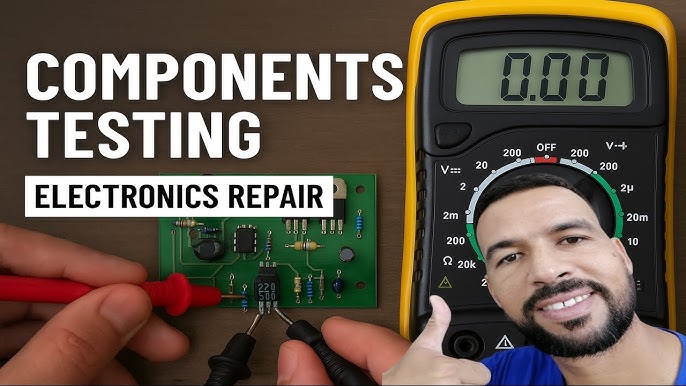
Have you ever wondered how the tiny parts inside your gadgets work so perfectly? Electronic component testing is the secret behind making sure each piece does its job right.
Whether you’re building, repairing, or just curious, understanding this process can save you time, money, and frustration. Keep reading to discover how testing helps keep your devices reliable and what you need to know to spot problems before they happen.
Your next project or repair might depend on it.

Credit: www.youtube.com
Basics Of Electronic Component Testing
Electronic component testing checks if parts work correctly before use in devices. It helps find defects early and avoid failures later. Testing ensures safety, quality, and performance of electronic products. Understanding the basics helps in choosing the right tests for different components.
Purpose And Importance
Testing electronic components confirms they meet required standards. It prevents faulty parts from damaging devices. Reliable components improve product lifespan and user safety. Testing reduces costs by catching problems early in production. It also supports compliance with industry regulations and standards.
Common Testing Methods
Several methods help test electronic components effectively. Each method suits specific types of components and defects.
- Visual Inspection:Looks for physical damage or incorrect assembly.
- Electrical Testing:Measures resistance, capacitance, and voltage to verify function.
- Functional Testing:Checks if the component performs its intended task.
- Environmental Testing:Exposes components to heat, cold, or moisture to test durability.
- X-ray Inspection:Examines internal structures without damaging the part.

Credit: www.youtube.com
Types Of Electronic Components
Electronic components come in various types, each serving a unique purpose. Understanding these types helps in testing and troubleshooting electronics effectively. Components are mainly divided into three groups based on their roles and functions.
Passive Components
Passive components do not generate energy but control it. They include resistors, capacitors, and inductors. These parts manage voltage, current, and signal flow. Testing passive components checks for resistance, capacitance, or inductance values. Faulty passive parts may cause circuit failure or poor performance.
Active Components
Active components can control the flow of electricity and amplify signals. Examples are transistors, diodes, and integrated circuits (ICs). They require a power source to operate. Testing active components involves checking voltage, current, and signal amplification. Defective active parts often cause circuits to stop working or behave erratically.
Electromechanical Components
Electromechanical components combine electrical and mechanical functions. Common examples include relays, switches, and connectors. These parts open or close circuits physically. Testing electromechanical components focuses on contact resistance and mechanical operation. Problems here can lead to interrupted connections or faulty switching.
Testing Equipment And Tools
Testing equipment and tools are essential for checking electronic components. They help find faults and ensure proper function. Using the right tools saves time and avoids damage. These devices measure electrical properties and show signals clearly. Each tool has a unique role in testing circuits and parts.
Multimeters
Multimeters measure voltage, current, and resistance. They come in analog and digital forms. Digital multimeters are easier to read and more accurate. Simple to use for checking batteries, wires, and circuits. They help detect short circuits and broken connections fast. Many models include continuity tests with a beep sound.
Oscilloscopes
Oscilloscopes display electronic signals as waveforms on a screen. They show how voltage changes over time. Useful for analyzing complex signals and timing issues. Engineers use them to view pulse shapes and noise. Oscilloscopes help understand circuit behavior in detail. Modern scopes often include digital features and storage.
Signal Generators
Signal generators create electrical signals for testing devices. They produce different waveforms like sine, square, and triangle. Used to simulate real signals for component response checks. Signal generators help test amplifiers, filters, and sensors. Adjustable frequency and amplitude make them flexible tools. They ensure components work correctly under various conditions.
Testing Techniques For Components
Testing techniques for electronic components are essential to ensure reliability and performance. These techniques help you identify faults early, reduce costs, and improve product quality. Understanding the different methods allows you to choose the right approach for your specific needs.
In-circuit Testing
In-Circuit Testing (ICT) checks each component on a circuit board while it is still assembled. It uses a bed of nails tester to contact various points and measure electrical properties like resistance and capacitance.
This method quickly finds assembly errors such as shorts or open circuits. Have you ever struggled to pinpoint a faulty resistor on a densely packed board? ICT makes that process much faster and more precise.
Functional Testing
Functional Testing verifies if a component or system works as intended under normal operating conditions. It simulates real-world scenarios to check the actual performance rather than just electrical parameters.
For example, testing a microcontroller might involve running its firmware and checking input-output responses. This approach helps you catch issues that only appear during real use, not just in static tests.
Environmental Stress Testing
This technique exposes components to extreme conditions like high temperature, humidity, or vibration to assess durability. It reveals weaknesses that could cause failures in harsh environments.
Imagine your device failing after a summer day in a hot car. Environmental stress testing helps you prevent that by identifying components that can’t handle such stress. Are your components truly ready for the environment they will face?
Key Parameters For Accurate Testing
Accurate electronic component testing depends on measuring key parameters correctly. These parameters help verify if components work as expected. Testing ensures components meet quality and safety standards. Understanding these parameters makes testing more reliable and efficient.
Voltage And Current Measurements
Voltage and current are basic yet vital electrical properties. Measuring voltage shows the potential difference across a component. Current measurement reveals the flow of electric charge. Both help detect faults like shorts or open circuits. Precise meters are needed to get accurate readings. Small errors can lead to wrong conclusions about component health.
Resistance And Capacitance Testing
Resistance measures how much a component opposes electric flow. It indicates if a resistor is within specification or damaged. Capacitance shows how much charge a capacitor can store. Testing capacitance reveals if the capacitor functions correctly or leaks energy. Both tests require stable test conditions. Variations in temperature or humidity affect results.
Frequency And Signal Integrity
Frequency testing checks if components operate at the right speed. Signal integrity ensures signals are clean and not distorted. These parameters are crucial for components in communication and high-speed circuits. Poor signal quality can cause data errors or device failure. Specialized tools analyze waveforms and detect noise or interference.
Challenges In Component Testing
Testing electronic components is not easy. Many challenges affect the accuracy and efficiency of the process. These challenges make it hard to find faults, handle variations, and work with complex parts. Understanding these issues helps improve testing methods and ensures better quality.
Fault Detection
Finding faults in components is often tricky. Some defects are hidden or appear only under specific conditions. Testing equipment may miss small or intermittent faults. This leads to unreliable results and possible failure in real use.
Component Variability
Electronic parts often vary even in the same batch. Differences in materials, size, or manufacturing affect how components work. Testing must consider these variations to avoid false positives or negatives. Ignoring variability reduces test accuracy and trust.
Testing Complex Assemblies
Modern electronics use many parts connected tightly. Testing these assemblies is complicated. Signals can interfere, and faults may hide among many components. Proper methods and tools are needed to isolate and test each part correctly.
Best Practices For Effective Testing
Effective electronic component testing hinges on a set of best practices that ensure accuracy, reliability, and consistency in results. You want to avoid costly errors and downtime, which means paying close attention to every detail. These practices help you build confidence in your testing process and the components you approve for use.
Calibration And Maintenance
Regular calibration of your testing equipment is essential. Without it, measurements can drift, leading to false passes or unnecessary failures. Schedule calibration based on the manufacturer’s recommendations and the frequency of your testing.
Maintenance is just as important. Clean your tools and inspect them for wear and tear before each testing session. Faulty equipment can skew results and create confusion.
Documentation And Record Keeping
Keeping detailed records of your tests helps you track patterns and identify recurring issues. Document every test result, including environmental conditions and equipment settings.
This practice not only aids troubleshooting but also supports compliance with quality standards. Can you recall a time when thorough documentation saved you from repeating mistakes? That’s the power of good record keeping.
Continuous Improvement
Testing is not a one-and-done task. Use your data to refine your procedures and tools continuously. Analyze failures to understand root causes and adjust your methods accordingly.
Ask yourself: How can your testing process become more efficient or accurate? Small tweaks can lead to significant gains in reliability and cost savings over time.

Credit: www.youtube.com
Future Trends In Electronic Component Testing
The future of electronic component testing is shaping up to be more dynamic and efficient than ever before. As technology evolves, so do the methods used to ensure components meet quality and performance standards. Keeping an eye on these trends can help you stay ahead in a rapidly changing landscape.
Automated Testing Solutions
Automation is becoming a key player in electronic component testing. Automated testing solutions reduce human error and speed up the process significantly. Imagine running hundreds of tests simultaneously without needing constant supervision—this is now possible with advanced robotic systems.
You might wonder how automation impacts your workflow. It frees up your time from repetitive tasks, allowing you to focus on analyzing results and making improvements. Plus, automated tests often provide more consistent and reliable data.
Advancements In Testing Equipment
Testing equipment is getting smarter and more precise. New tools offer higher accuracy at lower costs, which means better detection of faults in even the smallest components. Portable and compact devices are also becoming popular, making on-site testing easier than before.
Think about how quick it is to spot a defective component now compared to a few years ago. This progress helps reduce waste and prevents faulty products from reaching customers. Staying updated with these tools can give you a real edge in quality control.
Integration With Iot And Ai
Integrating testing systems with IoT and AI is opening up new possibilities. Sensors connected through the Internet of Things can continuously monitor components during production, providing real-time data. AI then analyzes this data to predict failures before they happen.
Have you considered how predictive maintenance could save your operation time and money? This integration means fewer breakdowns and smarter decisions based on actual performance trends. It’s a shift from reactive to proactive testing that you don’t want to miss.
Frequently Asked Questions
What Is Electronic Component Testing?
Electronic component testing is the process of verifying the functionality and quality of electronic parts. It ensures components meet design specifications before assembly. Testing helps detect defects early, improving product reliability and performance.
Why Is Electronic Component Testing Important?
Testing prevents faulty components from causing product failures. It ensures safety, reliability, and compliance with industry standards. This reduces costly recalls and enhances customer satisfaction.
How Are Electronic Components Tested?
Components are tested using specialized equipment like multimeters, oscilloscopes, and automated test systems. Tests include electrical measurements, functional checks, and stress testing to verify performance and durability.
What Types Of Electronic Component Tests Exist?
Common tests include continuity, resistance, capacitance, voltage, and functional tests. Environmental tests like temperature and humidity checks assess component stability under various conditions.
Conclusion
Electronic component testing helps find faults early and saves time. It keeps devices working safely and correctly. Testing uses tools to check parts like resistors, capacitors, and chips. This process improves quality and reduces errors in electronics. Knowing how to test parts helps in repairs and new designs.
It is a key step for reliable and long-lasting products. Simple tests can prevent big problems later. Understanding these basics makes working with electronics easier and safer.
Leave a Reply