Have you ever wondered how your body turns the food you eat into energy? The secret lies in a tiny but powerful process inside your cells called the electron transport chain.
Understanding which components make up this chain can unlock a clearer picture of how energy flows through your body. You’ll discover the key players involved and how they work together to keep you energized every moment. Keep reading to uncover the fascinating details behind this vital process—you won’t want to miss it!
Role Of The Electron Transport Chain
The electron transport chain (ETC) plays a crucial role in cellular respiration by converting energy from nutrients into a usable form for your cells. This process happens in the mitochondria, often called the powerhouse of the cell. The ETC’s main function is to produce ATP, the energy currency your body relies on for everything from muscle movement to brain function.
How The Electron Transport Chain Creates Energy
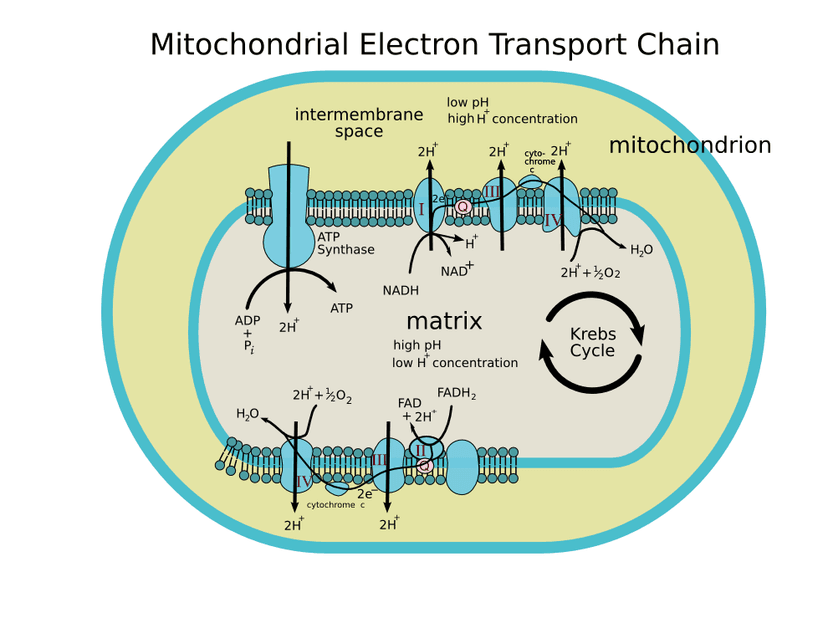
The ETC transfers electrons through a series of protein complexes embedded in the mitochondrial membrane. As electrons move from one complex to the next, they release energy. This energy is used to pump protons across the membrane, creating a gradient.
Think of this proton gradient as a battery storing potential energy. The flow of protons back into the mitochondria powers an enzyme called ATP synthase. This enzyme adds a phosphate group to ADP, producing ATP, which fuels many cellular processes.
Why Oxygen Is Essential In The Chain
Oxygen acts as the final electron acceptor in the chain. Without oxygen, electrons would back up, and the entire process would stall. This is why you feel out of breath during intense exercise—your cells are demanding more oxygen to keep the ETC running efficiently.
When oxygen accepts electrons, it combines with protons to form water. This step is vital because it prevents a toxic buildup of electrons and allows the chain to keep moving forward.
Impact Of The Electron Transport Chain On Your Health
Disruptions in the ETC can lead to reduced energy production and contribute to various diseases, including neurodegenerative disorders. Understanding how this chain works can help you appreciate the importance of healthy mitochondria.
Have you ever wondered why certain nutrients and supplements boost your energy? Many target the ETC to improve its function, helping your cells generate ATP more effectively. Paying attention to your diet and lifestyle can directly influence this energy-producing system.
Location In The Cell
The electron transport chain (ETC) is a vital part of cellular respiration. It is where cells generate most of their energy. Understanding its location inside the cell helps explain how it works efficiently.
The ETC is located in a special membrane inside cells. This membrane has a unique structure that supports energy production. The position of the ETC allows it to interact with other cell parts.
Inner Mitochondrial Membrane
The ETC sits in the inner membrane of mitochondria. Mitochondria are known as the powerhouses of the cell. This membrane is folded into many layers called cristae.
Cristaes increase the surface area. This gives more space for ETC components. More space means more energy can be made.
Role Of The Mitochondrial Matrix
The mitochondrial matrix is the space inside the inner membrane. Some ETC components and enzymes are found here. The matrix provides molecules needed for the ETC to function.
It contains NADH and FADH2, which donate electrons. These molecules come from earlier steps of respiration. The matrix also holds enzymes that help in energy conversion.
Position Relative To Other Cell Structures
The ETC’s location allows it to work closely with other cell parts. It connects with metabolic pathways in the cytoplasm. This proximity helps shuttle materials in and out quickly.
The outer mitochondrial membrane separates the mitochondrion from the rest of the cell. It controls what enters and leaves. This control supports the ETC’s function by maintaining a proper environment.
Key Protein Complexes
The electron transport chain (ETC) relies on several key protein complexes embedded in the inner mitochondrial membrane. These complexes work together to transfer electrons and pump protons, creating the energy your cells need. Understanding each complex’s role helps you grasp how energy production happens at a molecular level.
Complex I: Nadh Dehydrogenase
Complex I is the largest protein complex in the ETC. It accepts electrons from NADH, a molecule that carries energy from earlier steps in metabolism. As it transfers electrons to the next carrier, Complex I also pumps protons across the membrane, contributing to the proton gradient essential for ATP synthesis.
Think about how this step is like the initial spark in a series of energy transfers. Without Complex I, your cells would lose a major source of power.
Complex Ii: Succinate Dehydrogenase
Complex II is unique because it also functions in the citric acid cycle. It accepts electrons from succinate and passes them to the electron transport chain via FADH2. Unlike Complex I, it doesn’t pump protons, but it still plays a crucial role by feeding electrons into the chain.
Have you noticed how this dual role highlights the efficiency of cellular metabolism? Complex II bridges two critical pathways seamlessly.
Complex Iii: Cytochrome Bc1 Complex
Complex III transfers electrons from ubiquinol to cytochrome c. During this process, it pumps protons into the intermembrane space, further building the proton gradient. This complex ensures that energy transfer continues smoothly and efficiently down the chain.
Imagine Complex III as a checkpoint, making sure that electron flow stays steady and energy output remains consistent.
Complex Iv: Cytochrome C Oxidase
Complex IV is the final protein complex in the chain. It transfers electrons to oxygen, the ultimate electron acceptor, forming water. This step is vital because it allows the electron transport chain to keep running and maintains the proton gradient for ATP production.
Without Complex IV, the entire system would back up, and your cells would struggle to generate energy. How often do you think about the oxygen you breathe powering this microscopic process?
Mobile Electron Carriers
The electron transport chain relies on mobile electron carriers to move electrons between protein complexes. These carriers shuttle electrons through the inner mitochondrial membrane. Their role is crucial for efficient energy production in cells. Two main mobile electron carriers participate in this process: ubiquinone and cytochrome c.
Ubiquinone (coenzyme Q)
Ubiquinone, also called Coenzyme Q, is a small lipid molecule. It moves freely within the inner mitochondrial membrane. Ubiquinone accepts electrons from Complex I and Complex II. Then, it transfers these electrons to Complex III. This carrier can carry one or two electrons at a time. It also picks up protons from the mitochondrial matrix. This helps create the proton gradient needed for ATP synthesis.
Cytochrome C
Cytochrome c is a small protein located in the space between membranes. It carries a single electron from Complex III to Complex IV. Unlike ubiquinone, cytochrome c is water-soluble. It binds loosely to the membrane surface. This allows quick movement and electron transfer. Cytochrome c plays a key role in maintaining the flow of electrons. This keeps the electron transport chain running smoothly.
Proton Gradient Formation
The proton gradient formation is a key process in the electron transport chain. It creates the energy needed for producing ATP, the cell’s energy currency. This gradient forms across the inner mitochondrial membrane.
As electrons move through the chain, protons are pumped from the mitochondrial matrix to the intermembrane space. This movement builds a high concentration of protons outside the inner membrane and a low concentration inside.
The difference in proton concentration generates potential energy. This energy is then used by ATP synthase to produce ATP from ADP and phosphate.
Role Of Protein Complexes In Proton Pumping
Several protein complexes in the electron transport chain pump protons. Complex I, III, and IV actively transport protons across the membrane. These complexes use the energy from electron transfer to move protons.
Creation Of Electrochemical Gradient
The proton gradient creates both a chemical and electrical difference across the membrane. This is called the electrochemical gradient. It drives protons back into the mitochondrial matrix through ATP synthase.
Importance Of Membrane Impermeability
The inner mitochondrial membrane is impermeable to protons. This prevents protons from leaking back freely. The controlled flow of protons is essential for efficient ATP production.
Energy Conversion During Proton Gradient Formation
Energy from electrons is converted into potential energy in the proton gradient. This stored energy powers ATP synthase, linking electron transport to ATP synthesis. Without this gradient, cells cannot produce enough energy to survive.

Credit: library.fiveable.me
Atp Synthesis Process
The ATP synthesis process is the heart of energy production in cells. It transforms the energy stored in food into a form your body can use—adenosine triphosphate (ATP). Understanding this process helps you appreciate how your body powers everything from muscle movement to brain function.
Role Of Atp Synthase
ATP synthase is a remarkable enzyme acting like a tiny molecular machine. It sits in the inner mitochondrial membrane and spins to produce ATP. This spinning motion happens when protons flow through ATP synthase, driven by a difference in proton concentration across the membrane.
Think of ATP synthase as a waterwheel. As protons move down their gradient, they turn the enzyme’s parts, which then forces ADP and phosphate to join and form ATP. Without ATP synthase, cells wouldn’t be able to efficiently produce this vital energy molecule.
Chemiosmotic Theory
The chemiosmotic theory explains how ATP synthase gets its power. It focuses on how the electron transport chain creates a proton gradient by pushing protons from the mitochondrial matrix to the intermembrane space. This gradient stores potential energy like water behind a dam.
When protons flow back through ATP synthase, the stored energy converts into mechanical energy, driving ATP production. This process links electron transport to ATP synthesis, showing how closely connected these cellular events are.
Have you ever wondered how your body efficiently manages energy at such a tiny scale? The chemiosmotic theory provides a clear answer, highlighting nature’s clever use of gradients and enzymes to keep you moving every day.
Importance In Cellular Respiration
The electron transport chain (ETC) plays a crucial role in cellular respiration by driving the production of ATP, the energy currency of your cells. Without it, your body wouldn’t efficiently convert nutrients into usable energy. Understanding its importance helps you appreciate how even tiny cellular processes impact your overall energy and health.
Energy Conversion Through Electron Transfer
The ETC transfers electrons from molecules like NADH and FADH2through a series of protein complexes. This transfer releases energy that pumps protons across the mitochondrial membrane, creating a gradient. You can think of this gradient as stored energy, ready to be tapped into when producing ATP.
Atp Synthesis And Its Direct Impact On Your Cells
ATP synthase uses the proton gradient created by the ETC to make ATP. This process is called oxidative phosphorylation. Without the ETC, ATP production would drop dramatically, and your cells wouldn’t have enough energy to perform essential functions like muscle contraction or nerve signaling.
Role In Maintaining Cellular Health
Besides energy production, the ETC helps regulate reactive oxygen species (ROS) levels. If the ETC malfunctions, ROS can build up and damage your cells. Keeping the ETC running smoothly is key to preventing oxidative stress and related diseases.
Why Should You Care About The Etc?
Have you ever wondered why you feel tired after intense exercise or why certain diseases cause fatigue? The efficiency of your electron transport chain directly affects how much energy your cells can produce. Paying attention to how your body generates energy can guide better lifestyle choices and improve your well-being.

Credit: www.dreamstime.com
Impact Of Inhibitors And Uncouplers
The electron transport chain (ETC) is essential for producing energy in your cells. But what happens when inhibitors or uncouplers interfere with this process? Understanding their impact can help you grasp how energy production is controlled and what can go wrong in certain diseases or poisoning cases.
How Inhibitors Block Electron Flow
Inhibitors stop the ETC by targeting specific complexes. For example, cyanide binds to Complex IV, preventing oxygen from accepting electrons. This halt causes energy production to stop almost immediately.
Other inhibitors work differently but with the same result. Rotenone blocks Complex I, and antimycin A targets Complex III. Each inhibitor disrupts the chain at a particular point, stopping electron flow and ATP synthesis.
Have you ever wondered why certain poisons are so deadly? Their ability to block the ETC explains it clearly.
Uncouplers And Their Effect On Atp Production
Uncouplers work by breaking the link between electron transport and ATP synthesis. They allow electrons to flow, but energy is released as heat instead of being stored as ATP. This can increase metabolic rate but reduce energy efficiency.
One well-known uncoupler is 2,4-Dinitrophenol (DNP), which was once used for weight loss but caused dangerous overheating. This shows how uncouplers can have powerful and risky effects on your body’s energy balance.
What would happen if your body’s energy production ran too hot like this? It’s a reminder of how finely tuned the ETC must be for your health.
Practical Implications For Health And Medicine
Knowing how inhibitors and uncouplers work helps in diagnosing and treating conditions like poisoning or mitochondrial diseases. It also guides the development of drugs that can target these pathways.
For example, some cancer therapies aim to disrupt energy production in tumor cells. Understanding the ETC’s vulnerabilities allows for more precise interventions.
Could targeting the ETC be a key in future treatments? The science says yes, but it must be done carefully to avoid harm.

Credit: echowater.com
Frequently Asked Questions
What Are The Main Components Of The Electron Transport Chain?
The electron transport chain includes Complex I, II, III, IV, and ATP synthase. It also involves coenzymes like ubiquinone and cytochrome c. These components work together to transfer electrons and produce ATP in mitochondria.
How Do Complexes I To Iv Function In The Chain?
Complexes I to IV transfer electrons through redox reactions. Each complex pumps protons across the mitochondrial membrane, creating a proton gradient. This gradient drives ATP synthesis, essential for cellular energy production.
What Role Does Atp Synthase Play In The Chain?
ATP synthase uses the proton gradient to produce ATP. Protons flow back into the mitochondrial matrix through ATP synthase. This flow drives the conversion of ADP to ATP, the cell’s main energy currency.
Why Are Ubiquinone And Cytochrome C Important?
Ubiquinone and cytochrome c shuttle electrons between complexes. Ubiquinone transports electrons from Complex I and II to III. Cytochrome c carries electrons from Complex III to IV, facilitating efficient electron transfer.
Conclusion
The electron transport chain has key parts that work together. These include protein complexes and mobile carriers. They help move electrons and make energy in cells. Understanding these components shows how cells breathe and create power. This process is vital for all living things.
Knowing this helps us learn about biology and health. Keep these parts in mind when studying cell energy. It makes the whole process easier to grasp. Simple steps lead to a big impact inside the cell.
Leave a Reply