Have you ever wondered how your gadgets hold onto electricity even for a moment? If you’re curious about which electronic component can store charge, you’re in the right place.
Understanding this key part can help you grasp how devices work and maybe even spark your interest in building your own circuits. Keep reading, and by the end, you’ll know exactly what stores electric charge and why it’s so important in electronics.
Let’s dive in!
Charge Storage Components
Charge storage components are pivotal in the world of electronics. They ensure that devices operate smoothly by storing and releasing energy as needed. Understanding these components can help you make informed decisions when designing or using electronic devices.
Capacitors
Capacitors are the go-to components for storing small amounts of charge. They consist of two conductive plates separated by an insulating material. This simple design allows them to quickly charge and discharge, making them perfect for applications like filtering and signal processing.
Have you ever wondered why your camera flash charges in seconds? That’s a capacitor at work, storing energy and releasing it all at once. Its ability to handle rapid energy changes makes it indispensable in electronics.
Batteries
Batteries are ubiquitous in our daily lives, powering everything from remote controls to electric cars. They store energy chemically, releasing it as electrical energy when needed. Unlike capacitors, batteries are ideal for providing a steady, long-term power supply.
Imagine your smartphone lasting only a few minutes. It’s the battery’s ability to store a large charge that keeps it running for hours. Next time you plug in your device, think about the complex chemistry working to store energy efficiently.
Supercapacitors
Supercapacitors bridge the gap between capacitors and batteries. They offer higher energy storage than capacitors while charging faster than batteries. These are particularly useful in applications requiring rapid charging and discharging cycles, like regenerative braking systems in vehicles.
What if your electric car charged in minutes instead of hours? Supercapacitors are paving the way for faster charging times and longer life cycles, offering a glimpse into the future of energy storage.
Inductors
Inductors store energy in a magnetic field when electric current passes through them. They are not used for long-term energy storage but excel in applications like filtering and tuning circuits. Their ability to resist changes in current makes them valuable in maintaining stable circuit operations.
Have you ever noticed the coil in your speaker system? That’s an inductor, ensuring the sound remains clear and distortion-free. It’s a small component with a significant impact on the quality of electronic devices.
Capacitor Types And Functions
Capacitors come in different types, each designed to store and release electric charge in unique ways. Knowing their functions helps you choose the right one for your project. Let’s look at the main types and what makes each special.
Ceramic Capacitors
Ceramic capacitors are small and affordable. They use a ceramic material as the dielectric, which separates the metal plates storing the charge.
These capacitors work well for high-frequency circuits and are common in everyday electronics like radios and computers.
Have you noticed how often these tiny components pop up on circuit boards? Their reliability and size make them a favorite among engineers.
Electrolytic Capacitors
Electrolytic capacitors store a large amount of charge compared to ceramics. They use a liquid or gel electrolyte to increase capacitance.
These are ideal for power supply filters and audio equipment where bigger charge storage is needed.
One thing to watch out for is their polarity—connecting them backward can damage your circuit. Have you ever double-checked capacitor orientation before powering a device?
Tantalum Capacitors
Tantalum capacitors offer stable capacitance and longer life than electrolytic types. They use tantalum metal for the anode.
These capacitors are great when space is limited, like in mobile phones and portable gadgets.
They can be a bit pricier, but their performance often justifies the cost. Would you choose reliability over budget in your next project?
Film Capacitors
Film capacitors use plastic films as the dielectric. They provide excellent stability and low losses.
You’ll find them in audio systems, timing circuits, and high-voltage applications.
Because of their durability, they often last longer than other types. How important is long-term reliability to you when picking components?
How Capacitors Store Charge
Capacitors are key electronic components that store electrical energy. They hold this energy by creating and maintaining an electric charge. Understanding how capacitors store charge helps explain their role in circuits and devices.
Electric Field Formation
Capacitors consist of two metal plates separated by an insulator. When voltage is applied, electrons gather on one plate. This creates a negative charge on one side and a positive charge on the other. The space between the plates holds an electric field. This field stores energy by separating charges.
Dielectric Materials
The insulator between the plates is called a dielectric. Dielectrics increase a capacitor’s ability to store charge. They reduce the electric field strength needed to hold charge. Common dielectrics include ceramic, plastic, and glass. Each material affects the capacitor’s performance and stability.
Capacitance And Charge Relationship
Capacitance measures a capacitor’s ability to store charge. It depends on plate size, distance, and dielectric type. The formula Q = C × V shows this relationship. Here, Q is charge, C is capacitance, and V is voltage. Higher capacitance means more charge storage at the same voltage.

Credit: www.electronicsandyou.com
Battery Charge Storage
Batteries are one of the most familiar electronic components that store electrical charge. They hold energy in a way that powers everything from your smartphone to electric vehicles. Understanding how batteries store charge can help you choose the right type for your needs and even extend the life of your devices.
Chemical Energy Storage
Batteries store charge by converting electrical energy into chemical energy. Inside a battery, chemical reactions happen between the electrodes and the electrolyte. These reactions trap energy that can be released later as electricity when the battery is connected to a device.
Think about your phone battery. When you plug it in, electricity flows in and causes chemical changes that “charge” the battery. When you use your phone, the chemical energy converts back into electrical energy to power the screen and apps.
Rechargeable Vs Non-rechargeable
Not all batteries are designed the same. Some can be recharged multiple times, while others are meant to be used once and then thrown away.
- Rechargeable batteriesallow you to restore their charge by reversing the chemical reaction. This makes them cost-effective and environmentally friendly over time.
- Non-rechargeable batteries, also called primary batteries, store a fixed amount of energy and cannot be recharged safely. You have to replace them once they’re drained.
Have you ever wondered why some devices warn against using rechargeable batteries? It’s because certain gadgets require a steady voltage level that non-rechargeable batteries provide. Knowing this helps you avoid damage and get the best performance.
Common Battery Types
Batteries come in many shapes and sizes, but a few types dominate the market based on their energy storage methods and applications.
| Battery Type | Rechargeable? | Typical Use | Key Advantage |
|---|---|---|---|
| Alkaline | No | Remote controls, flashlights | Long shelf life |
| Li-ion (Lithium-ion) | Yes | Smartphones, laptops, electric cars | High energy density |
| NiMH (Nickel-Metal Hydride) | Yes | Rechargeable AA/AAA batteries, cameras | Good cycle life |
| Lead-Acid | Yes | Cars, backup power supplies | Reliable and low cost |
Next time you pick up a battery, think about what type it is and how it stores charge. This can help you make smarter choices for your electronics and save money in the long run.
Supercapacitors Advantages
Supercapacitors offer unique advantages in storing electrical charge efficiently. They bridge the gap between traditional capacitors and batteries. These components provide higher power density and longer life cycles. Their ability to quickly charge and discharge makes them valuable in many devices.
High Capacitance
Supercapacitors have much higher capacitance than regular capacitors. This means they can store more electrical charge. Their design uses special materials that increase surface area. This large surface area allows more charge to be held safely.
Fast Charging And Discharging
These components can charge and discharge very fast. They deliver power quickly when needed. This feature supports applications requiring bursts of energy. Fast energy transfer also reduces waiting time for devices.
Applications In Electronics
Supercapacitors are useful in various electronic fields. They help stabilize power supplies in renewable energy systems. Also, they improve backup power in memory and data storage. Many electric vehicles use them for quick energy boosts during acceleration.

Credit: veloxboreholes.com
Inductors And Energy Storage
Inductors play a key role in storing energy in electronic circuits. Unlike components that store electric charge, inductors store energy in a magnetic field. This makes them unique and useful in many applications. Understanding how inductors manage energy helps in choosing the right component for a project.
Magnetic Field Storage
An inductor stores energy by creating a magnetic field. When current flows through the coil of wire in an inductor, it generates a magnetic field around it. The energy stays in this field as long as the current flows. Once the current stops, the magnetic field collapses and releases the stored energy back into the circuit.
Differences From Capacitors
Inductors and capacitors both store energy but in different ways. Capacitors store energy as electric charge on their plates. Inductors store energy as a magnetic field created by current flow. Capacitors resist changes in voltage, while inductors resist changes in current. This difference affects how each component behaves in circuits.
Practical Uses
- Inductors are used in filters to block certain frequencies.
- They help in tuning circuits like radios and televisions.
- Inductors smooth out electric currents in power supplies.
- They are key in transformers to transfer energy between circuits.
- Inductors protect circuits from sudden voltage spikes.
Choosing The Right Component
Choosing the right electronic component to store charge can make all the difference in your project’s performance and efficiency. Each component offers unique features that suit different needs. Understanding these differences helps you pick the one that fits your requirements best.
Application Requirements
Think about what your project needs first. Are you building a small sensor or a large power supply? The size and complexity of your application will guide your choice.
For example, if your device only needs to hold a small amount of charge briefly, a capacitor might be perfect. But if you require long-term energy storage, a battery or a supercapacitor could be better options. Always ask yourself: How long do I need to store charge, and how stable does it need to be?
Energy Density
Energy density tells you how much charge a component can hold relative to its size. This is crucial if space is limited or if you want to keep your design lightweight.
- Capacitorshave low energy density but can charge and discharge quickly.
- Batteriesoffer high energy density, making them ideal for long-term power supply.
- Supercapacitorssit in between, providing moderate energy density with rapid charge/discharge cycles.
Knowing these differences can save you from costly redesigns. Are you willing to compromise size for capacity, or vice versa?
Charge/discharge Rates
The speed at which a component charges and discharges affects your device’s responsiveness. If you need quick bursts of energy, like in flash cameras or power tools, fast charge/discharge rates are essential.
Capacitors excel here, delivering energy in milliseconds. Batteries, however, usually charge and discharge slower but sustain energy longer. Supercapacitors provide a balance, offering quicker response than batteries but longer storage than capacitors.
Consider how often and how fast your device will need power. Would a rapid energy delivery improve your project’s functionality? Your answer guides your component choice.
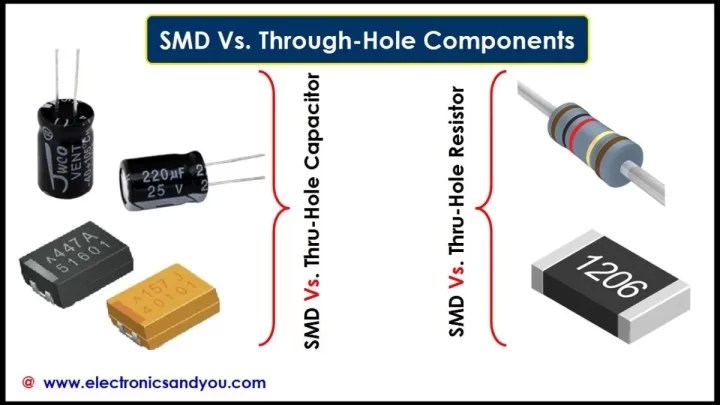
Credit: www.electronicsandyou.com
Future Trends In Charge Storage
The future of charge storage is rapidly evolving, offering exciting possibilities for both everyday gadgets and large-scale energy systems. As technology advances, the components that store electrical charge are becoming more efficient, durable, and environmentally friendly. Understanding these trends can help you make smarter choices about the devices you use and how energy storage might shape your future.
Advancements In Capacitor Technology
Capacitors are getting a major upgrade with new materials and designs that allow them to store more charge in smaller sizes. These improvements mean faster charging times and longer lifespans, which are crucial for applications like electric vehicles and renewable energy systems.
Imagine charging your smartphone in seconds instead of minutes—modern capacitors are pushing us closer to that reality. Companies are also experimenting with flexible and transparent capacitors, which could change how electronic devices are designed and used.
Next-gen Batteries
Batteries remain the most common way to store electrical energy, but next-generation batteries are addressing the limitations of current lithium-ion technology. Solid-state batteries, for example, promise higher energy densities and enhanced safety by using solid electrolytes instead of liquid ones.
Have you ever worried about your battery overheating or degrading quickly? These new battery types aim to reduce those risks while extending how long your devices can run on a single charge. This shift could lead to electric cars with longer ranges and less frequent charging.
Emerging Storage Materials
Researchers are exploring novel materials like graphene, metal-organic frameworks, and nanomaterials to boost charge storage capabilities. These materials offer unique properties such as higher conductivity and greater surface area, which improve energy storage efficiency.
Consider how a simple change in the material can impact the performance and environmental footprint of your devices. Would you be willing to choose gadgets made with these advanced materials if it meant better performance and sustainability?
Frequently Asked Questions
What Electronic Component Is Used To Store Electrical Charge?
A capacitor is the primary electronic component designed to store electrical charge. It holds energy in an electric field between its plates. Capacitors are crucial in filtering, timing, and energy storage applications in circuits.
How Does A Capacitor Store Electrical Energy?
A capacitor stores electrical energy by accumulating opposite charges on two conductive plates separated by an insulator. This separation creates an electric field, allowing the capacitor to hold charge until discharged in a circuit.
Can Batteries Store Charge Like Capacitors?
Batteries store charge chemically, unlike capacitors that store it electrostatically. Batteries release energy slowly over time, while capacitors can charge and discharge rapidly for short bursts of energy.
Why Are Capacitors Important In Electronic Circuits?
Capacitors stabilize voltage and power flow, filter noise, and store energy for quick release. They improve circuit performance and protect components from voltage spikes and fluctuations.
Conclusion
Capacitors store electrical charge and release it when needed. They come in many types and sizes for different uses. Understanding how capacitors work helps in many electronic projects. They keep circuits running smoothly by holding energy briefly. Knowing this simple fact can improve your electronics knowledge.
Keep exploring components to build smarter devices. Charge storage is essential in electronics today. Simple but powerful.
Leave a Reply