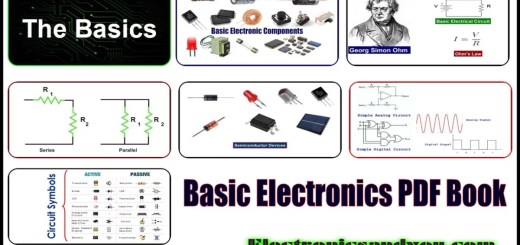
Are you trying to understand electronic components but feel overwhelmed by all the technical terms and complex diagrams? You’re not alone.
Finding clear and simple information can be tough, especially when you just want a quick, reliable guide. That’s why a well-organized electronic components PDF can be your best friend. It puts everything you need in one place, making it easy to learn at your own pace.
In this guide, you’ll discover the basics explained in simple language, so you can confidently move forward with your projects. Keep reading—this could be the breakthrough you’ve been waiting for.

Credit: www.electronicsandyou.com
What Are Electronic Components?
Electronic components are the basic building blocks of all electronic devices. They control electric current and signal flow in circuits. Without these components, modern technology would not exist.
These parts come in many shapes and sizes. Each has a specific role in making electronic systems work. Understanding them helps you create or repair devices.
What Is An Electronic Component?
An electronic component is a small part that controls electricity. It can store, resist, or conduct electric current. Components are connected to form circuits that perform tasks.
Types Of Electronic Components
- Resistors – limit current flow
- Capacitors – store electric charge
- Inductors – store energy in a magnetic field
- Diodes – allow current in one direction
- Transistors – amplify or switch signals
- Integrated Circuits – contain many components in one chip
How Do Electronic Components Work?
Components interact by passing electric signals. Each type changes current or voltage differently. These changes create the desired electronic effect.
Why Are Electronic Components Important?
They make electronic devices functional and reliable. Without components, devices cannot process information or power. They enable everything from simple gadgets to complex machines.
Basic Types Of Electronic Components
Understanding the basic types of electronic components is essential for anyone diving into electronics. These components form the foundation of all electronic circuits, each serving a unique purpose. Knowing their roles helps you design, troubleshoot, and improve your projects more effectively.
Resistors
Resistors control the flow of electric current by providing resistance. They protect sensitive parts in your circuit by limiting current to safe levels. You’ll find resistors come in various types, such as fixed, variable, and special-purpose, each suited for different tasks.
When building a project, choosing the right resistor value can make a big difference. Have you ever wondered why a circuit didn’t work as expected? Often, the resistor value was off, causing either too much or too little current. Learning to read resistor color codes can save you time and frustration.
Capacitors
Capacitors store and release electrical energy quickly. They smooth out voltage fluctuations and filter signals in circuits. You’ll see them in devices like radios, power supplies, and even in timing circuits.
What surprised me was how a small capacitor could prevent annoying noise in audio equipment. Their sizes and types vary, from ceramic to electrolytic, each with different voltage ratings and capacities. Knowing which capacitor to pick can improve your circuit’s performance dramatically.
Inductors
Inductors store energy in a magnetic field when current passes through them. They are key in tuning circuits, transformers, and filters. Inductors often look like coils of wire wrapped around a core, and their value depends on the number of turns and the core material.
Have you tried experimenting with inductors in a simple radio circuit? Changing the inductor can shift the frequency your radio picks up. This hands-on experience reveals how crucial inductors are in controlling signals and energy flow.
Semiconductor Devices
Semiconductor devices form the backbone of modern electronics. These components control the flow of electrical current in devices ranging from simple gadgets to complex computer systems. Understanding them will give you a clearer picture of how electronic circuits function and how you can use them effectively in your projects.
Diodes
Diodes are simple yet powerful semiconductor devices that allow current to flow in only one direction. This one-way property makes them essential for converting alternating current (AC) to direct current (DC), protecting circuits from voltage spikes, and controlling signals.
Have you ever noticed how your phone charger converts AC power from the wall into DC power your device can use? Diodes are the key players in that process. Different types of diodes, like light-emitting diodes (LEDs) and Zener diodes, serve specific roles—LEDs emit light, while Zener diodes regulate voltage.
Transistors
Transistors act like electronic switches or amplifiers. They control large currents with small input signals, which is why they are critical in amplifying audio signals or switching circuits on and off.
Think about the volume control on your speaker system. Transistors adjust the sound strength by amplifying the input signal without distorting it. There are two main types: Bipolar Junction Transistors (BJTs) and Field Effect Transistors (FETs), each with unique characteristics suited for different applications.
Integrated Circuits
Integrated Circuits (ICs) combine multiple semiconductor devices like transistors and diodes into a single chip. This miniaturization helps build complex electronic functions while saving space and improving reliability.
Ever wondered how your smartphone fits so much computing power into a tiny device? ICs are the reason. They can perform tasks such as amplification, signal processing, and logic operations, all within a compact package that you can hold in your hand.
Active Vs. Passive Components
Understanding the difference between active and passive components is crucial for anyone working with electronic circuits. These components behave differently and serve unique purposes in your designs. Recognizing their characteristics can help you choose the right parts and troubleshoot more effectively.
Characteristics Of Active Components
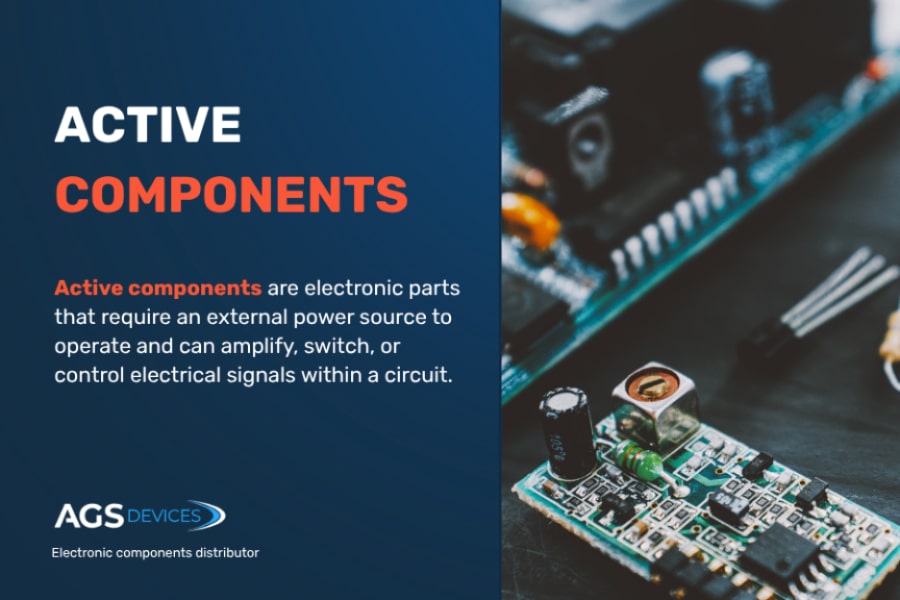
Active components can control the flow of electricity and often require an external power source to operate. They have the ability to amplify signals or produce energy, which makes them essential in circuits that need power gain.
- Examples include:transistors, diodes, integrated circuits (ICs), and vacuum tubes.
- They can inject power into a circuit, allowing signal amplification or switching.
- Active components are generally more complex and sensitive compared to passive ones.
Have you ever noticed how a tiny transistor can amplify your voice in a microphone? That’s active power in action, transforming weak signals into stronger ones.
Characteristics Of Passive Components
Passive components cannot introduce energy into the circuit on their own. Instead, they store or dissipate energy supplied by active components. Their main role is to regulate, filter, or store electrical energy without amplification.
- Examples include:resistors, capacitors, inductors, and transformers.
- They do not need an external power source to function.
- Passive components are usually simpler and more robust.
Think about a resistor controlling the current to prevent damage to a LED. It doesn’t add power but plays a vital role in protecting your circuit.
Which components do you rely on more when building your circuits? Understanding their roles can sharpen your design skills and save you time troubleshooting.
Understanding Circuit Diagrams
Understanding circuit diagrams is essential for anyone working with electronic components. These diagrams are the blueprints that show how components connect and interact. Grasping the basics will help you build, troubleshoot, and improve your electronic projects with confidence.
Symbols And Notations
Each electronic component has a unique symbol in circuit diagrams. Recognizing these symbols lets you quickly identify parts like resistors, capacitors, and transistors.
Here are some common symbols you should know:
- Resistor:A zigzag or rectangular line.
- Capacitor:Two parallel lines, sometimes with one curved.
- Diode:A triangle pointing to a line.
- Ground:A set of descending lines.
Notations often include values and units, such as “10k” for a 10 kilo-ohm resistor. Paying attention to these details helps avoid confusion during assembly.
Reading Circuit Schematics
Reading a schematic is like following a map for your electronic circuit. Start by locating the power source, usually marked with a battery symbol or voltage level.
Trace the connections from the power source through the components. Notice how lines represent wires, and junctions indicate where connections split or join.
Ask yourself: Does the flow make sense? Are all components connected properly? This mindset helps you spot errors before you build.
When you encounter complex sections, break them down into smaller parts. Focus on one component and its immediate connections, then gradually piece the whole circuit together.
Tools For Working With Electronic Components
Working with electronic components requires the right tools to ensure accuracy and safety. These tools help you test, connect, and create circuits effectively. Without them, even the simplest project can become frustrating or prone to errors.
Multimeters
A multimeter is your best friend when measuring voltage, current, and resistance. It helps you troubleshoot circuits by quickly identifying issues like broken connections or faulty components.
Choosing a digital multimeter with clear displays and multiple functions can save you time. Have you ever tried fixing a circuit only to realize you were measuring the wrong value? A reliable multimeter prevents that headache.
Soldering Equipment
Soldering irons and solder are essential for making permanent electrical connections. Using the right temperature and technique ensures strong joints without damaging delicate parts.
Invest in a soldering station with adjustable heat control for better precision. Remember, practicing on scrap components first improves your skill and confidence.
Breadboards
Breadboards are ideal for testing circuit designs without soldering. They allow you to quickly add, remove, or change components while experimenting.
With a breadboard, you can prototype multiple ideas in minutes. Have you tried building a circuit that didn’t work because it was soldered too soon? Breadboards prevent that by keeping your setup flexible.
Safety Tips For Beginners
Safety is crucial when working with electronic components, especially if you’re just starting out. Handling these parts without care can lead to damage or even personal injury. Paying attention to safety tips can save you from costly mistakes and keep your projects running smoothly.
Handling Precautions
Always discharge static electricity from your body before touching electronic components. You can do this by touching a grounded metal object. This simple step prevents sensitive parts from being damaged by static shocks.
Keep your workspace clean and organized. Clutter can cause accidental short circuits or misplaced parts. Use anti-static mats and wrist straps if possible to add extra protection.
Be gentle when inserting or removing components. Forcing parts into place can break delicate pins or damage the circuit board. Take your time and double-check the orientation before making connections.
Avoiding Common Mistakes
Double-check the voltage and polarity requirements before powering your circuit. Connecting components incorrectly can cause overheating or permanent damage. Have you ever powered a circuit only to find it didn’t work? Often, it’s a simple wiring error.
Don’t mix up components that look similar but have different specifications. Resistors, capacitors, and diodes come in many varieties, and using the wrong one can ruin your project. Label your parts or keep them in separate containers to avoid confusion.
Test your circuit with a multimeter before applying full power. This step helps catch shorts or wiring errors early. It’s better to catch problems on the bench than after soldering everything together.
Credit: www.agsdevices.com
Resources For Further Learning
Diving deeper into electronic components requires good resources. These help you learn more and solve problems easily. Here are some key places to expand your knowledge.
Online Courses
Online courses offer structured lessons on electronics. They include videos, quizzes, and hands-on projects. Many platforms provide beginner to advanced levels. You can learn at your own pace and revisit tough topics anytime.
Recommended Books
Books explain concepts clearly and often include diagrams. Titles like “The Art of Electronics” and “Make: Electronics” are popular. They cover basics and practical uses. Reading helps build a strong foundation and reference material.
Community Forums
Forums connect you with other electronics enthusiasts. You can ask questions and share ideas. Sites like Electronics Stack Exchange and Reddit’s electronics subreddit are active. This support speeds up learning and troubleshooting.

Credit: www.electronicsandyou.com
Frequently Asked Questions
What Is Included In An Electronic Components Pdf?
An electronic components PDF typically covers basic parts like resistors, capacitors, and transistors. It explains functions, symbols, and usage. This guide helps beginners understand component roles in circuits quickly and clearly.
How Can A Pdf Help Learn Electronic Components?
A PDF offers structured, easy-to-access information on components. It provides diagrams, descriptions, and practical tips. This format aids quick reference and repeated study, enhancing learning efficiency for electronics enthusiasts.
Are Electronic Components Pdfs Suitable For Beginners?
Yes, these PDFs are designed for beginners. They use simple language and clear illustrations. This helps users grasp fundamental concepts without technical jargon, making electronics accessible to all skill levels.
Where Can I Find Reliable Electronic Components Pdfs?
Reliable PDFs are available on educational websites, electronics forums, and manufacturer sites. Look for resources authored by experts or reputable institutions for accurate, updated information.
Conclusion
This guide helps you understand electronic components clearly. You can now read and use the PDF with ease. Learning these basics makes projects simpler and more fun. Use this knowledge to build and fix electronics confidently. Keep exploring to grow your skills step by step.
Simple, clear, and useful—just what you need to start.
Leave a Reply