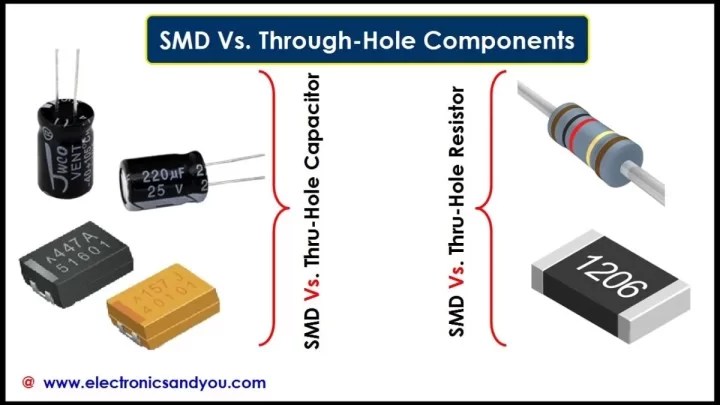
Have you ever wondered what makes your gadgets work behind the scenes? The secret lies in tiny parts called discrete electronic components.
These small but powerful pieces control how your devices perform, from turning on lights to processing information. Understanding these components can give you a clearer picture of the technology you use every day. Ready to discover what discrete electronic components are and why they matter to you?
Keep reading to unlock the basics that power your world.
Basics Of Discrete Components
The world of electronics is vast, and at its heart lie discrete electronic components. These are the building blocks that form the foundation of nearly every electronic device you interact with daily. Understanding their basics can empower you to grasp how your favorite gadgets work or even embark on a DIY electronics project.
Definition And Characteristics
Discrete electronic components are individual electronic parts that have a specific function. Unlike integrated circuits, which house multiple components in a single package, discrete components stand alone. This standalone nature makes them easier to identify and replace if a device malfunctions.
These components perform basic electronic functions such as amplification, switching, or signal modulation. For instance, a simple resistor limits the flow of electric current, while a transistor can amplify or switch electronic signals. Their simplicity and clarity in function make them essential for beginners in electronics.
Types Of Discrete Components
There are several types of discrete components, each serving a unique purpose. Here are a few common ones:
- Resistors:Control the flow of electric current. They’re crucial in managing voltage and current levels.
- Capacitors:Store and release electrical energy. They help in smoothing out voltage fluctuations in power supplies.
- Inductors:Store energy in a magnetic field when electric current passes through them. They’re often used in filtering applications.
- Diodes:Allow current to flow in only one direction. They are essential in converting AC to DC current.
- Transistors:Act as amplifiers or switches. They are fundamental in building logic circuits.
Each type plays a critical role in the function of electronic circuits. Have you ever opened up an old radio or television and marveled at the small, colorful components inside? Those tiny parts, though they might seem insignificant, are what bring your devices to life.
So, next time you use your smartphone or turn on a light, think about the discrete components working tirelessly behind the scenes. How might understanding these components inspire you to create or repair something yourself?
Resistors And Their Functions
Resistors are one of the most fundamental components in electronics. They control the flow of electric current by providing resistance, which helps protect sensitive parts and manage voltage levels in a circuit. Understanding how resistors work can help you design better circuits and troubleshoot issues more effectively.
Fixed Vs Variable Resistors
Fixed resistors have a set resistance value that does not change. You can find them in almost every electronic device, and they come in a variety of sizes and power ratings. Their simplicity makes them reliable and easy to use.
Variable resistors, on the other hand, allow you to adjust the resistance manually. Potentiometers and rheostats are common examples. If you’ve ever adjusted the volume on a radio, you’ve used a variable resistor.
Choosing between fixed and variable resistors depends on whether you need a constant resistance or one that you can fine-tune during operation.
Applications In Circuits
Resistors serve many roles in circuits, such as limiting current to LEDs to prevent burning them out. They also divide voltages to provide specific voltage levels where needed.
In sensors, resistors help convert physical changes like temperature or light into readable electrical signals. You might be surprised how often they appear in simple gadgets you use daily.
Have you ever wondered why your phone’s screen brightness adjusts automatically? That often involves variable resistors working in tandem with sensors to create a smooth user experience.
Capacitors Explained
Capacitors are key parts in many electronic circuits. They store and release electrical energy quickly. This ability makes them useful in various devices. Understanding capacitors helps grasp how electronics function.
Types Of Capacitors
- Ceramic Capacitors:Small, reliable, used in high-frequency circuits.
- Electrolytic Capacitors:Larger, hold more charge, common in power supplies.
- Tantalum Capacitors:Stable, with good capacitance in small sizes.
- Film Capacitors:Durable, used for precise and high-voltage applications.
- Supercapacitors:Store large energy amounts, used in energy storage systems.
Role In Electronic Devices
Capacitors smooth out voltage changes in circuits. They filter noise from signals to improve quality. They help start motors and power flashes in cameras. Capacitors also store temporary energy in devices like radios and TVs.
Diodes And Their Uses
Diodes are one of the most fundamental discrete electronic components you’ll encounter. They allow current to flow in only one direction, acting like a one-way gate for electrical signals. This simple function makes them incredibly useful in a wide range of devices and circuits.
Understanding how diodes work and where you can use them can save you time and frustration when building or repairing electronics. Have you ever wondered why your phone charger only works when plugged in a certain way? That’s a diode at work!
Different Diode Types
- Standard (Silicon) Diodes:These are the most common. They allow current to flow forward with minimal resistance and block it backward. You’ll find them in power supplies and signal demodulation.
- Zener Diodes:Designed to allow current to flow backwards when voltage exceeds a certain value. Useful for voltage regulation and protecting circuits from voltage spikes.
- Light Emitting Diodes (LEDs):Emit light when current passes through. Widely used for indicators, displays, and lighting solutions.
- Schottky Diodes:Known for their fast switching and low voltage drop. Often used in high-speed switching applications and power rectification.
- Photodiodes:Generate current when exposed to light. Common in sensors and optical communication devices.
Common Applications
Diodes appear in many everyday electronics you use. They protect circuits by preventing reverse polarity connections, which can damage components.
In power supplies, diodes convert alternating current (AC) to direct current (DC), making your devices run smoothly. Have you noticed how your laptop charger converts wall power into usable current? That’s thanks to a bridge rectifier made of multiple diodes.
LEDs serve as efficient, long-lasting indicators in almost every device, from remote controls to modern TVs. And Zener diodes keep your gadgets safe by stabilizing voltage levels, ensuring they don’t fry during power surges.
Thinking about your own projects, how could you use a diode to protect your circuit or indicate power status? Experimenting with different diode types can give you better control and reliability in your electronics work.
Transistors In Electronics
Transistors are key parts in almost all electronic devices. They control electric signals and power. Without transistors, modern electronics like phones and computers would not work. These tiny components act as switches or amplifiers in circuits.
Understanding transistors helps in grasping basic electronics. They come in different types, each with unique features. Their roles make electronics more efficient and reliable.
Bjt Vs Fet Transistors
Two common types of transistors are BJT and FET. BJT stands for Bipolar Junction Transistor. FET means Field Effect Transistor.
- BJT uses current to control output.
- FET uses voltage to control output.
- BJT has three layers: emitter, base, and collector.
- FET has source, gate, and drain terminals.
- BJT works well in high-speed switching.
- FET uses less power and has high input resistance.
Choosing between BJT and FET depends on the circuit need. Each has strengths for specific tasks.
Switching And Amplifying Roles
Transistors serve two main roles: switching and amplifying.
- As switches, they turn current on or off.
- This helps control devices like lights and motors.
- As amplifiers, they increase weak signals.
- This is useful in radios and audio devices.
Switching and amplifying make transistors versatile. They shape the function of many electronic systems.

Credit: www.electronicsandyou.com
Inductors And Coils
Inductors and coils are essential discrete electronic components that store energy in a magnetic field when electric current passes through them. You’ll find these components in many circuits, playing a key role in managing current and voltage. Understanding how they work can help you design better electronic devices and troubleshoot issues more effectively.
Basic Principles
An inductor typically consists of a wire wound into a coil. When current flows through this coil, it creates a magnetic field around it. This magnetic field resists changes in current, which means the inductor opposes sudden increases or decreases in current flow.
The ability of an inductor to store energy in its magnetic field depends on factors like the number of turns in the coil, the coil’s shape, and the material inside the coil (called the core). You might be surprised to learn that even a simple coil of wire can affect circuit behavior significantly.
Applications In Filters And Oscillators
Inductors are commonly used in filters to block or pass certain frequencies. For example, in a low-pass filter, an inductor allows low-frequency signals to pass while blocking higher frequencies. This is useful in audio equipment to reduce unwanted noise.
Oscillators rely on inductors paired with capacitors to create circuits that generate repetitive signals. These signals are essential in clocks, radios, and many communication devices. Have you ever wondered how your radio tunes into a specific station? Inductors help select the right frequency.
- In radio transmitters, coils help match the antenna to the transmitter for efficient signal transmission.
- In power supplies, inductors smooth out fluctuations in current, improving performance.
- They also protect circuits by limiting sudden surges of current.
Understanding these roles not only improves your grasp of electronics but also helps you build circuits that work reliably and efficiently. What circuit in your project could benefit from adding an inductor?
Choosing The Right Component
Choosing the right discrete electronic component is key for any successful electronic project. Selecting a component that fits the needs ensures the circuit works correctly and lasts longer. It also prevents damage and improves performance. Understanding what to look for makes this process easier and more effective.
Factors To Consider
Start by identifying the function the component must serve. Consider the voltage and current levels it will handle. Size and package type matter for fitting the component into the design. Reliability and tolerance define how well the part performs under different conditions. Cost is important but should not compromise quality.
- Voltage rating
- Current capacity
- Power dissipation
- Physical size
- Temperature range
- Tolerance and precision
- Manufacturer reputation
Reading Component Specifications
Specifications provide detailed information about each component. Learn to read datasheets carefully. Look for key parameters such as maximum voltage and current. Check the power rating to avoid overheating. Note the tolerance percentage for accuracy. Pay attention to pin configuration and package type to ensure compatibility.
| Specification | What It Means | Why It Matters |
|---|---|---|
| Maximum Voltage | Highest voltage the component can handle | Prevents damage from voltage spikes |
| Maximum Current | Maximum current flow allowed | Avoids overheating and failure |
| Power Rating | Energy the component can dissipate safely | Ensures reliable operation under load |
| Tolerance | Allowed variation from nominal value | Impacts circuit precision |
| Package Type | Physical shape and pin layout | Determines fit on the circuit board |
Testing And Handling Tips
Testing and handling discrete electronic components properly can save you time, money, and frustration. These small parts might seem simple, but a wrong move can damage them or lead to inaccurate test results. Knowing how to check their function and treat them carefully is essential for any electronics project or repair work.
Basic Testing Methods
Start with a digital multimeter to check common components like resistors, capacitors, and diodes. You can measure resistance, capacitance, and forward voltage drop quickly. For example, when testing a diode, look for a low voltage drop in one direction and no conduction in the opposite direction.
Sometimes, a visual inspection reveals issues like burnt marks or broken leads before testing. Use the continuity mode to check if a component’s internal connections are intact.
When testing transistors, try measuring the junctions between the base and collector/emitter just like diodes. This simple step often points out faulty units without needing complex equipment.
Safe Handling Practices
Static electricity can destroy sensitive components instantly. Always ground yourself using an anti-static wrist strap or touch a grounded metal object before handling parts.
Keep components in anti-static bags or containers when not in use. Avoid touching the leads or terminals directly; hold parts by their bodies to reduce contamination or damage.
Store components properly by labeling and separating them to prevent mixing up values or types. Have you ever wasted hours troubleshooting only to find you grabbed the wrong resistor? Proper organization saves headaches.
Future Trends In Discrete Components
The future of discrete electronic components is bright and full of change. These small parts will become even more important in electronics. New trends are shaping how these components are made and used. They will affect many industries, from consumer gadgets to industrial machines. Understanding these trends helps us see what to expect in the coming years.
Miniaturization And Integration
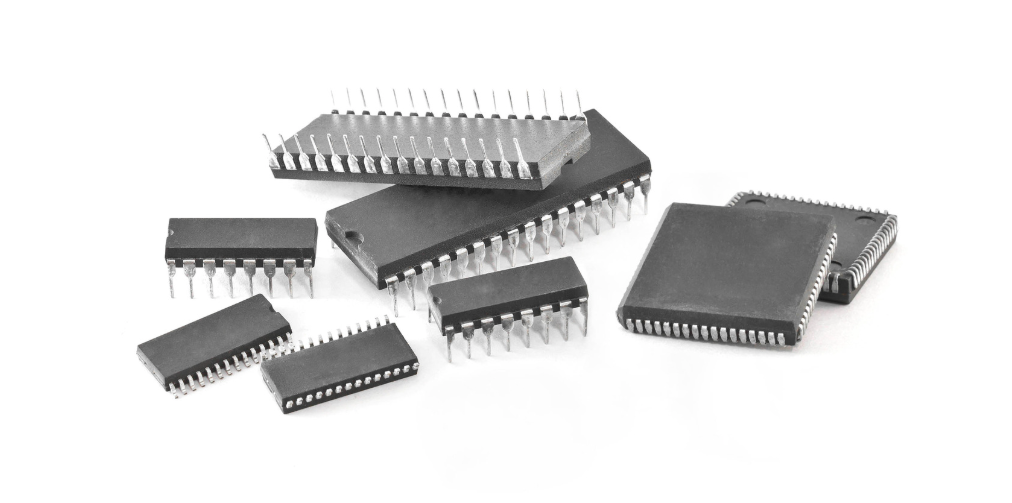
Components are becoming smaller and more powerful. Miniaturization saves space in devices and cuts costs. Engineers focus on making parts that fit tiny spaces. This trend allows for slimmer phones and compact gadgets. Integration combines several functions into one component. This reduces the number of parts needed. It also improves device reliability and speed.
Emerging Technologies
New materials and designs are changing discrete components. Silicon carbide and gallium nitride offer better performance. These materials work well in high power and heat. Flexible electronics create components that bend or stretch. This opens doors to wearable tech and smart clothing. Advances in 3D printing allow fast and cheap prototyping. Artificial intelligence helps design better and efficient parts.

Credit: en.wikipedia.org
Credit: www.microchipusa.com
Frequently Asked Questions
What Are Discrete Electronic Components?
Discrete electronic components are individual, separate electronic parts. They include resistors, capacitors, diodes, and transistors. These components perform specific functions in circuits. They are essential for building and repairing electronic devices.
Why Use Discrete Components In Circuits?
Discrete components offer precise control and flexibility. They allow custom circuit design and easy troubleshooting. They are often preferred for prototyping and small-scale projects. Their individual nature makes upgrading or replacing parts straightforward.
How Do Discrete Components Differ From Integrated Circuits?
Discrete components are single-function parts, while integrated circuits combine many functions in one chip. Discrete parts are larger and easier to handle. Integrated circuits save space and improve efficiency but lack individual component control.
What Are Common Examples Of Discrete Electronic Components?
Common examples include resistors, capacitors, inductors, diodes, and transistors. Each serves a unique role like resistance, capacitance, or signal amplification. These components are widely used in electronics for various applications.
Conclusion
Discrete electronic components play a key role in many devices. They help control and direct electrical signals. Understanding their function makes electronics easier to learn. Each component has a specific job in a circuit. From resistors to capacitors, they work together smoothly.
Knowing these parts helps you fix or build circuits. Electronics become less confusing with clear knowledge. Small parts, big impact. Keep exploring to see how these components fit in your daily tech. Simple parts, powerful results.
Leave a Reply