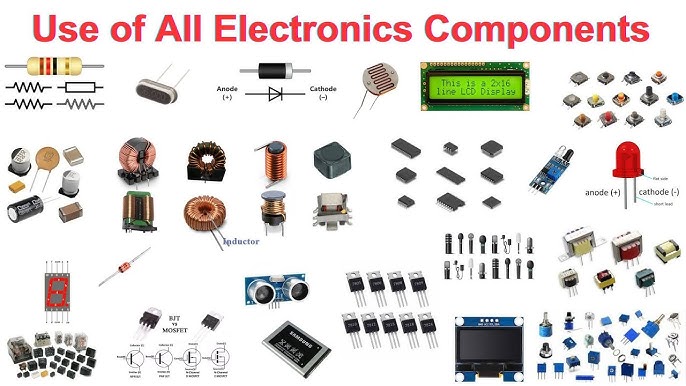
Have you ever wondered what makes your smartphone light up or your TV show clear pictures? The secret lies in tiny parts called electronic components.
These small pieces play a huge role in powering the devices you use every day. Understanding what electronic components are used for can help you see the magic behind technology and even inspire you to create your own gadgets. Keep reading to discover how these components work and why they matter to you.
Active Components
Active components are essential parts of electronic circuits that control the flow of electricity. They can amplify signals, switch currents on and off, and perform complex processing tasks. Without these components, your devices wouldn’t be able to function the way they do today.
Transistors
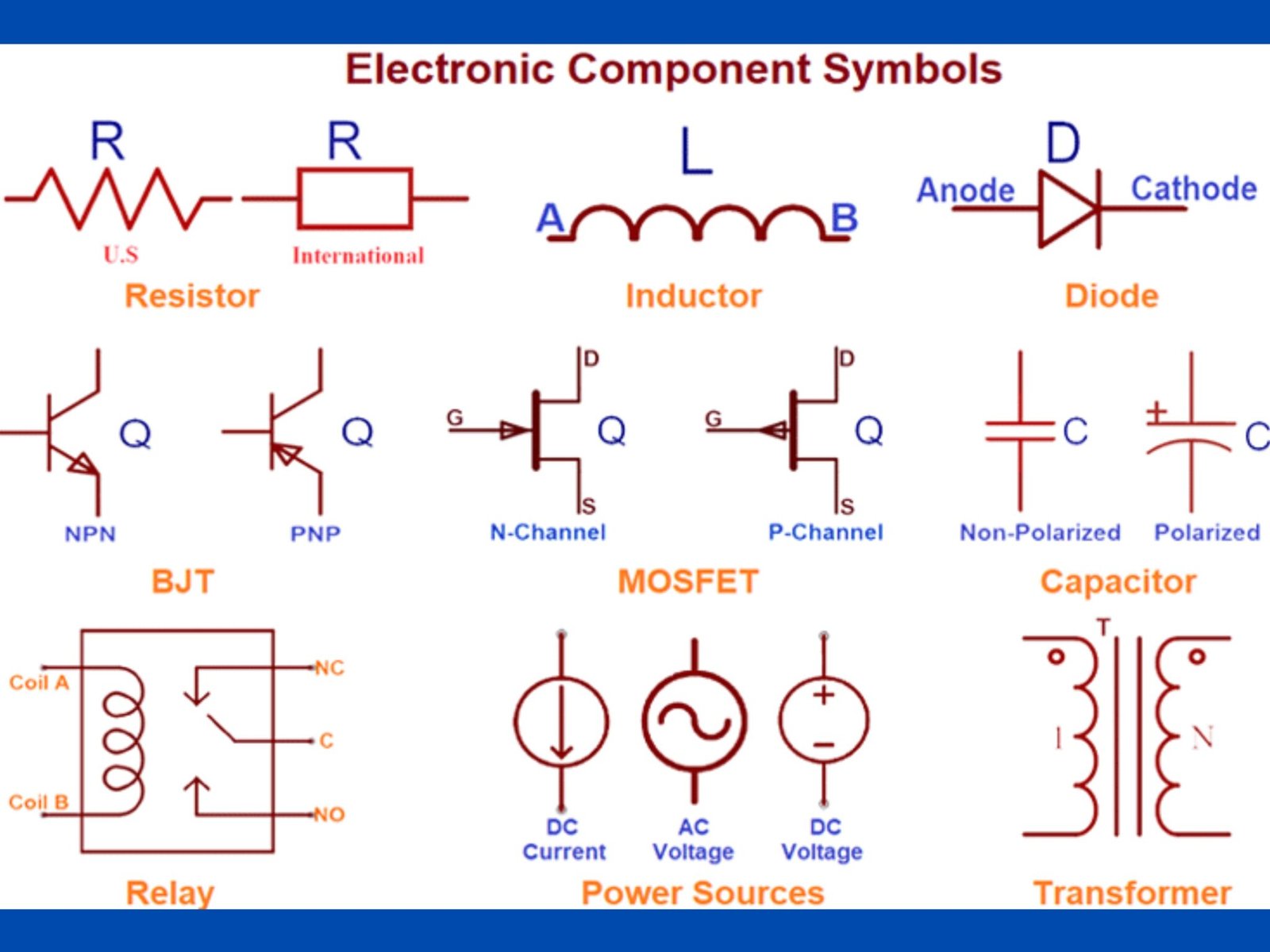
Transistors act like tiny switches or amplifiers inside your gadgets. They can turn current on or off, making them crucial for digital circuits like computers and smartphones. Think about your phone’s processor—it’s packed with millions of transistors working together to handle your commands instantly.
Ever wondered how your voice gets louder when you use a microphone? Transistors help by amplifying weak signals into stronger ones you can hear clearly. They come in different types, like bipolar junction transistors (BJTs) and field-effect transistors (FETs), each suited for specific tasks.
Diodes
Diodes allow current to flow in only one direction, protecting your circuits from damage. They’re like one-way gates for electricity, preventing backflow that could harm sensitive parts. In your power adapters, diodes convert alternating current (AC) into direct current (DC), which your devices need.
Some diodes, like light-emitting diodes (LEDs), do more than control current—they produce light. Have you noticed how LEDs last longer and use less power than traditional bulbs? That’s the magic of these small but powerful active components.
Integrated Circuits
Integrated circuits (ICs) combine hundreds or thousands of active components into a single chip. They handle everything from simple calculations to complex data processing in compact sizes. Your computer’s brain, the CPU, is a massive IC designed to perform billions of operations per second.
Using ICs means devices can be smaller, faster, and more reliable. Imagine trying to build a smartphone without these chips—it would be bulky and slow. Have you ever opened an old radio or TV? You’ll see how ICs replaced countless separate components, simplifying design and boosting performance.

Credit: www.tomsonelectronics.com
Passive Components
Passive components are the unsung heroes in electronic circuits. They don’t require power to operate but play crucial roles in controlling current, voltage, and signal flow. Understanding these components can help you design or troubleshoot circuits more effectively.
Resistors
Resistors limit the flow of electric current in a circuit. By controlling current, they protect sensitive components from damage. If you’ve ever adjusted the brightness of a light using a dimmer, you’ve seen resistors in action.
They come in various types, like fixed and variable resistors, each serving specific needs. Do you know how changing a resistor value can affect your circuit’s performance?
Capacitors
Capacitors store and release electrical energy quickly. They smooth out voltage fluctuations and filter out noise in signals. Think about how your smartphone’s camera uses capacitors to stabilize power for clear photos.
Capacitors also help in timing applications and energy storage. Have you noticed how your TV remote controls respond instantly? Capacitors play a role in that quick reaction.
Inductors
Inductors store energy in a magnetic field when electrical current flows through them. They are essential in tuning circuits and managing signal frequencies. Radio receivers use inductors to select the right station from many signals.
They also help reduce electrical noise and stabilize current. Ever wondered how your computer power supply keeps voltage steady? Inductors are part of that process.
Electromechanical Components
Electromechanical components combine electrical and mechanical functions. They play a vital role in controlling electrical circuits using physical movement. These components convert electrical signals into mechanical actions or vice versa. They are essential in many devices, enabling them to operate smoothly and safely.
Relays
Relays act as electrically operated switches. They open or close circuits by using an electromagnet. This allows a small electrical signal to control a larger current. Relays protect circuits from damage and help automate processes. They are common in home appliances and industrial machines.
Switches
Switches control the flow of electricity by making or breaking a connection. They can be manual or automatic. Manual switches require a person to turn them on or off. Automatic switches operate based on conditions like temperature or light. Switches are found in almost every electronic device.
Connectors
Connectors join electrical circuits together. They allow easy connection and disconnection of wires or cables. Connectors ensure a secure and stable electrical connection. They come in many shapes and sizes for different uses. Connectors are crucial for assembling and maintaining electronic equipment.
Semiconductor Devices
Semiconductor devices form the backbone of modern electronic systems. They control the flow of electrical current in devices ranging from simple gadgets to complex machinery. Understanding how these components work can help you appreciate their role in everyday technology and even inspire you to create your own electronic projects.
Rectifiers
Rectifiers convert alternating current (AC) to direct current (DC). This is crucial because many electronic devices require stable DC power to function correctly. You’ll find rectifiers in power supplies for radios, computers, and TVs, ensuring they get the right kind of electrical flow.
If you ever opened a power adapter, you might have noticed a small heat sink—this often cools the rectifier inside. Have you thought about how your devices would operate without this steady DC supply?
Optoelectronic Devices
Optoelectronic devices combine light and electronics to perform unique functions. Examples include LEDs, photodiodes, and laser diodes. These components are everywhere—from the screens you look at to sensors that detect light in cameras and remote controls.
Imagine how your smartphone camera adjusts to different lighting conditions; optoelectronic devices make that possible by converting light signals into electrical signals. What new applications could you create if you understood how light and electronics work together?
Thyristors
Thyristors act as switches that control large amounts of power with a small trigger signal. They are commonly used in motor speed controls, light dimmers, and power converters. Their ability to handle high voltage and current makes them vital in industrial and household devices.
Next time you adjust a fan’s speed or dim your room lights, consider the role of thyristors in delivering smooth and efficient control. Could mastering these components help you build smarter, energy-saving devices?
Functions In Circuit Design
Electronic components play vital roles in circuit design, acting as the building blocks that shape how a device functions. Each component has a specific job that supports the overall performance of the circuit. Understanding these functions helps you design better electronics and troubleshoot issues more effectively.
Signal Amplification
Amplification is about making weak signals stronger. Transistors and operational amplifiers are key components that boost electrical signals without altering the original information.
Imagine listening to a faint sound on your phone. The amplifier component ensures you hear it clearly by increasing the signal’s strength. Have you ever wondered how your audio devices make quiet sounds loud enough to enjoy?
Power Regulation
Power regulation keeps the voltage and current within safe and usable limits. Components like voltage regulators and capacitors help maintain steady power flow to prevent damage or malfunction.
Think about your laptop charger—it delivers power safely by adjusting voltage to what your device needs. What would happen if your circuit received too much or too little power? Proper regulation avoids such risks.
Data Processing
Data processing components interpret and manipulate signals to perform tasks. Microcontrollers and logic gates process input data, enabling devices to make decisions and control actions.
Consider how a thermostat reads temperature data and adjusts heating accordingly. These components are the brains behind that smart response. How does your device know what to do next? Data processing components make it happen.

Credit: www.reddit.com
Innovations In Electronic Components
Electronic components have evolved significantly, shaping how devices perform and interact with users. Innovations in these components focus on making gadgets smaller, smarter, and more energy-conscious. Such advancements directly impact your daily tech experience, from faster smartphones to longer-lasting wearables.
Miniaturization
Smaller electronic components allow designers to pack more power into less space. This trend has made it possible to carry powerful devices like smartphones and fitness trackers in your pocket or on your wrist. Have you ever wondered how your watch can track your heart rate and GPS without being bulky?
The push for miniaturization also drives innovation in circuit design and materials. Tiny components reduce weight and improve portability, giving you more freedom to use technology anywhere. This change affects everything from medical devices to drones, making them more practical and accessible.
Energy Efficiency
Energy-efficient components help extend battery life, a feature crucial for mobile and remote devices. Advances in semiconductors and power management mean your laptop or phone can last hours longer without a charge. Imagine how this saves you in inconvenient moments when charging isn’t an option.
Efficient components also reduce heat generation, improving device reliability and safety. This innovation not only benefits users but also supports eco-friendly technology by lowering overall power consumption. How often do you consider the environmental impact of your gadgets?
Smart Technologies
Smart electronic components enable devices to process data, communicate, and adapt to user needs. Sensors, microcontrollers, and AI chips work together to make your home appliances and vehicles more responsive. Have you noticed how your smartphone adjusts brightness or your thermostat learns your schedule?
These components allow for automation and personalized experiences that simplify your daily routine. As they become more affordable, expect to see smarter products in every aspect of life. What would you automate if your devices understood your habits better?
Applications In Modern Electronics
Electronic components play a vital role in shaping modern technology. These tiny parts make devices smarter, faster, and more efficient. They are the building blocks behind many everyday gadgets and complex systems.
Modern electronics rely on these components to function properly. They help in processing data, controlling power, and enabling communication. Different industries use electronic components to meet unique needs and challenges.
Consumer Electronics
Electronic components are everywhere in consumer devices. Smartphones, tablets, and laptops depend on chips, resistors, and capacitors to work smoothly. These parts help manage power, store data, and connect to networks.
Other devices like TVs, cameras, and gaming consoles also use these components. They improve display quality, enhance sound, and support wireless features. Without them, modern gadgets would not exist.
Automotive Systems
Vehicles now contain many electronic components for safety and comfort. Sensors monitor engine performance and detect obstacles. Microcontrollers control braking systems and airbag deployment.
Electric and hybrid cars use components to manage battery power and motor control. Infotainment systems and GPS navigation also rely on electronic parts. These components make driving safer and more enjoyable.
Industrial Automation
Factories use electronic components to automate machines and processes. Sensors detect product quality and machine status. Controllers regulate motors, conveyors, and robotic arms.
These components increase production speed and reduce human error. They help maintain safety and improve energy efficiency. Industrial electronics are key to modern manufacturing and smart factories.
Credit: mscpl.in
Frequently Asked Questions
What Are The Main Uses Of Electronic Components?
Electronic components are used to build circuits and devices. They control electrical signals and power flow. Common uses include computing, communication, and automation in various industries.
How Do Electronic Components Improve Device Performance?
They regulate voltage, current, and signal processing. This ensures devices run efficiently and reliably. Components like resistors, capacitors, and transistors enhance functionality and stability.
Which Industries Rely On Electronic Components The Most?
Electronics are crucial in healthcare, automotive, consumer gadgets, and telecommunications. They enable innovation and improve product capabilities in these sectors.
Can Electronic Components Be Used In Diy Projects?
Yes, electronic components are ideal for DIY electronics and prototyping. They allow hobbyists to create custom gadgets and learn about circuitry.
Conclusion
Electronic components make devices work by controlling electricity. They help build circuits for many products we use daily. From phones to cars, these parts play a key role. Knowing their uses helps us understand technology better. Simple parts can create complex machines.
Every component has a special job in the system. Technology grows because of these small pieces. They connect, switch, and guide electric signals smoothly. Understanding them opens doors to learning electronics easily. This knowledge is useful for students and hobbyists alike.
Leave a Reply