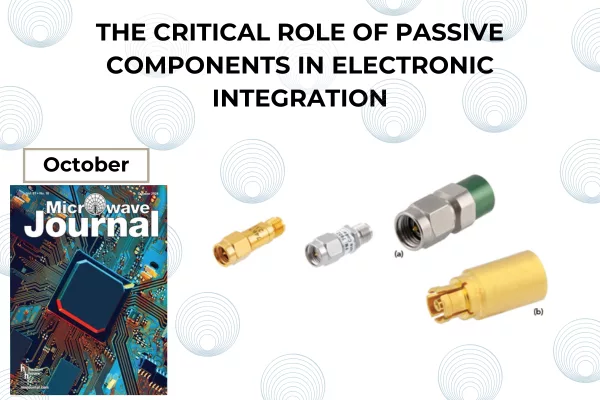
Have you ever wondered what makes your electronic devices work smoothly without any sparks or noise? The secret lies in passive components—tiny parts that quietly control the flow of electricity around your gadgets.
Understanding these components can give you a clear edge, whether you’re fixing a device, designing a circuit, or just curious about how electronics really function. You’ll discover the key passive components used in electronics and why they matter to your projects.
Keep reading, and you’ll soon see how these simple parts play a powerful role in the technology you use every day.

Credit: www.electronicsandyou.com
Resistors
Resistors are fundamental components in electronics that control the flow of electric current. They provide resistance to the current, allowing circuits to function correctly by managing voltage and current levels. Understanding resistors helps you design and troubleshoot electronic devices effectively.
Types Of Resistors
Resistors come in various types based on their construction and purpose. The most common are fixed resistors, which have a set resistance value, and variable resistors, like potentiometers, that allow you to adjust resistance.
- Carbon Film Resistors:Affordable and widely used in general circuits.
- Metal Film Resistors:Offer better accuracy and stability.
- Wirewound Resistors:Suitable for high power applications.
- Surface Mount Resistors:Compact size for modern electronics.
Applications Of Resistors
Resistors are everywhere in electronics, shaping how devices work. They limit current to sensitive components, divide voltages to create reference points, and help in timing circuits by working with capacitors.
Have you ever wondered how your phone manages different brightness levels or audio volumes? Resistors play a key role in these adjustments by controlling the electric signals.
Choosing The Right Resistor
Picking the right resistor depends on your circuit’s needs. Consider the resistance value, power rating, tolerance, and type.
- Resistance Value:Determines how much current is limited.
- Power Rating:Indicates how much heat the resistor can safely handle.
- Tolerance:Shows how precise the resistance value is.
- Physical Size:Important for space constraints in your design.
Ask yourself: does your circuit need a precise resistor or a general one? This choice affects performance and reliability significantly.
Capacitors
Capacitors are fundamental passive components in electronics that store and release electrical energy. They consist of two conductive plates separated by an insulating material called a dielectric. This simple structure allows capacitors to perform vital roles in circuits, from filtering noise to stabilizing power supply.
Varieties Of Capacitors
Capacitors come in many types, each suited for different applications. Common varieties include:
- Ceramic Capacitors:Small, low-cost, and used in high-frequency circuits.
- Electrolytic Capacitors:Higher capacitance values, often used in power supply filtering.
- Tantalum Capacitors:Stable and reliable, ideal for space-constrained designs.
- Film Capacitors:Known for low loss and high stability.
Choosing the right type can impact your circuit’s performance dramatically. Have you ever faced issues because a capacitor didn’t match the circuit’s needs?
Capacitor Uses In Circuits
Capacitors serve many roles depending on the circuit’s purpose. They smooth voltage fluctuations by filtering out noise in power supplies. They also store energy temporarily to release it when needed, such as in camera flashes or audio equipment.
In timing circuits, capacitors help control delays and oscillations. You might be surprised how often a simple capacitor can improve signal quality or stabilize voltage in your projects.
Factors To Consider When Selecting Capacitors
Selecting the right capacitor involves more than just capacitance value. You must consider voltage rating to ensure the capacitor can handle the circuit’s maximum voltage. Temperature stability is crucial, especially in environments with extreme temperature changes.
Other key factors include tolerance, size, and equivalent series resistance (ESR). Ignoring these can lead to circuit failure or inefficiency. What’s your approach to balancing these factors when picking capacitors for your designs?
Inductors
Inductors are essential passive components in electronics that store energy in a magnetic field when electric current flows through them. They may look simple, but their role can dramatically affect how a circuit performs. Understanding inductors helps you design better circuits and troubleshoot more effectively.
Different Inductor Types
Inductors come in various forms, each suited for specific applications:
- Air Core Inductors:These use no magnetic core, making them ideal for high-frequency circuits because they avoid core losses.
- Iron Core Inductors:Featuring an iron core, they offer higher inductance but can suffer from core losses at high frequencies.
- Ferrite Core Inductors:Commonly used in power supplies, these have ferrite cores that provide good magnetic properties with minimal losses.
- Toroidal Inductors:Wound on a doughnut-shaped core, they reduce electromagnetic interference and are compact.
Choosing the right type depends on your circuit’s frequency and size constraints.
Role Of Inductors In Electronics
Inductors control current flow and filter signals by opposing changes in current. This makes them invaluable in power supplies, radio-frequency circuits, and audio equipment.
Have you ever wondered why your phone charger doesn’t cause interference? That’s often thanks to inductors smoothing out the power supply.
Inductors also work with capacitors to create tuned circuits, which select specific frequencies in radios or filters.
Selecting The Appropriate Inductor
Choosing the right inductor isn’t just about picking the one with the highest inductance. You need to consider:
- Inductance value:Match it to your circuit’s requirements for proper filtering or timing.
- Current rating:Ensure the inductor can handle the maximum current without overheating.
- Resistance:Lower resistance means less energy loss, improving efficiency.
- Size and shape:Consider space limitations and EMI concerns.
Have you checked the datasheet carefully before buying an inductor? It can save you from costly mistakes.

Credit: www.youtube.com
Transformers
Transformers are essential passive components in electronics. They transfer electrical energy between circuits through magnetic fields. Transformers adjust voltage levels and provide isolation between circuits. Their design allows efficient energy transfer with minimal loss. This makes them vital in power supplies, audio systems, and communication devices.
Transformer Varieties
- Power Transformers:Used in power distribution to step voltage up or down.
- Audio Transformers:Match impedance and isolate audio signals.
- Isolation Transformers:Separate circuits for safety and noise reduction.
- Pulse Transformers:Handle high-frequency signals in digital circuits.
- Autotransformers:Use a single winding for voltage adjustment with less copper.
Importance Of Transformers
Transformers enable voltage conversion, allowing devices to operate safely. They protect circuits by isolating sections and reducing noise. Transformers improve energy efficiency by minimizing power loss. They support signal integrity in audio and communication systems. Without transformers, modern electronics would face voltage compatibility issues.
Transformer Selection Criteria
- Voltage Rating:Choose based on input and output voltage needs.
- Power Rating:Must handle the maximum load current without overheating.
- Frequency Range:Select according to the operating signal frequency.
- Size and Weight:Consider space constraints and portability.
- Isolation Requirements:Determine if electrical isolation is necessary for safety.
- Efficiency:Higher efficiency reduces energy loss and heat.
Diodes
Diodes are fundamental passive components in electronics. They allow current to flow in only one direction. This simple function makes them vital for controlling electrical circuits. Diodes protect circuits from damage and help convert alternating current (AC) to direct current (DC).
Their small size and reliability make them common in many devices. From power supplies to signal processing, diodes serve many roles.
Types Of Diodes
- Standard (PN Junction) Diode – Controls current flow direction.
- Zener Diode – Maintains a fixed voltage level.
- Light Emitting Diode (LED) – Emits light when current passes through.
- Schottky Diode – Fast switching and low forward voltage drop.
- Photodiode – Converts light into electrical current.
- Tunnel Diode – Operates at very high speeds.
Applications Of Diodes
- Rectification – Converts AC to DC in power supplies.
- Voltage Regulation – Keeps voltage steady using Zener diodes.
- Signal Demodulation – Extracts audio signals from radio waves.
- Protection – Prevents damage from voltage spikes.
- Light Emission – Used in displays and indicators.
Considerations For Diode Selection
- Maximum Forward Current – Ensure diode can handle circuit current.
- Reverse Voltage Rating – Must withstand maximum voltage in reverse.
- Forward Voltage Drop – Lower voltage drop improves efficiency.
- Switching Speed – Important for high-frequency applications.
- Package Type – Size and mounting affect circuit design.
Crystals And Oscillators
Crystals and oscillators are essential passive components in electronics that help create precise timing signals. They provide stability and frequency control in many circuits, from simple clocks to complex communication devices. Understanding their types, roles, and how to choose them can improve your circuit’s performance significantly.
Types Of Crystals And Oscillators
Crystals come mainly in quartz form, prized for their stable frequency. Common types include:
- AT-Cut Crystals:Most popular, used for general timing applications due to good temperature stability.
- BT-Cut Crystals:Better for high-temperature environments but less common.
- TCXO (Temperature Compensated Crystal Oscillator):Adjusts frequency to counter temperature changes.
Oscillators can be categorized based on their frequency range and construction:
- Crystal Oscillators:Use crystals for stable frequency output.
- MEMS Oscillators:Microelectromechanical systems offering ruggedness and miniaturization.
- RC Oscillators:Use resistors and capacitors but less precise than crystal-based ones.
Function In Circuits
Crystals and oscillators generate consistent timing signals, which act as the heartbeat of digital circuits. They synchronize microprocessors, communication devices, and clocks, ensuring everything runs on time. Without them, your devices would lose sync, causing errors and unreliable performance.
Think about your computer’s clock—without a crystal oscillator, it wouldn’t keep accurate time. This precision is critical for data transmission, where even tiny timing errors can cause data loss or corruption.
Choosing Crystals And Oscillators
Selecting the right crystal or oscillator depends on your circuit’s frequency requirements and operating conditions. Consider factors like frequency stability, temperature range, and power consumption.
If your device operates in a harsh environment, a TCXO or MEMS oscillator might be the better choice for consistent performance. On the other hand, for cost-sensitive projects, a standard AT-cut crystal oscillator usually does the job well.
Ask yourself: How much frequency drift can your application tolerate? What temperature range will your device experience? Answering these will guide you to the best component choice.
Connectors And Switches
Connectors and switches are essential passive components that link different parts of an electronic circuit. They allow you to join wires and components securely and control the flow of electricity by opening or closing circuits. Without reliable connectors and switches, your device could malfunction or fail to operate altogether.
Varieties Of Connectors
Connectors come in many shapes and sizes to suit various applications. Some common types include:
- Pin connectors:Simple, often used on printed circuit boards (PCBs) for easy connection and disconnection.
- USB connectors:Widely used for data transfer and power in consumer electronics.
- Coaxial connectors:Designed for high-frequency signals like in cable TV or radio equipment.
- Terminal blocks:Useful for securing wires in industrial and home wiring setups.
Each connector type has its unique locking mechanism and current rating. Choosing the right one depends on your device’s power needs and environmental conditions.
Types Of Switches
Switches control the connection in a circuit by either completing or breaking the electrical path. The main types include:
- Toggle switches:Simple on/off switches that flip between two states.
- Push-button switches:Activate circuits only when pressed, often used in reset buttons.
- Rotary switches:Rotate to select one of several circuit paths.
- Slide switches:Slide to open or close a circuit, common in small electronics.
Each switch type offers different tactile feedback and durability, so consider how often the switch will be used and the environment it will face.
Selecting Connectors And Switches
Choosing connectors and switches isn’t just about fitting parts together; it’s about ensuring safety and reliability. Ask yourself these questions:
- Will the component handle the voltage and current in your circuit?
- Is the connector or switch rated for the environmental conditions, like moisture or temperature?
- How often will you need to connect or switch the component? Frequent use demands more durable parts.
In my experience, selecting a cheap connector for a high-power device led to overheating and failure. Investing a bit more upfront in quality components can save you headaches later.
Think about your project’s needs carefully—your choice affects both performance and longevity.
Credit: www.agsdevices.com
Printed Circuit Boards
Printed Circuit Boards (PCBs) form the backbone of modern electronic devices. They provide a compact platform to connect and support passive components like resistors, capacitors, and inductors. PCBs help organize these components neatly and ensure reliable electrical connections. The design and materials used in PCBs significantly affect the performance and durability of electronic circuits.
Role Of Pcbs
PCBs hold and connect passive components in an electronic circuit. They replace bulky wiring with thin copper tracks. This makes circuits smaller and lighter. PCBs also reduce errors during assembly and improve signal quality. They protect components from damage and help heat dissipation. Overall, PCBs make electronics efficient and reliable.
Designing Effective Pcbs
Effective PCB design balances space, signal flow, and heat management. Designers place components to minimize wire length and interference. They use layers to separate power and signal paths. Clear labeling and correct pad sizes simplify assembly. Testing points are included for troubleshooting. Good design ensures the circuit works well and lasts long.
Materials Used In Pcbs
PCBs use materials that provide strength, insulation, and heat resistance. Common materials include:
- FR-4:A fiberglass epoxy laminate, popular for durability and cost.
- Copper:Thin layers form the conductive pathways.
- Solder mask:A protective coating to prevent short circuits.
- Substrates:Sometimes flexible plastics for bendable circuits.
Choosing the right materials affects the PCB’s performance in different environments.
Frequently Asked Questions
What Are Passive Components In Electronics?
Passive components are electronic parts that do not generate energy. They only store or dissipate electrical energy, such as resistors, capacitors, and inductors. These components control current and voltage without amplification or power gain.
Which Are Common Passive Components Used In Circuits?
Common passive components include resistors, capacitors, inductors, diodes, and transformers. They manage electrical signals by resisting, storing, or transferring energy. These parts are essential for filtering, timing, and signal conditioning.
How Do Resistors Function As Passive Components?
Resistors limit electrical current flow in circuits. They convert electrical energy into heat, controlling voltage and current. Resistors help protect sensitive components and set operating points in electronic devices.
Why Are Capacitors Important Passive Components?
Capacitors store and release electrical energy quickly. They filter noise, stabilize voltage, and block direct current. Capacitors improve circuit performance by managing energy flow and signal timing.
Conclusion
Passive components play a key role in every electronic circuit. Resistors, capacitors, and inductors help control current and voltage. They do not need power to work. These parts make devices reliable and efficient. Understanding them helps you learn how electronics function.
Simple but essential. Use this knowledge to explore electronics with confidence.
Leave a Reply