Have you ever wondered what makes a Tesla coil work its magic? If you’re curious about the electronic components hidden inside this fascinating device, you’re in the right place.
Understanding these parts will not only satisfy your curiosity but also help you grasp how Tesla coils generate those spectacular sparks and electrical effects. Keep reading to discover exactly what components are at the heart of a Tesla coil and how they work together to create this stunning phenomenon.
Your journey into the world of Tesla coils starts here!

Credit: www.reddit.com
Basic Tesla Coil Structure
Understanding the basic structure of a Tesla coil is crucial. It consists of several key components. Each part plays a significant role in its operation. Let’s explore these components.
Primary Coil
The primary coil is the starting point of energy transformation. It typically consists of copper wire. This coil connects to a power source and capacitor. The primary coil generates a magnetic field. This field interacts with the secondary coil. It’s usually made of a few turns of thick wire.
Secondary Coil
The secondary coil is longer and thinner. It contains many more turns of wire. The coil is wound around a cylindrical form. The magnetic field from the primary coil induces a current here. This current is at a much higher voltage. The secondary coil is crucial for voltage amplification.
Toroid
The toroid sits atop the secondary coil. It shapes like a donut. This component helps distribute the electric field. It also prevents arcing to other objects. The toroid aids in storing electrical charge. It also boosts the voltage further. This part gives Tesla coils their iconic look.
Power Supply Components
The power supply components are essential for Tesla coils to work properly. They provide the high voltage needed to create the electric sparks. These parts control and manage the flow of electricity. Without them, the Tesla coil cannot generate the impressive arcs it is known for.
High Voltage Transformer
The high voltage transformer raises the voltage from the power source. It changes low voltage into thousands of volts. This boost is necessary to create strong electrical discharges. Different types of transformers can be used, like neon sign transformers or microwave oven transformers. They must handle high current and high voltage safely.
Capacitors
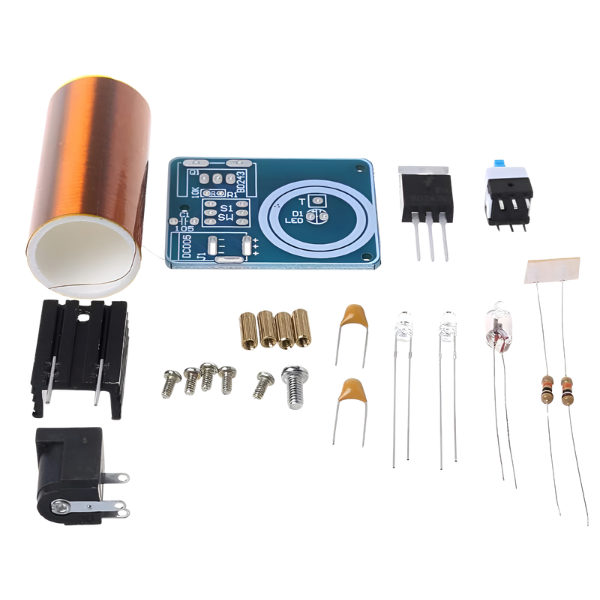
Capacitors store electrical energy and release it quickly. They work with the transformer to create bursts of high voltage. These bursts help form the spark streamers. Capacitors also smooth out voltage changes, protecting other parts. The type and size of the capacitor affect the coil’s performance.
Resistors
Resistors control the flow of electrical current in the circuit. They prevent damage by limiting the current. Resistors also help stabilize the voltage levels. Choosing the right resistor ensures the Tesla coil runs safely. They are small but play a big role in the power supply system.
Switching Devices
Switching devices play a crucial role in Tesla coils by controlling the flow of electricity that generates the high-voltage sparks. These components switch the current on and off rapidly, which is essential for creating the coil’s characteristic electrical arcs. Understanding the different types of switching devices helps you choose the right setup for your Tesla coil project.
Spark Gap
The spark gap is one of the oldest and simplest switching devices used in Tesla coils. It works by creating a small gap between two electrodes, which electricity jumps across when the voltage is high enough.
This sudden jump allows the coil to release energy in bursts, producing those impressive sparks. If you’ve ever built a Tesla coil, you might have noticed how adjusting the gap size changes the spark’s intensity and frequency.
Transistors
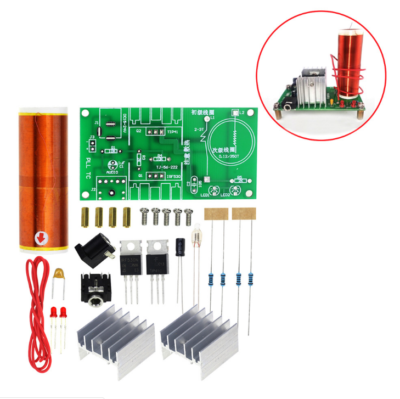
Transistors provide a more modern and efficient way to switch current in Tesla coils. Unlike spark gaps, transistors can switch on and off with precise timing and control.
You can use them to build solid-state Tesla coils that run cooler and quieter. If you want smoother control over your coil’s output, transistors are an excellent choice.
Thyristors
Thyristors are semiconductor devices that act like switches, turning on when triggered by a small current and staying on until the circuit is interrupted. They handle high voltages and currents, making them suitable for larger Tesla coils.
Using thyristors can improve efficiency and allow for better control over the coil’s operation. Have you tried working with thyristors in your high-voltage projects? They might surprise you with how well they manage power flow.
Credit: www.ebay.com
Control And Tuning Parts
Control and tuning parts play a crucial role in the performance of a Tesla coil. These components allow you to adjust the coil’s behavior, ensuring it operates efficiently and safely. Understanding how these parts work can help you fine-tune your Tesla coil to produce the desired electrical effects.
Variable Capacitors
Variable capacitors let you change the capacitance in the circuit easily. This adjustment helps you match the Tesla coil’s resonant frequency, which is vital for maximum energy transfer.
By turning the dial on a variable capacitor, you can increase or decrease capacitance, affecting how the coil oscillates. Have you ever tried tuning a radio? The concept is similar—finding the right frequency for a clear signal.
Spark Gap Adjustments
The spark gap controls when the Tesla coil fires by creating an electrical spark between two electrodes. Adjusting the gap distance changes the timing and intensity of the sparks.
Tightening the gap can increase the frequency of sparks but might cause overheating. Loosening it reduces spark frequency but lowers power. Finding the right gap setting requires careful trial and error.
Feedback Coils
Feedback coils provide a signal back to the primary circuit, stabilizing the oscillations and maintaining consistent power output. This feedback loop is essential for keeping the Tesla coil running smoothly.
Without proper feedback, your coil might lose energy quickly or produce weak sparks. Adjusting the position or turns of the feedback coil can significantly improve the coil’s performance. Have you noticed how small tweaks can lead to big changes in your Tesla coil’s behavior?
Safety And Support Elements
Safety and support elements play a crucial role in the operation of Tesla coils. These components help prevent accidents and ensure the coil functions reliably over time. Without proper safety measures, the high voltage and electromagnetic fields generated can pose serious risks.
Grounding Systems
Grounding is vital for Tesla coils to safely dissipate excess electrical energy. A solid grounding system redirects stray currents away from users and sensitive components.
Many Tesla coil builders use copper rods driven deep into the earth or metal plates buried underground. This creates a low-resistance path for electricity, reducing the chance of electric shock or damage.
Have you checked your grounding setup lately? A poor ground can cause unpredictable sparks or even damage your equipment.
Insulators
Insulators keep high voltage from jumping to unwanted places. They are made from materials like glass, ceramic, or plastic that resist electrical flow.
In my own Tesla coil project, I found that upgrading to high-quality ceramic insulators prevented unexpected arcs that once interrupted my experiments.
Using proper insulators around the primary coil, secondary coil, and connections ensures the electricity flows where it should—through the coil, not through your workspace.
Protective Enclosures
Protective enclosures shield you and others from accidental contact with high voltage parts. These can be made from acrylic, wood, or metal with viewing windows.
Enclosures also help contain electromagnetic interference and prevent dust or debris from affecting the coil’s operation.
Have you considered how an enclosure could improve both safety and performance? Even a simple transparent box can make a big difference in protecting users and extending the coil’s lifespan.
Credit: stemvolt.in
Frequently Asked Questions
What Electronic Components Are Inside Tesla Coils?
Tesla coils typically contain capacitors, spark gaps, primary and secondary coils, and transformers. These parts create high-voltage, high-frequency electricity.
How Do Capacitors Work In Tesla Coils?
Capacitors store electrical energy and release it rapidly to create oscillating currents. This helps generate the coil’s high-frequency voltage.
Why Are Spark Gaps Essential In Tesla Coils?
Spark gaps act as switches, allowing current to jump and create electrical pulses. They initiate the coil’s oscillations and energy transfer.
What Role Do Transformers Play In Tesla Coils?
Transformers step up voltage from a low level to a high level. This high voltage is crucial for Tesla coil operation.
Conclusion
Tesla coils use simple parts like wires, capacitors, and transformers. Each component plays a key role in creating high voltage electricity. Understanding these parts helps you see how Tesla coils work. They show the basics of electrical circuits clearly and simply.
Anyone curious about electronics can learn from them. Keep exploring and experimenting with these components to deepen your knowledge. Tesla coils remain a fascinating example of electrical science in action.
Leave a Reply