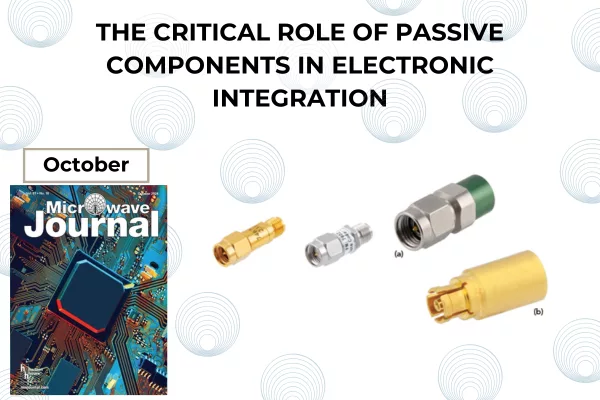
Have you ever wondered what makes your electronic devices work smoothly without constantly needing power? Understanding passive components in electronics is key to unlocking this mystery.
These small but powerful parts quietly control the flow of electricity and keep circuits stable. If you want to know how your gadgets stay reliable and efficient, keep reading. This article will reveal exactly what passive components are, why they matter, and how they impact the electronics you use every day.
Your journey to mastering electronics starts here!

Credit: www.youtube.com
Basics Of Passive Components
Understanding the basics of passive components is essential if you want to work with electronics or even just understand how your devices function. Passive components are the building blocks of circuits that do not require any external power to operate. They simply respond to the electrical signals passing through them, without adding energy to the system.
These components control and manage electrical energy by storing, dissipating, or filtering it. Think about your everyday gadgets—their performance depends heavily on how well these components are chosen and placed. Have you ever wondered how your phone manages power without overheating? Passive components play a big role in that.
What Defines A Passive Component?
A passive component cannot generate energy; it can only store or dissipate it. Unlike active components such as transistors or ICs, they don’t amplify signals or power. Their main job is to regulate voltage, current, and signal flow within circuits.
Because they don’t need a power source to function, passive components are generally more reliable and durable. This simplicity makes them ideal for a wide range of applications, from simple household electronics to complex industrial machines.
Common Types Of Passive Components
- Resistors:They limit the flow of electric current and adjust signal levels.
- Capacitors:These store and release electrical energy quickly, useful in filtering and timing applications.
- Inductors:They store energy in a magnetic field, commonly used in power supplies and filters.
- Transformers:These transfer electrical energy between circuits through magnetic coupling.
Knowing these types helps you identify what each part does when you look inside a device. It’s not just about labels; it’s about understanding their roles in making circuits work efficiently.
How Passive Components Affect Your Circuits
Passive components influence the performance and behavior of your circuits by controlling electrical parameters. If you change a resistor’s value, the current flow changes accordingly, which can impact the entire system.
They also affect signal quality. For example, capacitors can filter out noise, making your audio clearer or your sensor readings more accurate. Have you noticed how a simple component swap can improve your device’s responsiveness? That’s passive components at work.

Credit: www.electronicsandyou.com
Types Of Passive Components
Passive components are essential in electronic circuits. They do not generate energy but store or dissipate it. These components control current and voltage without amplification. Each type has a unique role and characteristics. Understanding them helps in designing and repairing electronic devices.
Resistors
Resistors limit the flow of electric current. They convert electrical energy into heat. Resistors have a fixed or variable resistance value. They protect sensitive components by controlling current levels. Common types include carbon film, metal film, and wire wound resistors.
Capacitors
Capacitors store electrical energy temporarily. They release energy when needed in the circuit. Capacitors smooth out voltage fluctuations and filter signals. Types include ceramic, electrolytic, and tantalum capacitors. Their ability to store charge depends on capacitance.
Inductors
Inductors store energy in a magnetic field. They resist changes in current flow. Inductors are coils of wire wrapped around a core. They help filter signals and stabilize current. Common uses include transformers and chokes in power supplies.
Characteristics Of Passive Components
Passive components in electronics have distinct characteristics that set them apart from active components. Understanding these traits helps you design circuits more effectively and predict how components will behave under different conditions.
These components do not generate energy but can store or dissipate it. You might be surprised to learn that despite their simplicity, passive components play a crucial role in controlling current, voltage, and signal flow in your devices.
Energy Consumption And Generation
Passive components never produce energy; they only consume or store it temporarily. Think of a resistor—it consumes electrical energy by converting it into heat. This lack of energy generation is a key marker distinguishing passive parts from active ones like transistors or ICs.
Non-amplifying Behavior
One defining feature is that passive components cannot amplify signals. They can only attenuate or modify them. For instance, capacitors and inductors may filter or delay signals but won’t increase signal strength.
Linearity And Time Invariance
Many passive components exhibit linear behavior, meaning their response is directly proportional to the input. This predictability makes them easier to analyze and use. However, some, like thermistors, show non-linear traits, which can be useful in sensing temperature changes.
Frequency Response
Passive components react differently to various signal frequencies. Capacitors block low-frequency signals but pass high-frequency ones, while inductors do the opposite. This frequency-dependent behavior lets you design filters and tuning circuits tailored to your needs.
Durability And Reliability
Generally, passive components are robust and have long lifespans. They don’t rely on power supplies or complex control, which reduces failure points. Have you ever noticed how capacitors and resistors often outlast more complex parts in your gadgets?
Physical Size And Cost
Passive components are usually small and inexpensive. This makes them ideal for mass production and integration into compact electronic devices. Despite their low cost, their influence on circuit performance is significant.
Role In Electronic Circuits
Understanding the role of passive components in electronic circuits is essential for anyone working with electronics. These components do not generate energy but play vital roles in controlling and managing electrical signals. Their presence ensures circuits function smoothly and efficiently.
How Passive Components Control Current And Voltage
Passive components like resistors, capacitors, and inductors regulate current and voltage without adding power to the circuit.
Resistors limit current flow, protecting sensitive parts from damage. Capacitors store and release electrical energy, smoothing out voltage fluctuations. Inductors resist changes in current, helping maintain steady signals.
Have you ever wondered how your phone keeps stable voltage despite battery drain? That’s the work of passive components managing energy flow.
Energy Storage And Release
Capacitors and inductors store energy temporarily and release it when needed.
This ability helps circuits handle sudden changes in power demand. For example, capacitors can provide quick bursts of energy to maintain performance.
Think about the flicker in a light bulb when you switch it on—that’s when energy storage components kick in to balance the load.
Signal Filtering And Noise Reduction
Passive components are crucial in filtering unwanted signals and reducing noise.
Capacitors block direct current (DC) while allowing alternating current (AC) to pass, which helps clean up signals. Inductors and resistors work together to smooth out fluctuations.
When you listen to music without static or interference, passive components are quietly doing their job behind the scenes.
Shaping And Timing Signals
Passive components help shape the timing and form of electrical signals.
RC (resistor-capacitor) circuits create delays or set frequencies, essential in clocks and timers. These precise adjustments allow devices to perform actions at the right moment.
Have you noticed how your microwave timer counts down accurately? Passive components play a big part in making that possible.
Cost-effective And Reliable Circuit Design
Using passive components can reduce complexity and cost in electronic designs.
They have no moving parts, which means they rarely fail and require less maintenance. This reliability makes your gadgets last longer and work better.
Next time your device runs smoothly for years, remember the silent work of passive components.
Passive Vs Active Components
Electronics use two main types of components: passive and active. These parts work together to make devices function. Understanding the difference helps in learning how circuits operate. Both types are essential but serve different roles in electronics.
What Are Passive Components?
Passive components do not generate energy. They only store or release it. Common examples include resistors, capacitors, and inductors. These parts control current and voltage without amplification. They cannot add power to a circuit.
What Are Active Components?
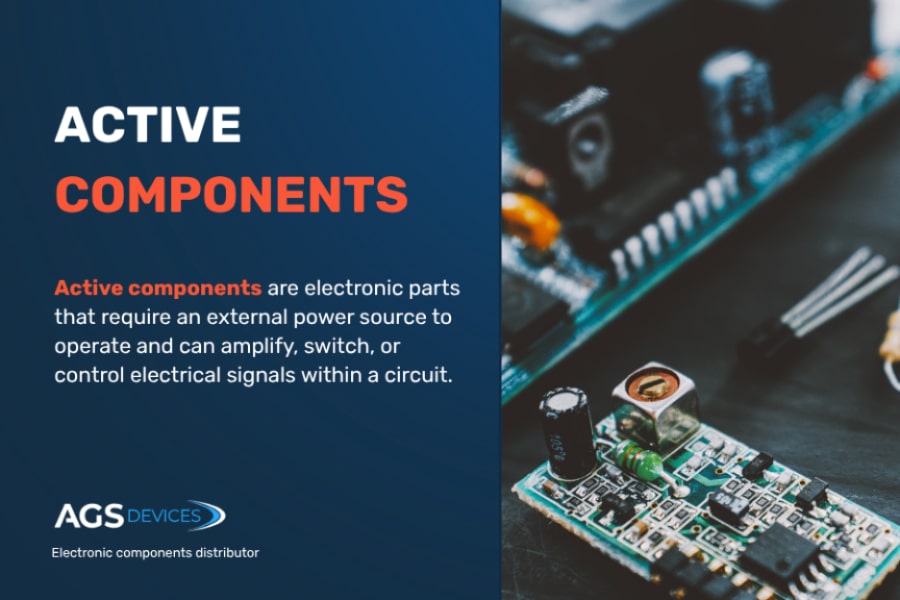
Active components can control current flow and amplify signals. They require an external power source to work. Examples include transistors, diodes, and integrated circuits. These parts can increase power or switch signals in a circuit.
Key Differences Between Passive And Active Components
| Feature | Passive Components | Active Components |
|---|---|---|
| Energy Source | No external power needed | Require external power |
| Function | Store or dissipate energy | Amplify or switch signals |
| Examples | Resistors, capacitors, inductors | Transistors, diodes, ICs |
| Signal Control | Cannot amplify | Can amplify |
Why Understanding The Difference Matters
Knowing passive versus active helps in designing circuits. It guides component choice for specific tasks. Correct use improves device efficiency and reliability. This knowledge benefits beginners and experts alike.
Applications In Everyday Devices
Passive components play a key role in many everyday devices. They help control and manage electrical signals without needing extra power. These parts include resistors, capacitors, and inductors. You find them in gadgets, appliances, and even simple toys.
They work quietly behind the scenes. Their job is to support the main functions of electronic devices. Their simple structure makes them reliable and long-lasting. Here are some common uses of passive components in daily life.
Television And Audio Equipment
Resistors adjust sound levels and control current flow. Capacitors help in tuning radio frequencies and storing energy. Inductors filter signals to improve sound quality. These parts ensure clear images and crisp sounds.
Mobile Phones And Tablets
Capacitors store and release energy quickly. Resistors limit current to protect circuits. Inductors help filter noise in signals. Together, they keep devices running smoothly and save battery life.
Home Appliances
Passive components help control motors and sensors. Resistors regulate power to heating elements. Capacitors start motors and smooth electrical supply. Inductors reduce electrical noise in circuits.
Lighting Systems
Capacitors improve energy efficiency in LED lights. Resistors control brightness levels. Inductors reduce flickering and electrical interference. These components create stable and long-lasting lighting.
Computers And Laptops
Passive parts manage voltage and current in motherboards. Capacitors store power for short bursts. Resistors protect delicate circuits from damage. Inductors filter signals for better performance.
Choosing The Right Passive Component
Choosing the right passive component can make or break your electronic project. These small parts often go unnoticed, but their quality and suitability directly affect your circuit’s performance and longevity. You need to look beyond just the price tag and understand what each component brings to the table.
Understanding Specifications
Every passive component comes with detailed specifications that you must understand to select the right one. Look at parameters like resistance, capacitance, tolerance, power rating, and frequency response. For example, a resistor with a 5% tolerance might work for a basic circuit, but precision electronics demand tighter tolerances like 1% or less.
Ignoring these details can cause unexpected failures or poor performance. Have you ever swapped a capacitor only to find your device still acts flaky? That’s often because its voltage rating or capacitance wasn’t suitable for the application.
Considering Environmental Factors
Where your component will live matters just as much as its specs. Temperature, humidity, and mechanical stress influence how passive components behave over time. If your device operates outdoors or inside a car, you need components rated for those harsh environments.
For instance, ceramic capacitors may crack under constant vibration, while tantalum capacitors handle stress better but come at a higher cost. Think about your project’s conditions—will it face sudden temperature changes or corrosive atmospheres? Choosing components that can withstand these challenges saves you from frequent repairs and replacements.
Future Trends In Passive Components
Passive components play a vital role in modern electronics. Their future development focuses on improving performance and adapting to new technologies. These components will become smaller, smarter, and more efficient. Innovations aim to meet the rising demand for compact and reliable devices.
Advances in materials and manufacturing techniques will shape the next generation of passive components. These trends will benefit various industries, including consumer electronics, automotive, and telecommunications.
Miniaturization and Higher DensityPassive components are shrinking in size to fit smaller devices. This trend allows more components on a single circuit board. Higher density improves device functionality without increasing size. It also reduces weight and power consumption.
Improved Material TechnologyNew materials enhance the durability and efficiency of passive components. Advances in ceramics, polymers, and composites lead to better performance. These materials help components withstand extreme temperatures and stresses.
Integration with Smart SystemsPassive components will increasingly work with smart sensors and circuits. This integration allows real-time monitoring and self-adjustment. Smart passive components can improve system reliability and lifespan.
Focus on SustainabilityEnvironmental concerns drive the development of eco-friendly passive components. Manufacturers are reducing hazardous substances and using recyclable materials. Energy-efficient designs also help lower the carbon footprint.
Support for 5G and BeyondPassive components must meet the demands of faster wireless networks. They require high-frequency performance and low signal loss. Innovations will support 5G, 6G, and future communication standards.
Credit: www.agsdevices.com
Frequently Asked Questions
What Defines A Passive Component In Electronics?
A passive component cannot generate energy. It only stores or dissipates electrical energy. Examples include resistors, capacitors, and inductors. They do not amplify or control current flow like active components.
How Do Passive Components Differ From Active Ones?
Passive components don’t require power to operate. Active components need an external power source. Passive parts only respond to electrical signals without adding energy. This makes them simpler and more reliable.
Why Are Passive Components Important In Circuits?
Passive components control voltage, current, and signal flow. They filter noise, store energy, and set timing. Without them, circuits would lack stability and functionality. They form the foundation for almost all electronic devices.
Can Passive Components Amplify Electrical Signals?
No, passive components cannot amplify signals. They only attenuate or modify signals. Amplification requires active components like transistors or operational amplifiers. Passive parts support signal processing but don’t increase signal strength.
Conclusion
Passive components play a key role in electronic circuits. They do not create energy but store or resist it. Common types include resistors, capacitors, and inductors. These parts help control current and voltage in devices. Understanding them helps you grasp how electronics work.
Simple yet essential. Keep exploring to learn more about electronics basics.
Leave a Reply