Have you ever wondered how advanced radar and communication systems direct electronic beams precisely without moving parts? Understanding which system component controls this electronic beam steering can unlock a whole new level of insight into modern technology.
If you want to know the secret behind fast, accurate, and flexible beam control, keep reading. This knowledge can help you grasp how devices around you work smarter and faster, and maybe even inspire your next tech project. Let’s dive into the key component responsible for this impressive feat.
Basics Of Electronic Beam Steering
Electronic beam steering is a technology that allows the direction of a signal beam to be changed without physically moving the antenna. This capability is essential in radar systems, wireless communications, and even medical imaging devices. Understanding the basics of how this works can help you appreciate the role of the system components behind the scenes.
What Is Electronic Beam Steering?
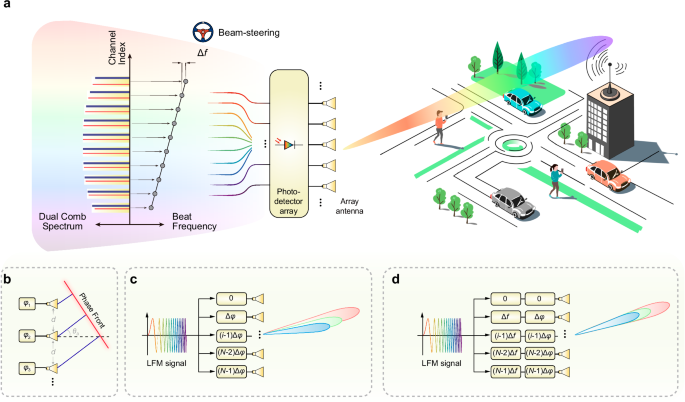
Electronic beam steering adjusts the direction of an electromagnetic wave by controlling the phase and amplitude of signals sent to an array of antenna elements. Instead of turning the antenna, the system shifts the beam electronically, making it faster and more precise.
Have you ever wondered how your phone connects to the strongest signal without moving any parts? That’s electronic beam steering at work.
How Phase Shifters Control Beam Direction
The key to steering the beam lies in phase shifters, which change the timing of the signal at each antenna element. By adding small delays, the waves combine to reinforce signals in one direction and cancel out in others.
This is similar to how you can create ripples in a pond that move in a certain direction by tapping the water at different times.
Role Of Antenna Arrays In Beam Formation
Antenna arrays consist of multiple elements arranged in a pattern. Each element emits a signal, and by adjusting their phases, the array forms a beam that points exactly where you want it.
The more elements in the array, the sharper and more focused the beam can be. This setup enables precise control over the beam’s path without physical movement.
Benefits Of Electronic Beam Steering
- Speed:Beam direction changes almost instantly, improving system responsiveness.
- Reliability:No moving parts mean less wear and tear.
- Flexibility:Can steer beams in multiple directions simultaneously or rapidly switch between targets.
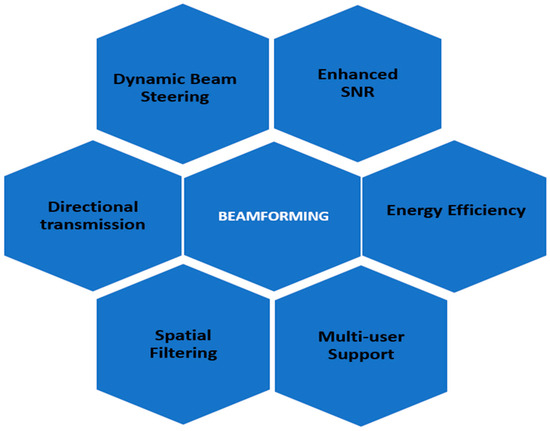
Imagine the advantage of switching your signal direction instantly during a critical communication, without any mechanical lag.
Credit: www.mdpi.com
Core Components Involved
Understanding electronic beam steering requires a close look at the core components that make it possible. These parts work together to control the direction of the beam without moving the antenna physically. Knowing what each component does can help you grasp how precise and fast modern beam steering systems are.
Phased Array Antennas
Phased array antennas are the heart of electronic beam steering. Instead of a single antenna, you have many small antennas arranged in a grid. Each antenna element emits a signal that combines with others to form a focused beam.
This setup lets you steer the beam by changing the timing of signals sent from each antenna. Imagine adjusting the timing so the waves add up in one direction, making the beam point exactly where you want. This method replaces mechanical movement with electronic control, making the system faster and more reliable.
Phase Shifters
Phase shifters are the key to controlling the timing of signals in phased array antennas. They adjust the phase of the signal at each antenna element, which changes the direction of the combined beam. Without phase shifters, you couldn’t steer the beam electronically.
Think about how a slight delay in signal timing can nudge the beam direction. These tiny adjustments happen continuously and rapidly, allowing the beam to scan an area or track moving targets with precision. They are small but powerful components that enable dynamic beam control.
Control Systems
The control system acts as the brain behind beam steering. It sends commands to phase shifters and manages the timing and direction of the beam. This system processes data from sensors and user inputs to decide where the beam should point next.
Imagine trying to manually adjust hundreds of antennas at once — it would be impossible without a smart control system. These systems use algorithms to calculate the necessary phase shifts in real time, ensuring your beam stays locked on target or sweeps accurately across a range.
Role Of Phased Array Antennas
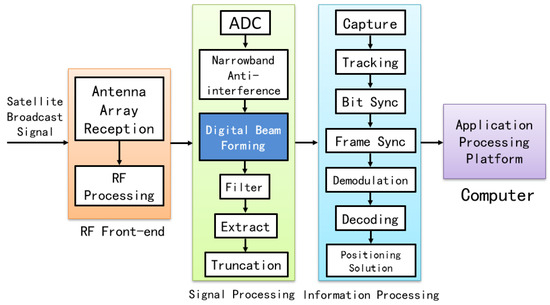
Phased array antennas play a key role in electronic beam steering. They control the direction of radio waves without moving parts. This ability makes modern radar and communication systems faster and more precise. The antenna’s electronic signals shift to steer the beam in different directions.
Structure And Function
Phased array antennas consist of many small antenna elements. Each element sends a signal with a slight time delay. The delays combine to shape and steer the beam. Changing these delays alters the beam’s angle quickly and accurately.
The system uses phase shifters to adjust signal timing. This adjustment creates constructive and destructive interference. The result focuses energy in the desired direction. The entire process happens electronically, with no physical movement.
Advantages Over Traditional Systems
- Faster beam steering without mechanical parts
- Higher reliability due to fewer moving components
- Ability to track multiple targets simultaneously
- Improved precision and flexibility in signal direction
- Compact design suitable for various applications
Traditional antennas rotate to change direction, which takes time. Phased arrays steer beams instantly. This speed is vital for modern radar and communication needs.
Functionality Of Phase Shifters
Phase shifters play a crucial role in electronic beam steering by controlling the phase of the signal in each antenna element. They adjust the timing of the wavefronts so the combined signal points in the desired direction without moving any physical parts. Understanding how phase shifters work can help you grasp how modern radar and communication systems achieve rapid and precise beam control.
Operating Principles
Phase shifters alter the phase of an electromagnetic signal by introducing a specific delay. This delay changes the timing of the wave emitted from each antenna element.
They operate using various technologies, including analog components like varactor diodes or digital approaches with switched delay lines. The key is to provide a controlled phase shift that can be adjusted dynamically.
Think of it as tuning the timing of each antenna’s signal so they all add up in a specific direction. This precise timing adjustment is what enables the beam to steer electronically.
Impact On Beam Direction
The phase shifts directly influence the direction where the signals combine constructively, effectively steering the beam.
By changing the phase incrementally across the antenna array, the main beam can be pointed anywhere within a certain range. This eliminates the need for mechanical movement, speeding up the steering process.
Have you ever wondered how radar systems track fast-moving objects so quickly? Phase shifters make it possible by allowing near-instantaneous beam steering, improving both response time and accuracy.
Without proper phase shifting, the beam would spread out or point in unintended directions, reducing the system’s efficiency. This highlights why phase shifters are essential components in electronic beam steering systems.
Importance Of Control Systems
Control systems play a crucial role in electronic beam steering. They manage how the beam moves and adjusts to different directions. Without control systems, steering the beam would be slow and inaccurate. These systems ensure precise control over the electronic signals that guide the beam.
Efficient control systems improve the performance of radar, communication, and imaging devices. They allow quick changes in beam direction without physical movement. This flexibility enhances signal quality and overall system reliability.
Signal Processing
Signal processing is at the heart of control systems for beam steering. It converts raw data into meaningful information that guides the beam. The system analyzes incoming signals and decides how to adjust the beam’s path.
Advanced algorithms filter noise and enhance signal clarity. This process helps maintain strong and accurate beams. Signal processing ensures the beam targets the correct location precisely.
Real-time Adjustments
Control systems enable real-time adjustments for dynamic beam steering. They respond instantly to changes in the environment or signal conditions. This quick reaction keeps the beam stable and focused.
Real-time control allows the system to track moving targets effectively. It also compensates for disturbances that could affect beam accuracy. Fast adjustments improve system performance and reduce errors.
Credit: www.mdpi.com
Comparative Analysis Of Components
Understanding which system component controls electronic beam steering requires a close look at how different parts perform against each other. Each component offers unique strengths and weaknesses that impact your device’s overall performance. Comparing these components helps you make smarter choices tailored to your specific needs.
Efficiency And Precision
Efficiency in beam steering means how quickly and accurately the system can redirect the beam without energy loss. Phase shifters, often used in phased array antennas, provide high precision by adjusting the signal phase at each antenna element. This results in sharp beam direction control, which is crucial for applications like radar and communications.
On the other hand, microelectromechanical systems (MEMS) mirrors steer beams by physically tilting reflective surfaces. These offer excellent angular precision but can be slower due to mechanical movement. When you require speed and fine angular resolution, weighing these differences is key.
Cost And Complexity
Cost plays a significant role, especially if you plan to scale your system. Phase shifters tend to be more expensive because they need complex circuitry and precise calibration. Their integration demands skilled design and careful maintenance, which adds to the overall project cost.
MEMS-based components usually cost less in bulk and have simpler integration with optical systems. However, their mechanical parts might wear out faster, leading to replacement costs. Deciding between upfront investment and long-term maintenance can save you headaches later.
Applications In Modern Technology
Electronic beam steering plays a crucial role in shaping modern technology. It allows systems to control the direction of beams without moving parts, making devices faster, more reliable, and efficient. Understanding where this technology fits can help you appreciate its impact on everyday tools and advanced systems.
Telecommunications
In telecommunications, electronic beam steering is essential for improving signal quality and coverage. Antennas use this technology to dynamically direct signals toward users, reducing interference and boosting data speeds. This means your calls and internet connections become clearer and more stable, even in crowded areas.
Imagine a busy city where thousands of devices compete for network access. Beam steering helps your phone get a stronger, more focused signal by adjusting the antenna’s direction instantly. This technology supports 5G networks, enabling faster downloads and smoother video calls.
Radar Systems
Radar systems rely on electronic beam steering to detect and track objects with precision. By quickly changing the beam’s direction, radars can scan large areas without mechanical movement, increasing speed and reliability. This is vital for applications like air traffic control and weather monitoring.
Think about how airports manage dozens of flights simultaneously. Beam steering helps radar systems track planes accurately and react swiftly to changes. It enhances safety by providing real-time information without delays.
Satellite Communications
Satellites use electronic beam steering to maintain strong communication links with ground stations and moving targets. This technology allows satellites to focus signals on specific areas, improving bandwidth and reducing power consumption. It also supports mobile users, like ships and planes, by keeping the connection stable.
Have you ever noticed how satellite TV or internet remains steady even when you’re on the move? Beam steering makes this possible by adjusting the satellite’s beam to follow your location. This adaptability is crucial for global connectivity in remote or changing environments.
Future Trends In Beam Steering Technology
Future trends in beam steering technology promise exciting changes. These changes aim to make electronic beam steering faster and more precise. The technology will likely improve how devices communicate and sense their environment. Advancements will focus on increasing efficiency and reducing size. Such improvements could impact radar, wireless networks, and autonomous systems deeply.
Innovations And Advancements
New materials like metamaterials help control beams with less power. Phased array antennas are becoming smaller and more affordable. AI and machine learning guide beam steering for better accuracy. Optical beam steering uses light for faster data transmission. Integration of 5G and 6G technology demands smarter beam steering solutions.
Potential Challenges
Heat generation remains a problem in compact beam steering devices. Complex algorithms require more processing power and energy. Interference from other signals can reduce beam steering effectiveness. Cost and manufacturing challenges slow down mass adoption. Ensuring security and privacy in beam-steered networks needs attention.

Credit: www.mdpi.com
Frequently Asked Questions
What Component Controls Electronic Beam Steering?
The phased array antenna system’s phase shifter controls electronic beam steering. It adjusts signal phases to steer the beam direction precisely.
How Does The Phase Shifter Aid Beam Steering?
Phase shifters change the signal phase in antenna elements. This alteration directs the beam without moving the antenna physically.
Which System Enables Dynamic Beam Direction Changes?
The beamforming network enables dynamic beam direction changes by controlling signal timing and phases across antenna elements.
Why Is The Beamforming Network Crucial For Steering?
The beamforming network manages signal distribution, enabling electronic beam steering and improving antenna performance and target tracking.
Conclusion
The electronic beam steering relies mainly on the phase shifter component. It changes the signal phase to direct the beam without moving parts. This control allows precise targeting in radar and communication systems. Understanding this part helps grasp how modern devices focus signals quickly.
The phase shifter works with other components, but it plays the key role. This technology improves performance and flexibility in many applications. Knowing which component steers the beam clarifies how electronic systems guide signals effectively.
Leave a Reply