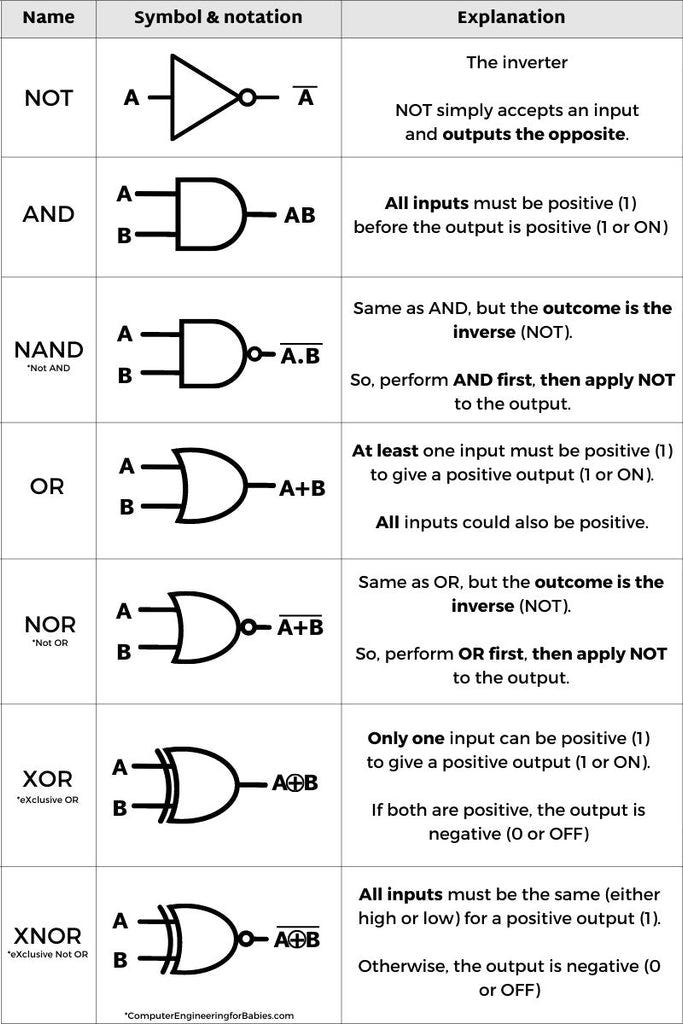
Have you ever wondered what makes your computer think, decide, and solve problems? At the heart of every digital device are tiny building blocks called Boolean logic gates.
But what electronic components actually bring these gates to life? Understanding these components can give you a clearer picture of how technology works behind the scenes. You’ll discover the essential parts that create Boolean logic gates and why they matter for your devices.
Keep reading—you’re about to unlock the secrets of the electronics that power your world.
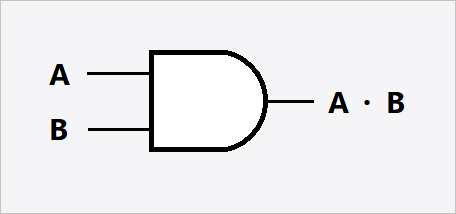
Credit: medium.com
History Of Boolean Logic Gates
The history of Boolean logic gates traces back to the 19th century. George Boole introduced Boolean algebra in 1854. His work laid the foundation for digital logic.
Early electronic components were simple but crucial. Engineers used them to build circuits that performed logical operations. These operations mimic human decision-making processes in machines.
Mechanical Relays And Switches
Before electronic components, mechanical relays were common. They acted as switches to control electrical signals. Relays helped form the first logic gate circuits.
Switches directed current flow, representing binary values. Their on/off states matched the 1s and 0s in Boolean logic.
Vacuum Tubes
Vacuum tubes appeared in the early 20th century. They amplified electrical signals and acted as switches. These tubes allowed faster and more reliable logic gates.
Computers like ENIAC used vacuum tube logic circuits. This technology marked a shift from mechanical to electronic gates.
Transistors
The invention of transistors revolutionized logic gates. Transistors replaced bulky vacuum tubes. They used less power and operated faster.
Transistors enabled the creation of integrated circuits. This made compact and complex Boolean logic gates possible.
Integrated Circuits And Modern Logic Gates
Integrated circuits combined many transistors on one chip. This innovation increased speed and reduced size. Modern digital devices rely on these circuits.
Today, Boolean logic gates are found in microprocessors and memory chips. They form the core of all digital electronics.
Basic Components Of Logic Gates
Logic gates form the foundation of digital circuits. They perform basic operations using electronic components. These components control the flow of electricity to produce desired outputs. Understanding these basic parts helps to grasp how logic gates work.
Each component has a unique role. Together, they create the functions of AND, OR, NOT, and other gates. The three key components are resistors, capacitors, and diodes. Let’s explore their functions in logic gates.
Resistors
Resistors limit the flow of electric current. They protect other components from too much current. In logic gates, resistors help set voltage levels. This controls the signal strength for correct logic operations. They ensure the circuit runs smoothly and safely.
Capacitors
Capacitors store and release electrical energy. They smooth out voltage changes in circuits. This helps prevent false signals in logic gates. Capacitors also delay signals slightly, aiding timing control. This timing is crucial for gates to process signals correctly.
Diodes
Diodes allow current to flow in one direction only. They act like a one-way valve for electricity. In logic gates, diodes help combine or separate signals. This controls how inputs affect the output. Diodes are essential in creating the basic logic functions.
Transistors In Logic Gates
Transistors form the heart of modern Boolean logic gates. They act as tiny switches that control electrical signals. By turning on or off, transistors represent the binary states 1 and 0. These states are essential for digital circuits and computing.
Different types of transistors were used to build logic gates. Each type offers unique advantages in speed, power, and size. Understanding these helps explain how early and current electronics function.
Bipolar Junction Transistors
Bipolar Junction Transistors (BJTs) were among the first transistors used in logic gates. They have three layers: emitter, base, and collector. BJTs control current flow by using a small current at the base to switch a larger current between emitter and collector.
BJTs switch quickly and handle high currents well. They helped create early logic families like TTL (Transistor-Transistor Logic). These gates are reliable and easy to produce. However, BJTs consume more power compared to newer transistors.
- Operate with both electrons and holes (bipolar)
- Used in early computers and devices
- Good switching speed but higher power use
Field Effect Transistors
Field Effect Transistors (FETs) control current using an electric field. They have three parts: gate, source, and drain. The gate voltage controls current flow between source and drain without needing much input current.
FETs use less power than BJTs and are easier to miniaturize. Metal-Oxide-Semiconductor FETs (MOSFETs) are the most common type in logic gates today. They enable complex circuits in small chips like microprocessors and memory devices.
- Voltage-controlled devices
- Lower power consumption
- Ideal for large-scale integration
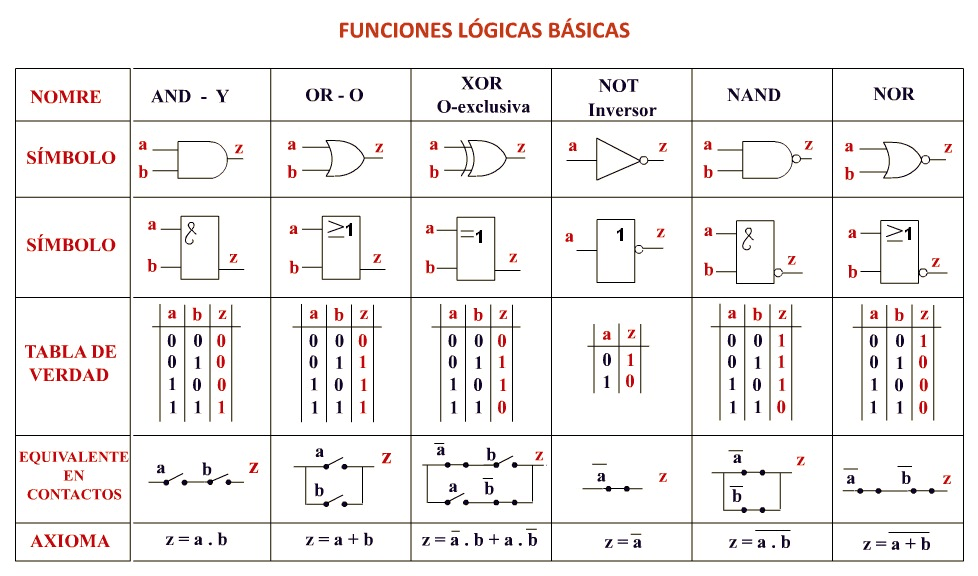
Credit: electronica.bysmax.com
Integrated Circuits In Modern Gates
Integrated circuits have transformed the way Boolean logic gates are built and used today. Instead of wiring individual components like transistors and resistors, modern gates are often embedded within compact chips. These chips handle complex logic functions while saving space and power, making your devices faster and more reliable.
Small Scale Integration
Small Scale Integration (SSI) marked the early days of integrated circuits. In SSI, just a few transistors—often less than 100—are combined on a single chip. This allowed basic logic gates, such as AND, OR, and NOT, to be created more efficiently than with discrete parts.
SSI chips made it easier to build simple circuits, but they still needed many chips to create complex systems. Imagine assembling a puzzle where each piece is a tiny gate; SSI helped reduce the number of pieces but didn’t solve the whole puzzle. Have you ever noticed how early computers were large and bulky? SSI was part of the reason.
Large Scale Integration
Large Scale Integration (LSI) pushed the limits by packing thousands of transistors into a single chip. This leap meant entire logic circuits, including multiple gates and even processors, could fit in a very small space. Today’s microchips are built on this principle, enabling your smartphone and laptop to perform millions of operations per second.
With LSI, manufacturers could produce chips that performed complete logic functions without external wiring. This drastically improved speed and reduced errors caused by physical connections. Have you ever wondered how complex computations fit into such tiny devices? LSI is the key.
Role Of Microprocessors
Microprocessors play a crucial role in the world of Boolean logic gates by acting as the brain behind complex decision-making processes in electronic devices. They are built using millions of tiny logic gates that perform simple yes/no operations, enabling your computer or smartphone to run applications and perform tasks efficiently.
Understanding how microprocessors use these fundamental components can give you insight into how electronic systems work at the most basic level. It’s fascinating to realize that the microprocessor is essentially a collection of interconnected Boolean logic gates working together to process information.
Microprocessors As Complex Logic Gate Networks
At their core, microprocessors consist of numerous Boolean logic gates such as AND, OR, NOT, NAND, and NOR gates. These gates combine to form arithmetic logic units (ALUs), control units, and memory elements.
Each gate handles a simple logic decision, but together, they enable the microprocessor to perform complex operations like addition, subtraction, and data comparison. This layered approach allows microprocessors to execute millions of instructions per second.
Electronic Components Behind Microprocessor Logic Gates
The fundamental components used in microprocessors to create Boolean logic gates include transistors, resistors, and capacitors. Transistors act as tiny switches that control the flow of electrical signals based on input voltage.
Resistors manage current flow, ensuring signals maintain proper voltage levels, while capacitors help store and stabilize electrical charges. Together, these components form the building blocks of logic gates inside the microprocessor’s integrated circuits.
How Understanding Microprocessor Logic Helps You
Knowing how microprocessors are built from Boolean logic gates can improve your grasp of troubleshooting and designing electronic circuits. For example, if you’re programming or working with hardware, understanding gate functions helps you write efficient code or debug hardware issues.
Have you ever wondered how your device decides to execute one action over another? The answer lies in the way microprocessors use these basic gates to evaluate conditions and make decisions instantly.
Application In Digital Circuits
Boolean logic gates form the foundation of digital circuits. These gates use electronic components like transistors and diodes to perform logical operations. Their role in digital circuits is crucial for processing and controlling data flow. They enable devices to make decisions based on binary inputs.
Computing Devices
Logic gates are essential in computers and processors. They handle arithmetic and data storage tasks. Transistors act as switches to turn signals on or off. This switching creates the basis for binary code, the language computers understand.
Microprocessors combine thousands of gates to execute complex instructions. Memory units use gates to store bits of data reliably. Without these gates, computers could not perform calculations or run software.
Consumer Electronics
Everyday gadgets rely on logic gates for smart functions. Smartphones, televisions, and gaming consoles use them for processing signals. Logic gates help control the display, sound, and user interface.
They also manage communication protocols in devices like routers and smart home systems. Small, energy-efficient transistors make these devices fast and reliable. Logic gates allow consumer electronics to respond instantly to user commands.
Future Trends In Logic Gate Design
The future of logic gate design is moving towards smaller, faster, and more efficient technologies. Traditional electronic components are reaching their physical limits. Scientists and engineers explore new materials and methods to overcome these barriers. This shift will impact computing power and energy use in devices. Two promising areas are quantum logic gates and nanotechnology.
Quantum Logic Gates
Quantum logic gates use quantum bits or qubits instead of classical bits. Qubits can exist in multiple states at once. This property allows quantum gates to process information much faster. They use principles like superposition and entanglement to perform calculations. Quantum gates could solve complex problems beyond current computers. Research focuses on making them stable and error-resistant. Quantum logic gates may change how computers handle tasks like cryptography and optimization.
Nanotechnology
Nanotechnology deals with building devices at the scale of atoms and molecules. It allows creating logic gates with tiny components smaller than traditional transistors. These nano-scale gates consume less power and generate less heat. New materials like graphene and carbon nanotubes improve gate performance. Nanotechnology can also enable flexible and wearable electronics. The challenge is to manufacture these gates reliably and in large amounts. Nanotech logic gates promise faster and more efficient circuits.
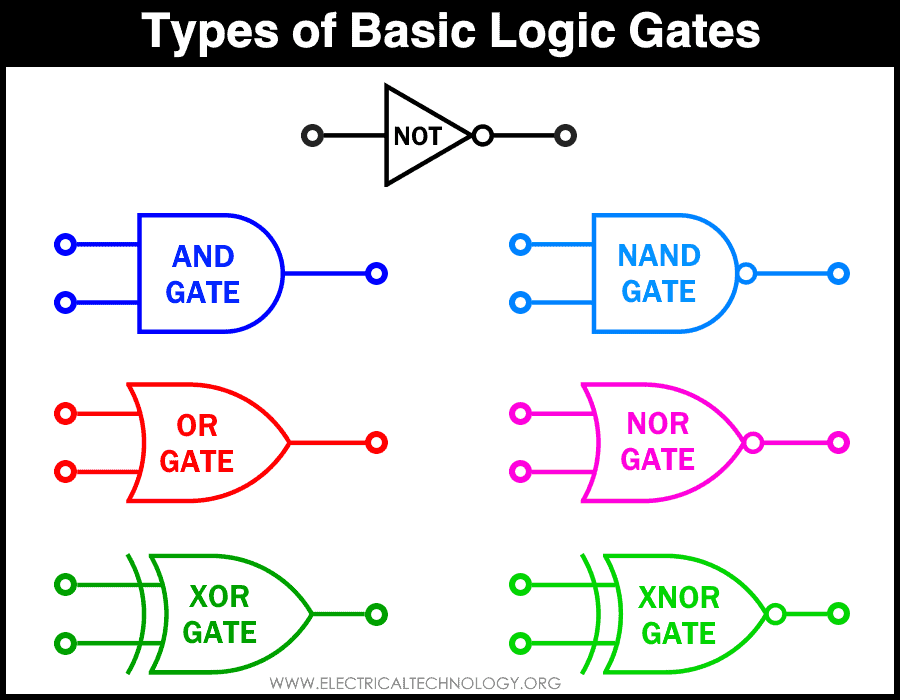
Credit: medium.com
Frequently Asked Questions
What Components Form Basic Boolean Logic Gates?
Basic Boolean logic gates use transistors, resistors, and diodes. Transistors act as switches. Resistors control current flow. Diodes allow current in one direction. Together, they perform AND, OR, and NOT operations in digital circuits.
How Do Transistors Create Logic Gate Functions?
Transistors control electrical signals by switching on or off. This switching enables Boolean operations like AND, OR, and NOT. Transistors amplify signals and act as electronic switches, fundamental in creating reliable, fast logic gates in modern digital electronics.
Why Were Diodes Important In Early Logic Gates?
Diodes allow current flow in a single direction. This property is essential for logic gate functions like OR and AND. Early logic gates used diodes to control signal paths before transistors became widespread and affordable.
Can Resistors Affect Boolean Logic Gate Performance?
Yes, resistors regulate current and voltage in logic circuits. They ensure proper signal levels and prevent damage to components. Resistors help stabilize gate operation and improve circuit reliability in Boolean logic implementations.
Conclusion
Electronic components like diodes and transistors build Boolean logic gates. These parts control electrical signals to create true or false outputs. Each gate uses a specific setup of these components to perform tasks. Understanding these basics helps explain how computers think and work.
Simple pieces combine to form complex circuits inside devices. Knowing this can make technology easier to grasp. Logic gates are the foundation of all digital electronics today.
Leave a Reply