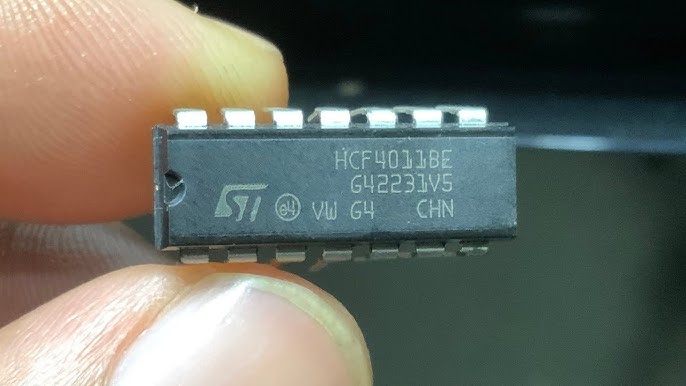
Are you working on a digital electronics project and wondering, “What number is my NAND gate IC component?” Finding the right number is crucial to ensure your circuit works perfectly.
Without knowing this, you might end up using the wrong chip and face frustrating errors. You’ll discover how to quickly identify your NAND gate IC number, what it means, and why it matters for your electronics work. Keep reading, and you’ll gain the confidence to pick the right component every time.
Common Nand Gate Ic Numbers
Common NAND gate IC numbers include 7400, 4011, and 74HC00 series. These numbers help identify digital electronic components quickly. Knowing the IC number makes it easier to find datasheets and specifications.
In digital electronics, understanding Nand gate IC numbers is crucial. These numbers help identify the specific IC containing the Nand gate logic. Different series of ICs exist to cater to various applications. Each series has unique characteristics and capabilities. Below, we explore some common Nand gate IC numbers.Standard 7400 Series
The 7400 series is a popular choice in digital electronics. It includes the classic 7400 IC. This IC contains four independent Nand gates. Each gate has two inputs, making it versatile. The 7400 series is known for its fast switching speed. It operates efficiently at standard voltage levels. Engineers often use it in commercial and industrial applications.Popular 4000 Series
The 4000 series caters to low power consumption needs. The CD4011 is a notable example. It contains four Nand gates with two inputs each. The 4000 series operates over a wider voltage range. This makes it suitable for battery-powered devices. Its slower speed compared to the 7400 series is a trade-off. Still, it remains a favorite for energy-efficient designs.Other Nand Gate Variants
Beyond the 7400 and 4000 series, other variants exist. Specialized ICs like the 74HC00 offer high-speed performance. They combine the benefits of the 7400 series with lower power usage. The 74LS00 is another variant. It provides low power Schottky performance. Each variant serves unique needs in different applications. Understanding these variants helps in selecting the right IC for a project.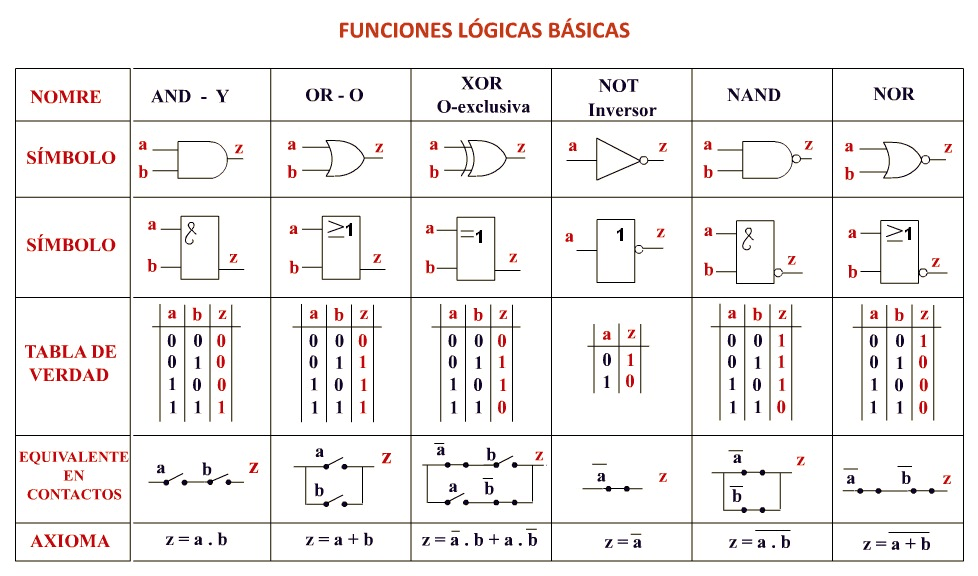
Credit: electronica.bysmax.com
Identifying Ic Pins And Layout
Identifying the pins and layout of a NAND gate IC is essential for proper use and connection. Each pin has a specific function, such as input, output, or power supply. Knowing the pin configuration helps prevent wiring errors that can damage components or cause circuits to fail. This section guides you through recognizing these details clearly and confidently.
Pin Configuration Basics
Most NAND gate ICs have a standard pin layout. Pins are arranged around the chip in a specific order. The chip usually has a notch or dot to indicate pin 1. Counting pins counterclockwise from pin 1 helps identify each pin’s role. Common pins include inputs, outputs, power supply (Vcc), and ground (GND).
- Inputs receive signals to be processed.
- Outputs send the result of the NAND operation.
- Power pins provide necessary voltage.
- Ground pins complete the circuit.
Reading Ic Labels
IC labels often include numbers and letters that indicate the chip type. The NAND gate IC usually starts with “74” or “40” series numbers. For example, “7400” is a common quad 2-input NAND gate IC. This label helps confirm the chip’s function and pin layout. Look for additional codes that show manufacturer and version.
Using Datasheets Effectively
Datasheets provide detailed information about IC pins and layout. They include diagrams, pin numbers, and electrical specifications. Use datasheets to verify pin functions and voltage limits. They also explain internal logic and timing. Keep datasheets handy to avoid mistakes and ensure correct circuit design.
Testing Nand Gate Ics
Testing NAND gate ICs ensures they work correctly in digital circuits. Faulty ICs can cause devices to malfunction or stop working. Testing helps identify problems before using the IC in a project. Simple tools and clear steps make testing easy even for beginners.
Basic Testing Tools
- Multimeter – checks voltage and continuity
- Power supply – provides correct voltage to the IC
- Breadboard – for easy circuit setup
- Connecting wires – to link components
- Logic probe or LED – to observe output signals
Step-by-step Testing Process
- Connect the IC to the power supply on the breadboard.
- Set inputs to known logic levels (0 or 1).
- Observe the output pin with a logic probe or LED.
- Compare the output with the NAND gate truth table.
- Test all input combinations to confirm consistent behavior.
Troubleshooting Common Issues
- Check power connections for proper voltage supply.
- Ensure input signals reach the IC without breaks.
- Verify no short circuits on the breadboard.
- Replace the IC if outputs stay constant or incorrect.
- Use the multimeter to test for internal damage.

Credit: dukatronic.co.ke
Applications Of Nand Gate Ics
NAND gate ICs play a vital role in digital electronics. They serve as the building blocks for many complex circuits. Their ability to perform universal logic operations makes them popular in various fields. From simple logic circuits to advanced digital systems, NAND gates find wide applications.
Logic Circuit Design
NAND gates simplify the design of logic circuits. They replace other gates like AND, OR, and NOT in many cases. Designers use NAND gates to create custom logic functions easily. This helps reduce circuit complexity and cost. NAND gate ICs provide flexibility in building combinational and sequential circuits.
Digital Systems Integration
NAND gate ICs integrate smoothly with digital systems. They control data flow and decision-making processes. Microprocessors and memory devices often use NAND-based logic. These ICs help manage timing and synchronization in circuits. Their reliability ensures stable operation in digital electronics.
Practical Project Examples
- Creating flip-flops for memory storage
- Building basic counters and timers
- Designing simple alarms and control systems
- Implementing logic puzzles and educational kits
These projects show how NAND gate ICs work in real life. They offer hands-on experience for students and hobbyists. Using NAND gates improves understanding of digital electronics principles.
Choosing The Right Nand Gate Ic
Choosing the right NAND gate IC is vital for your digital electronics project. Each IC differs in characteristics that affect performance and compatibility. Selecting the correct one ensures your circuit works reliably and efficiently. Consider key factors like voltage, speed, and package type before making a choice.
Voltage And Current Ratings
Check the voltage rating to match your power supply. Too high or too low voltage can damage the IC or cause malfunction. Current ratings show how much current the IC can handle safely. Choose an IC that supports the load current of your circuit. Always select an IC with a comfortable margin above your circuit’s requirements.
Speed And Power Considerations
The speed of a NAND gate IC affects how fast it processes signals. Faster ICs are better for high-speed circuits but may consume more power. Lower power ICs help reduce heat and save energy. Balance speed and power based on your project needs. For battery-powered devices, prioritize low power consumption.
Package Types And Compatibility
NAND gate ICs come in various package types like DIP, SOIC, and TSSOP. The package affects how easy it is to mount the IC on a board. Choose a package compatible with your PCB design and soldering tools. Smaller packages save space but can be harder to handle. Match the package type with your assembly skills and equipment.

Credit: medium.com
Frequently Asked Questions
What Number Identifies A Nand Gate Ic Component?
The most common NAND gate IC number is 7400. It contains four independent NAND gates. Other variations include 4011 and 74LS00 series.
How To Find Nand Gate Number On A Digital Ic?
Check the IC label for numbers like 7400 or 4011. These indicate NAND gate ICs. Datasheets provide detailed specifications.
Are All Nand Gate Ic Numbers Standardized?
Yes, most NAND gate IC numbers follow standard series like 74xx or 40xx. This helps in easy identification and compatibility.
What Is The Difference Between 7400 And 4011 Ics?
7400 is a TTL NAND gate IC, while 4011 uses CMOS technology. Both perform NAND logic but differ in power and speed.
Conclusion
Knowing the number of your NAND gate IC helps in easy identification. It makes buying and using components much simpler. You can connect circuits correctly and avoid mistakes. Always check the IC number before starting any project. This small step saves time and effort.
Understanding these basics improves your electronics skills. Keep practicing and learning to build better circuits. Simple knowledge leads to better results.
Leave a Reply